Prefer Jewish News on Google
We must not let the distorters define Holocaust Memorial Day
The best way to counter those who seek to silence us is not to shout into the void of their making
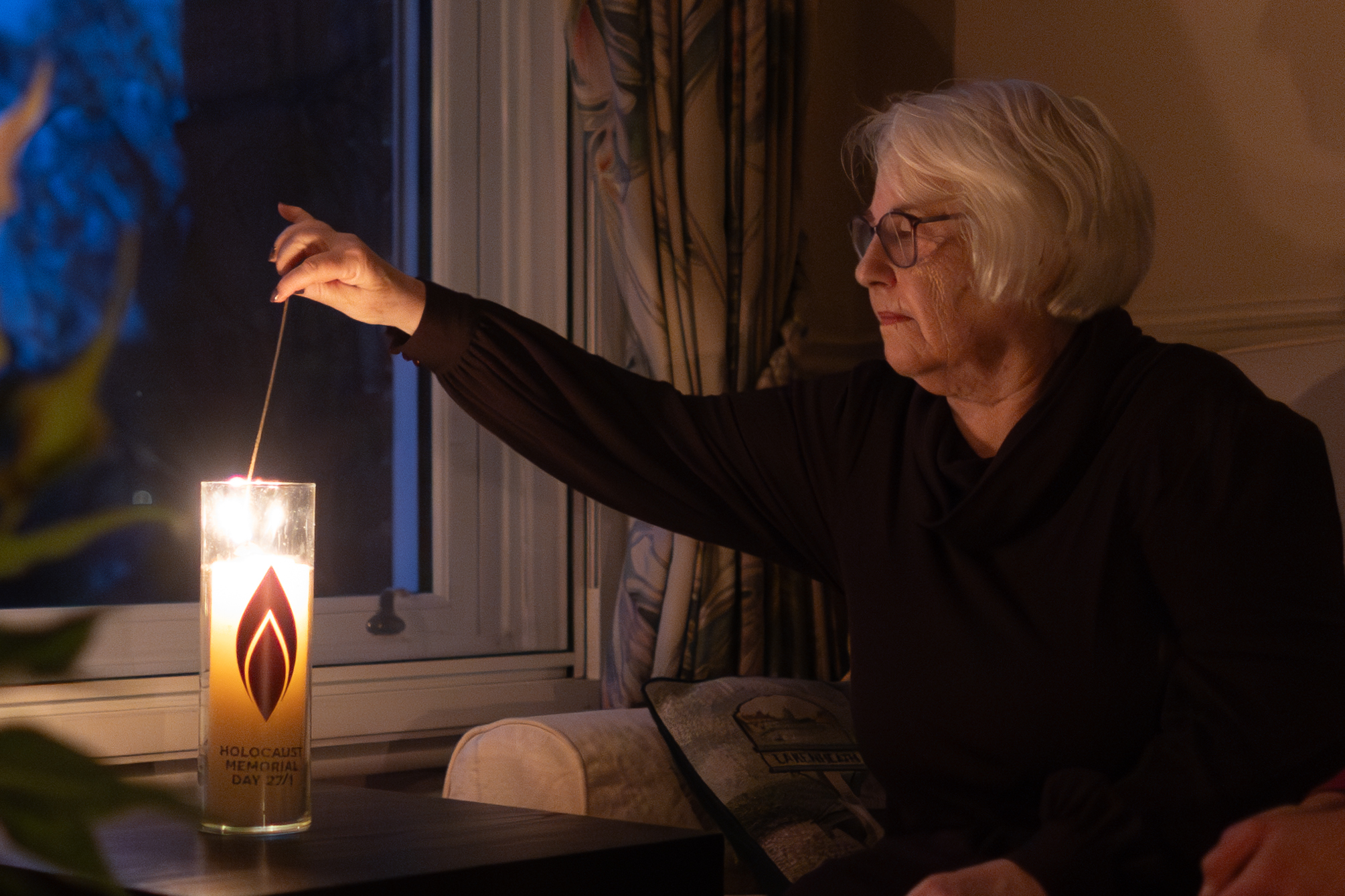
Every January, I, like many other Holocaust survivors, spend the month committed to Holocaust commemoration. This year, as has been the case for the last four decades, my schedule was a whirlwind of schools, workplaces, and community centres. I travelled across the country to share my Holocaust experience and that of my parents.
As Polish Jewish immigrants who had lived in France for most of their adult lives, we became the target of the anti-Jewish measures initiated by a collaborative Vichy government after the Nazi invasion of France. Born three months before the invasion in May 1940, I, like my parents, was classified as a Polish Jew, therefore a stateless person and a target for deportation. At the Wannsee Conference in January 1942, the extermination of all Jews in Europe was laid down as the final solution to the Jewish Problem. By July of that year, the majority of foreign Jewish males had been deported, and for the first time, the Vichy government decided to include women and children in the quotas set by the Nazi command.
If my mother had not been warned and we had not been smuggled out of the occupied zone, I would have been one of the 11,400 children deported to the extermination camps in the east. Aged barely three years old at the time, it is unlikely that I would have been among the 250 children known to have survived. So I would not be here to share my journey. The Nazis would have exterminated me and even the memory of me.
Statistics suggest that this year’s Holocaust Memorial Day (HMD) achieved the second-highest coverage on record, surpassed only by last year’s landmark 80th anniversary. Yet with increased visibility comes increased scrutiny and, unfortunately, potential failures.
The intention of the Nazis was to wipe the memory of the Jews, their presence and their culture off the face of the world. Tragically, particularly for me, who sees myself as an integrated British Jew, some, including the BBC coverage, tainted the memory of the Holocaust by managing to discuss the murder of six million men, women and children without using the word “Jew”. Managing to dehumanise our dead by this omission. Similarly, the memorialising of the attempt to extinguish our people was polluted by the efforts of a minority of bad-faith individuals who attempted to hijack local community HMD events and to distort our message of warning against the use of propaganda to inflame prejudice and so perpetuate a cycle of fear and hate. However, we must avoid rising to these provocations.
The overwhelming majority of HMD events and media coverage did exactly what they intended to. They told of the deliberate, systematic destruction of Jewish culture and the murder of six million Jewish men, women and children for their only crime of being born Jewish. When I hear claims that “Jews have been erased from Holocaust Memorial Day”, I despair.
For me, the lesson of the Holocaust that I, and the majority of my fellow survivors, learned is one of the dangers of prejudice. We do not stoop to the level of our detractors. We remember the Shoah with anger, with pain and with an unshakable commitment to the truth. The best way to counter those who seek to silence us is not to shout into the void of their making.
This year, Holocaust Memorial Day started with an event hosted at Buckingham Palace by our Head of State, King Charles III, followed by the Holocaust Memorial Day Trust’s UK National Ceremony with political, faith and civic leaders across the UK, and culminated with the national moment of remembrance, ‘Light the Darkness’ on the iconic billboards at Picadilly Circus.
I was very proud to stand with my fellow citizens in Piccadilly Circus. To stand as a Jew, openly without fear, and to see illuminated 3D candles in the heart of London in memory of those we lost. This poignant moment was supported by a week-long national billboard and radio campaign calling on people to stand against antisemitism today. The campaign, and the moment in Piccadilly Circus, attracted widespread interest and support, with no reports of negative reactions or vandalism.
The best way forward is for us to be the light in the darkness.
Joan Salter MBE is a child survivor of the Holocaust

Keep community journalism free.
Jewish News is free for everyone. No paywall. No barriers. Just trusted journalism for anyone who wants to stay connected to Jewish life in Britain.
If you value that, please support us.
From as little as £5 a month, you can help keep our journalism free and accessible to all.
Every day, we report on the issues that matter to our community. We celebrate achievements, support charities, challenge antisemitism and ensure Jewish voices are heard more widely.
From as little as £5 a month, you can help us continue to:
- Report on the stories shaping Jewish life in the UK and beyond
- Bring our community together through shared stories, events and campaigns
- Celebrate the people, culture and moments that define our community
- Support organisations doing vital work across Jewish Britain
You can make a one-off donation or become a regular supporter. Every contribution helps keep our journalism free, independent and accessible to all.
If everyone who values Jewish News gave a small amount, it would make a real difference to our future.