Prefer Jewish News on Google
Welcome to a sceptical son’s April Fools’ seder
The Passover story refuses to let this atheist go
Is God sending simple sons like me a message by making this year’s first seder night fall on April Fools’ Day? It’s hard to ignore the timing. If anything could tempt a Jewish atheist to glance up at the heavens and stroke his chin, it’s a cosmic coincidence like this.
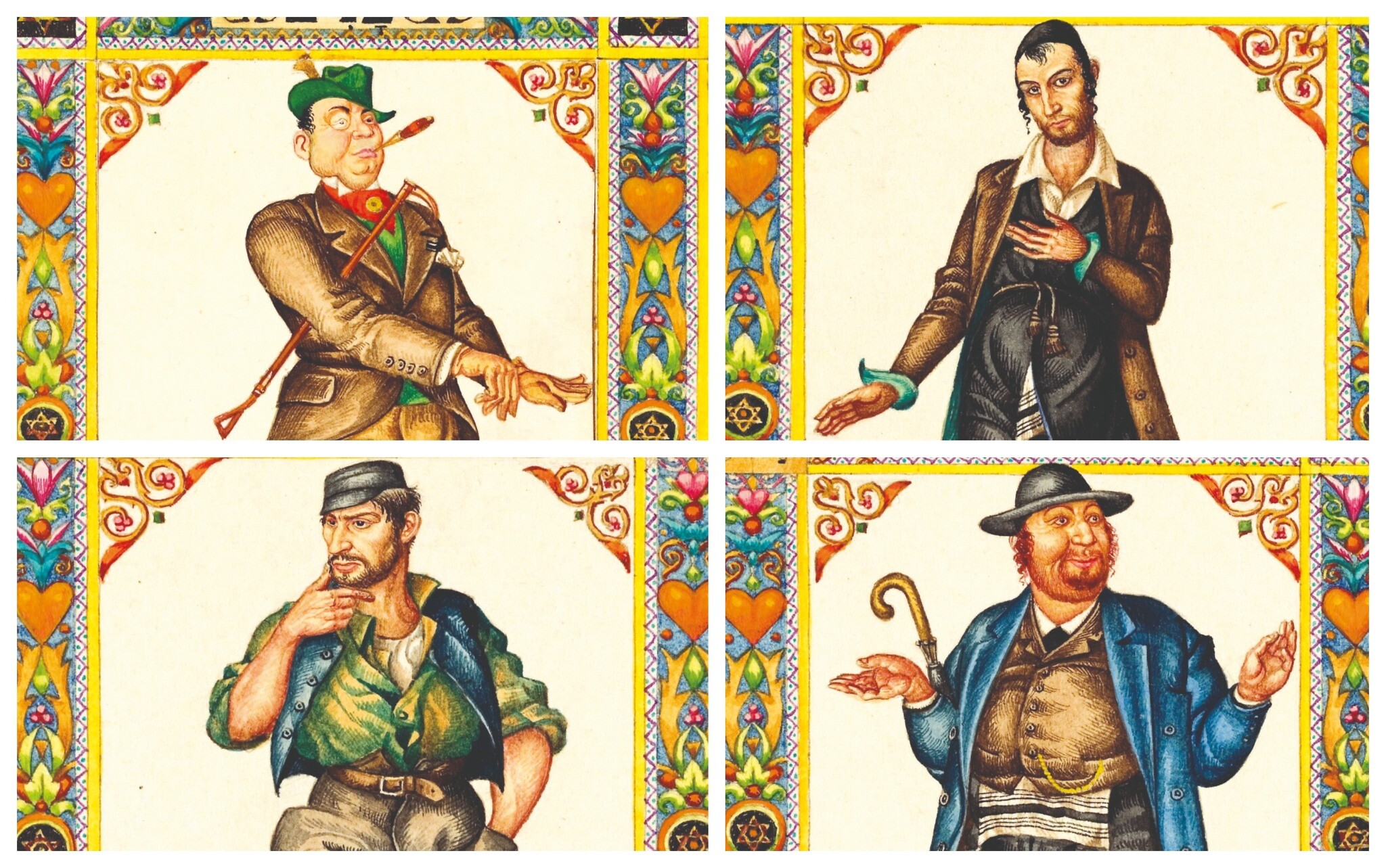
The Simple Son has always been my favourite seder sibling. The moniker does him no favours. “Simple” does not mean stupid. A mind devoid of thought. That misses what matters most about him. The Haggadah’s unfairly maligned halfwit is a misunderstood character who sees the rituals around the table and asks the most important question of all: “What is this?” His problem isn’t a lack of intelligence, it’s a lack of acceptance. He simply cannot understand what he’s being told and why it should matter. He stubbornly refuses to lean. And learn. A more fitting name for such a pensive young man would be the Sceptical Son.
He’s the secular yin to the seder’s yang. Without him, the meal would be like any other. He’s the secret sauce that gives the evening its edge. That makes it different from all other nights. To boil his role down like chicken soup, the Simple Son is the star of the show.
He does not nod along like the dog in the Churchill insurance adverts. Instead, he cocks his head to one side, like a dog who can’t comprehend the words but recognises their importance to everyone else in the room. He’s searching the seder for something solid, something to grasp – observing the adults around him lean and dip and sing and wondering what to make of it all.
I’m the Simple Son. I know, as sure as I know burnt eggs are burnt eggs, that little, if anything, read around the seder table is factually true. What I’ve been trying to figure out for the past 55 Pesachs is why it is culturally true. Morally true. Psychologically true. What is it about the Exodus that’s been a bonding (or should that be bondage?) agent for five millennia? To ask that crucial question, never mind answer it, you cannot afford to be simple.

Simple Sons see that blind faith makes perfect sense. They see it’s a fully-packed suitcase, handed down through time, heavy with grand stories, good habits and gallant heroes. Weighty enough to stop the Jewish people drifting away on the choppy waters of tragedy and time. Useful survival gear. Simple Sons see that even if God is a human invention, belief in him is, clearly, rational. That life without anything God is bad. The proof is right there in the matzah pudding.
Simple Sons see that even if God is a human invention, belief in him is, clearly, rational. That life without anything God is bad. The proof is right there in the matzah pudding.
The Simple Son believes in belief as much as his three siblings. He simply knows that belief is all there is. And all there ever will be. He may roll his eyes at the frogs, brush off the boils and look past the locust, but he still sees what the story is trying to teach. He knows it’s doing some heavy lifting. And he gets the punchline: we’re still here, Pharaoh is not.
I play with this paradox – God as functional fiction – in my sci-fi comedy novel Error 404 (in all good bookstores this summer). In it, a future AI empirically proves God is a human invention, society promptly eats itself and atheists are forced to confront a basic truth of human nature – faith can be more important than facts.
My atheism is real. My Judaism no less so. It reveals itself most clearly in the dogged idealism of showing up year after year to celebrate an exodus I did not witness, yet somehow remember.
Simple Sons sit at the seder because stepping out of that five-thousand-year chain would feel less like liberation than amputation. Simple Sons like me wear a Star of David around our necks because its familiar weight anchors us. And this April Fools’ Day, Simple Sons like me will listen to a story we do not believe yet cannot live without and ask the question expected of us – as if our lives depended on it.
“What is this?’

Keep community journalism free.
Jewish News is free for everyone. No paywall. No barriers. Just trusted journalism for anyone who wants to stay connected to Jewish life in Britain.
If you value that, please support us.
From as little as £5 a month, you can help keep our journalism free and accessible to all.
Every day, we report on the issues that matter to our community. We celebrate achievements, support charities, challenge antisemitism and ensure Jewish voices are heard more widely.
From as little as £5 a month, you can help us continue to:
- Report on the stories shaping Jewish life in the UK and beyond
- Bring our community together through shared stories, events and campaigns
- Celebrate the people, culture and moments that define our community
- Support organisations doing vital work across Jewish Britain
You can make a one-off donation or become a regular supporter. Every contribution helps keep our journalism free, independent and accessible to all.
If everyone who values Jewish News gave a small amount, it would make a real difference to our future.