Prefer Jewish News on Google
What Britain can do to defend itself and its Jews
Extremism does not begin with violence. It begins with permission, writes David Toube
I spent the last three days at a counter-extremism conference in a country house hotel. Over breakfast this morning, I remarked to a colleague how strange and rather welcome it was to have a little time to think about the larger questions: resilience, democratic confidence, institutional failure, the slow corrosion of public life.
Three days without being dragged back into the daily business of responding to attacks or outrages felt like an impossible luxury.
My colleague smiled grimly. The conference was not quite over, he said. I should not speak too soon.
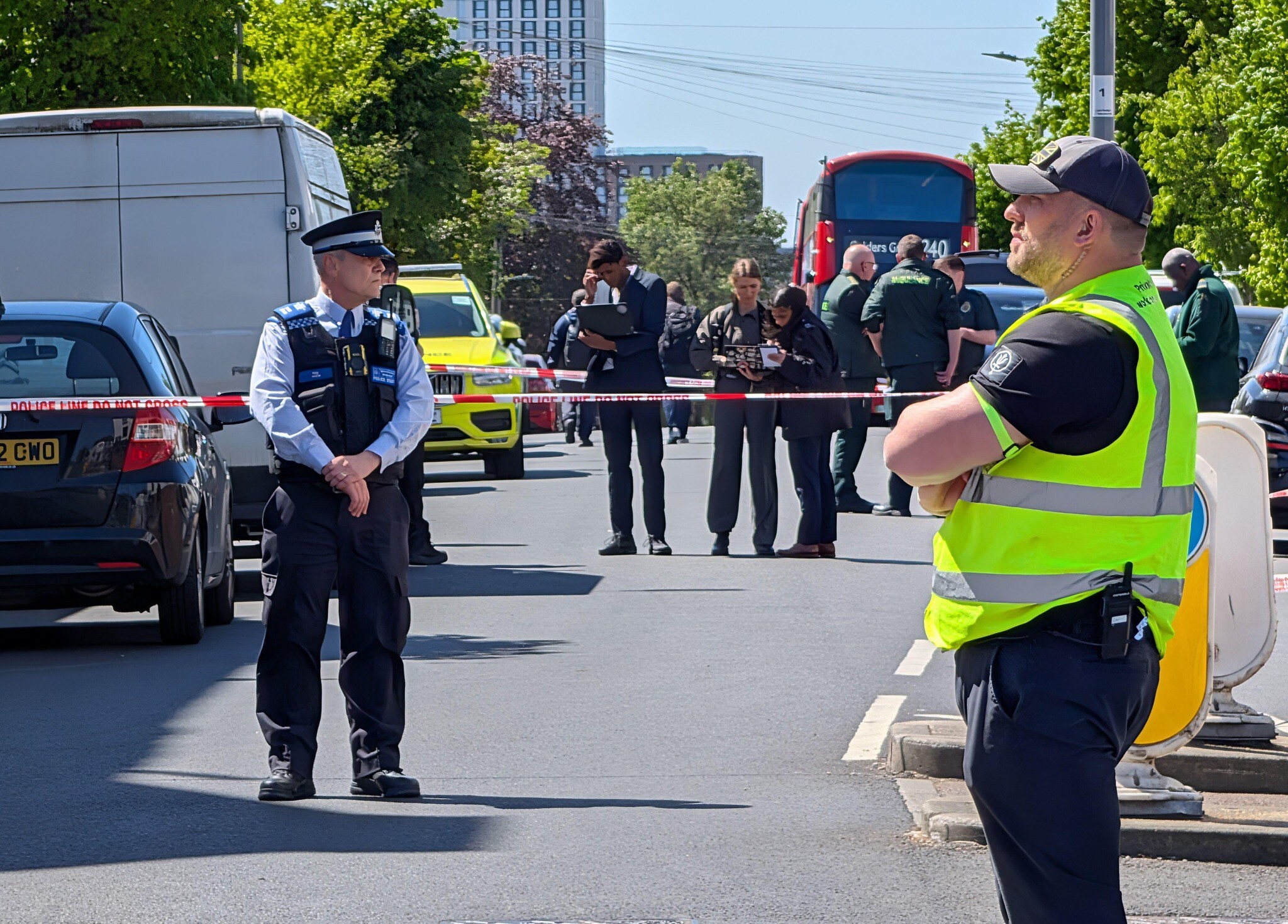
An hour later, two Jewish men were stabbed in Golders Green.
There is a certain banality to writing about this now. The correct words come too easily: shock, horror, solidarity, no place for hatred, thanks to the police, Shomrim, Hatzola and CST. All of it is sincere. All of it must be said. Yet there is something indecent about the predictability of it.
Jewish life in Britain now exists under a constant pressure that is difficult to describe without sounding melodramatic. Synagogues hire guards. Schools install gates. Communal events require risk assessments. Then, despite everything, charities and places of worship are attacked. Two Jews were murdered on Yom Kippur. Now two visibly Jewish men have been attacked in the street.



The temptation is to treat each incident separately. That is administratively convenient. It allows every atrocity to be filed away with its own suspect, its own motive, its own investigation. But this is not how extremism works, and it is not how fear is experienced. What we are seeing is not a series of disconnected events, but a pattern that cannot be ignored.
By the time someone picks up a knife, it is already too late. The failure has occurred much earlier: in the normalisation of hatred, in the erosion of social restraint, in the reluctance to confront extremist networks and name ideologies, and in the institutional habit of treating antisemitism as a problem to be managed rather than an evil to be defeated.
This is why these attacks must be understood as a matter of national security. Attacks on Jews are, in effect, attacks on the authority of the democratic state. They test whether minorities can live openly and safely. They test whether the streets belong to the public or to those willing to dominate them through intimidation.
A country in which Jews cannot walk safely through Golders Green is not merely failing Jews. It is failing itself.
Extremism does not begin with violence. It begins with permission: when hatred is excused as anger, when sectarianism is repackaged as politics and when foreign regimes are allowed to project menace into British life. A society can become less free in quiet ways long before the danger becomes undeniable.
This is not a challenge for government alone. It is a test for the country as a whole. Laws, policing and strategy matter, but they are not enough if the wider culture drifts into indifference. The Jewish community cannot and should not face this alone. We need something more basic and fundamental: a willingness, across society, to reject antisemitism not only in principle but in practice, and to stand visibly against those who seek to intimidate our fellow citizens.
What is required now is the hard work of democratic self-defence: a counter-extremism strategy treated as central to national security, action against extremist organisations, state-linked intimidation and incitement, implementation of the measures already set out in the Government’s Protecting What Matters Action Plan. There must be real consequences for antisemitism.
The question now is not simply what the state will do. It is whether Britain still has the confidence to defend the conditions of its own freedom.

Keep community journalism free.
Jewish News is free for everyone. No paywall. No barriers. Just trusted journalism for anyone who wants to stay connected to Jewish life in Britain.
If you value that, please support us.
From as little as £5 a month, you can help keep our journalism free and accessible to all.
Every day, we report on the issues that matter to our community. We celebrate achievements, support charities, challenge antisemitism and ensure Jewish voices are heard more widely.
From as little as £5 a month, you can help us continue to:
- Report on the stories shaping Jewish life in the UK and beyond
- Bring our community together through shared stories, events and campaigns
- Celebrate the people, culture and moments that define our community
- Support organisations doing vital work across Jewish Britain
You can make a one-off donation or become a regular supporter. Every contribution helps keep our journalism free, independent and accessible to all.
If everyone who values Jewish News gave a small amount, it would make a real difference to our future.