
 Prefer Jewish News on Google

What Canvey Island taught me about antisemitism and about Britain
I am not hard to identify: yarmulke, beard, peyes, traditional dress. My Judaism is visible, and unapologetically so. But that is not the whole story.
On Monday, we woke up to the news that four Hatzola ambulances have been set on fire in an antisemitic arson attack in the heart of Golders Green.
Later that same day, I attended the annual Community Security Trust dinner in Mayfair, where the mood was sombre. The attack is a reminder that Jewish security in Britain is not theoretical, and that organisations like CST do indispensable work because they have to.
On the way home, it becomes personal.
Having stopped at a red light just after passing Buckingham Palace, my car was approached by a man offering to clean the windscreen. When I decline politely, he begins hurling racial abuse. He is angry because he wants money, but that is not what he says. What he says is aimed at one thing only: that I am Jewish.
So that is one ordinary day in Jewish Britain: waking to antisemitism in the headlines, spending the evening hearing how serious it is and what must be done about it, and then, on the way home, getting a small reminder of the reality of life as a visibly Charedi Jew in Britain.
I am not hard to identify: yarmulke, beard, peyes, traditional dress. My Judaism is visible, and unapologetically so. But that is not the whole story.
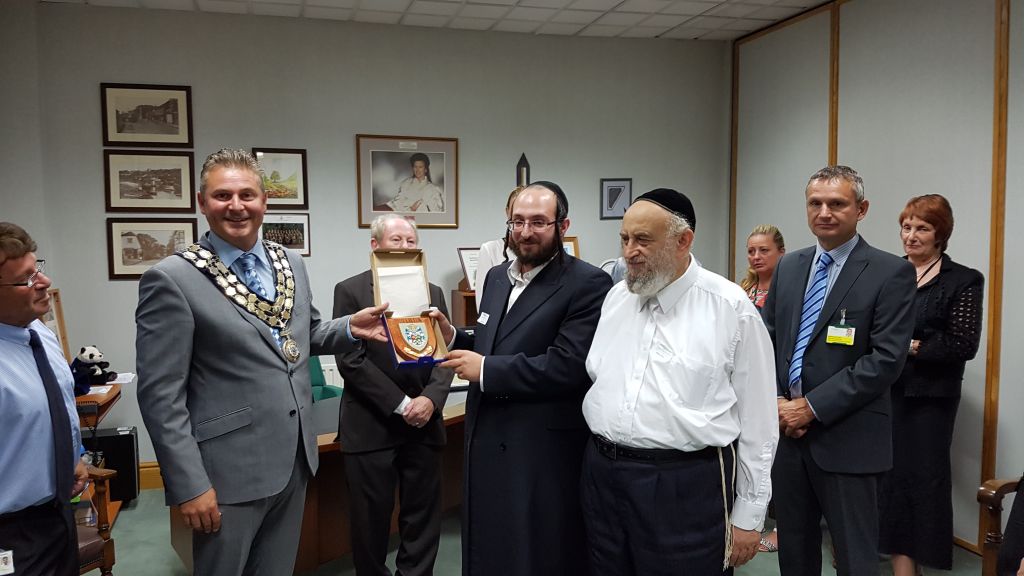
Nearly ten years ago, I was part of a small group of six Charedi families who moved to Canvey Island in Castle Point. Today, that community has grown to around 160 families. That is not just a story about one community. It is also a story about modern Britain, because Canvey Island is not Stamford Hill or Golders Green. It is one of the least diverse parts of the country.
People noticed when we arrived. Some welcomed us warmly, while others were unsure what to make of us. Some warned that we would stand out too much and that the cultural shift would be difficult.
They were wrong, though the journey has not been without its challenges.
Life in Canvey Island has been shaped by two realities at once. Yes, there have been incidents of antisemitism, some crude, some ugly, some serious. But there has also been warmth, decency and goodwill. The overwhelming majority of local people are friendly, fair and welcoming.
That matters because public debate so often collapses into two false choices: either that Britain is irredeemably hostile to Jews, or that concern about antisemitism is somehow overstated. Neither is true.
The reality is more complicated. Antisemitism is real, persistent and increasingly normalised. But it exists alongside a much larger public that is decent and fair-minded. That is where engagement matters most, and it has shaped how I try to respond.
There are boundaries, of course. I am not referring to physical violence or direct threats, which must be dealt with head on. I am referring to the wider communal and online hostility that may seem minor, but which feeds the fire and shapes the climate in which the next generation grows up.
I try not to label everything too quickly as antisemitism, even when an ugly remark may deserve it. Not because I excuse it, but because I have learned that not every ugly remark is best answered with immediate escalation. Often it is ignorance fuelled by frustration. Sometimes it is unfamiliarity dressed up in unpleasant language.
Where I can, I try to get to the underlying issue. I try to explain. I try to lower the temperature rather than raise it. That works more often than people imagine. The hardcore minority for whom hatred is the point are not the people I expect to persuade. The task is to deprive them of oxygen by engaging the much larger group around them before resentment hardens into something darker.
Before chagim such as Purim, Pesach or Chanukah, I write explanatory posts in local Facebook groups. Not to apologise for our way of life, but to give context. If people know why something unusual is happening, they are often less suspicious and less hostile.
That does not always stop the ugliness. Social media has become a sewer, and the modern antisemite no longer feels any need to distinguish between Jews in Essex and events in the Middle East, or between one person’s actions and another person’s innocence.
And yet I still resist despair. Canvey Island has also shown me the decent majority: people who are curious rather than hostile, neighbourly rather than suspicious, and prepared to meet difference with basic goodwill.
Perhaps the most enduring lesson I ever learned came from the unforgettable Rabbi Avraham Pinter, of blessed memory. He taught us a great deal about public life and Jewish communal responsibility. He showed us how to engage confidently with wider society with our heads held high, build bridges where we can, yet stand firm where we must, and refuse to let the worst voices define who the rest of us are.
Monday was a reminder that Britain has a serious antisemitism problem. But Canvey Island has also taught me that Britain still has people worth fighting for.
Joel Friedman JP is chair of the Canvey Jewish Trust and a community leader on Canvey Island. He is a former Director of Public Affairs at the Interlink Foundation and Pinter Trust, and writes in a personal capacity.

Keep community journalism free.
Jewish News is free for everyone. No paywall. No barriers. Just trusted journalism for anyone who wants to stay connected to Jewish life in Britain.
If you value that, please support us.
From as little as £5 a month, you can help keep our journalism free and accessible to all.
Every day, we report on the issues that matter to our community. We celebrate achievements, support charities, challenge antisemitism and ensure Jewish voices are heard more widely.
From as little as £5 a month, you can help us continue to:
- Report on the stories shaping Jewish life in the UK and beyond
- Bring our community together through shared stories, events and campaigns
- Celebrate the people, culture and moments that define our community
- Support organisations doing vital work across Jewish Britain
You can make a one-off donation or become a regular supporter. Every contribution helps keep our journalism free, independent and accessible to all.
If everyone who values Jewish News gave a small amount, it would make a real difference to our future.





















