
 Prefer Jewish News on Google

What does the Maccabi Tel Aviv fan ban say about the future of Jews in the UK?
Civilised societies balance risk: they manage it, they don’t erase people because of it.
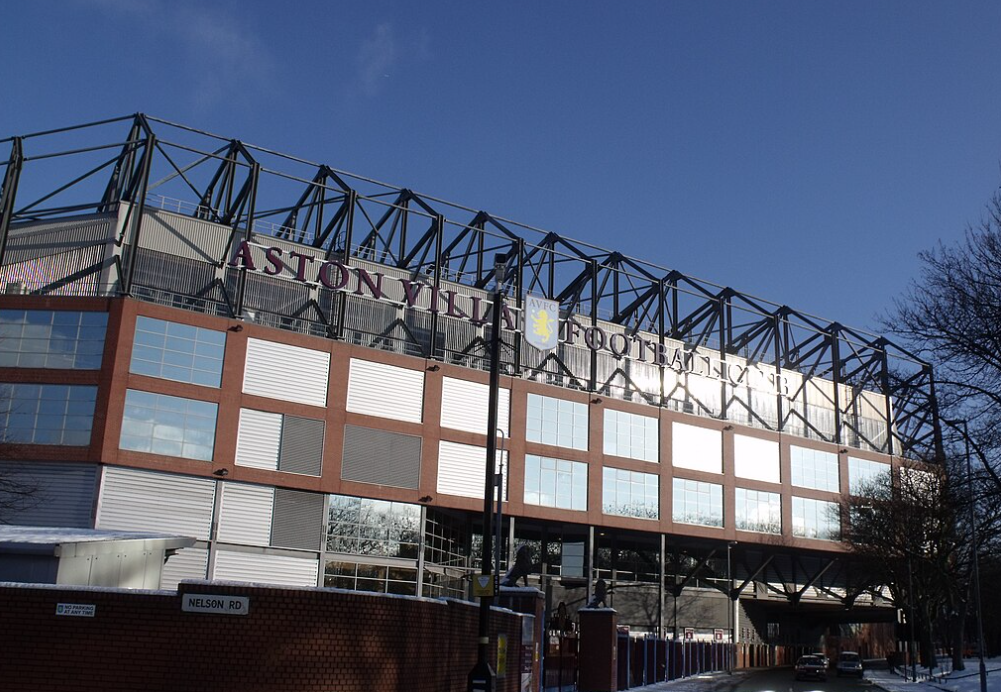
Yesterday, Jewish football fans were told they cannot safely enter a British stadium. When Aston Villa hosted Maccabi Tel Aviv in Birmingham, the stands were missing something essential: the visiting team’s supporters. Not because they didn’t want to come, but because they weren’t allowed.
West Midlands Police and Aston Villa banned all Maccabi Tel Aviv fans from attending the Europa League fixture, citing “safety concerns.” On paper, it sounds pragmatic. In reality, it’s chilling.
“Safety” has become the word used to exclude Jews from public life, not protect them within it.
Once again, Jews are being told: it’s easier if you just stay home.
A Dangerous Normalisation


It’s tempting to treat this as a one-off policing decision. It isn’t. It’s a mirror of where we are as a country.
Jewish schools have been forced to close temporarily over security fears. Jewish students on campuses are being harassed. Jewish teachers, MPs, and business owners are told to hide their identities online.
And now, Jewish football fans, in a country that prides itself on diversity and democracy are told they can’t safely attend a football match.
We must ask ourselves: what does it say about Britain that our authorities cannot guarantee the safety of Jews at a sporting event? And what precedent does this set for every other public space where Jews gather, from synagogues to schools to cultural events?
A Double Standard
Throughout football history, clubs with far more violent reputations, from Millwall to Galatasaray have seen their fans travel to away matches under heavy police escort, not blanket exclusion. Riot control units, transport coordination, and separation barriers have been standard tools for decades.
I remember when my husband travelled to Rome for an Arsenal Champions League match years ago. The city was tense, Italian ultras had stabbed fans on the bridge leading to the Stadio Olimpico. And yet, the solution wasn’t to ban supporters. British fans were escorted in and out of the stadium under tight police protection. It was dangerous, but managed, because authorities understood that the right to attend, even amid risk, was non-negotiable.
That’s how civilised societies balance risk: they manage it, they don’t erase people because of it.
And yet, in 2025, Jewish and Israeli supporters are being denied even that. No escort, no compromise, no attempt to uphold their right to attend, just a categorical ban.
It’s hard to escape the conclusion that when it comes to Jews, the rules suddenly change.
The Line We’ve Crossed
The Board of Deputies and other communal leaders proposed a reasonable alternative: allowing a limited number of British Jewish fans — not even Israelis — to attend under secure conditions. Aston Villa reportedly declined to even discuss it.
This isn’t about football anymore. It’s about the quiet, steady erosion of confidence among Jews in the UK, a feeling that we are being “managed,” not protected. That our visibility is seen as a problem to contain, rather than a right to defend.
When the state decides that excluding Jews is the easiest way to avoid conflict, it is no longer keeping the peace. It is surrendering it.
Where Is Our Leadership?
Prime Minister Keir Starmer called the decision “wrong.” He was right to do so. But strong words are no longer enough.
British Jews are tired of statements. We want protection. We want to live, work, study, and support our teams without fear.
If the government can’t ensure that a group of peaceful Jewish fans can attend a football match, what does that mean for our national promise of equal citizenship?
Where are the resources, the directives, the accountability?
What specific actions is our government taking to ensure that police and local authorities understand the difference between managing a risk and legitimising discrimination?
“Safety” should not mean sacrificing the rights of those most at risk. It should mean standing up for them.
The Broader Picture
Football is more than a game; it’s a reflection of society. When Jewish fans are treated as a risk factor, not as part of the crowd, it tells us that something in our social fabric has torn.
For generations, Jews have played, coached, owned clubs, and filled terraces across this country. To now be excluded under the guise of security is a stain on British values and a warning sign for every minority that depends on those same protections.
Because when Jews are told “you’re not safe here,” it’s never just about Jews. It’s about a society losing the moral courage to protect difference.
A Call to Action
Last night, there were 40,000 fans at Villa Park and an empty section where Maccabi Tel Aviv supporters should have been.
That silence will echo far beyond Birmingham. It will echo through classrooms, boardrooms, and synagogues, through every Jewish family wondering whether they are still truly welcome in this country.
The Prime Minister should not let that silence stand. He must make it clear, in actions not words, that Jews belong on the terraces, in the public square, and in every part of British life.
Because when Britain stops feeling safe for Jews, it stops being Britain.
Leah Stern is Partner at Israel’s largest VC firm, OurCrowd

Keep community journalism free.
Jewish News is free for everyone. No paywall. No barriers. Just trusted journalism for anyone who wants to stay connected to Jewish life in Britain.
If you value that, please support us.
From as little as £5 a month, you can help keep our journalism free and accessible to all.
Every day, we report on the issues that matter to our community. We celebrate achievements, support charities, challenge antisemitism and ensure Jewish voices are heard more widely.
From as little as £5 a month, you can help us continue to:
- Report on the stories shaping Jewish life in the UK and beyond
- Bring our community together through shared stories, events and campaigns
- Celebrate the people, culture and moments that define our community
- Support organisations doing vital work across Jewish Britain
You can make a one-off donation or become a regular supporter. Every contribution helps keep our journalism free, independent and accessible to all.
If everyone who values Jewish News gave a small amount, it would make a real difference to our future.





















