Prefer Jewish News on Google
Opinion: When does ‘Jew’ not mean Jew – the BBC’s long obfuscation
Despite a recent internal review into BBC practices, it is far from clear that one of the Corporation's most notorious mistranslation policies is over
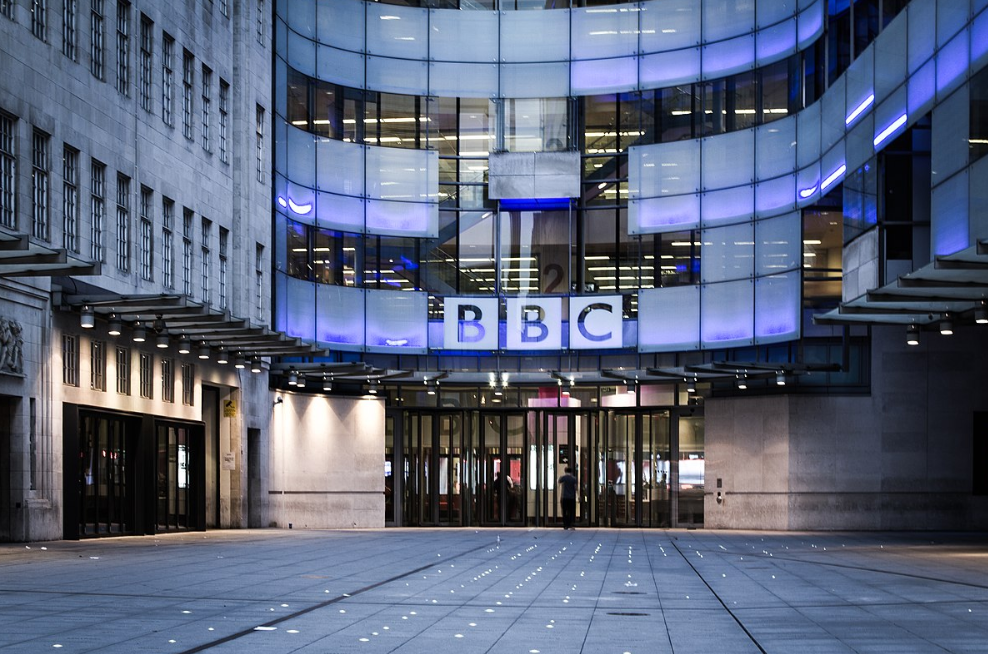
The recently published findings of the BBC’s internal review into its commissioned documentary ‘Gaza: How to Survive a War Zone’ include a separately-uploaded ‘Action Plan’, part of which relates to the issue of “Language”:
The BBC will issue new editorial guidance to programme makers on the use and translation of the word ‘Yahud/ Yahudi’ into English, following the recommendation in Peter Johnston’s Review. Going forward, programme makers should default to using the literal translation of those terms as ‘Jews/ Jewish’. It will still be possible to use a different translation, but this would need to be referred up to senior executive editor level and the programme should make clear to the audience wherever possible why they deviated from the literal translation. Peter Johnston’s report also recommends that ‘Yahud/ Yahudi’ be looked at more comprehensively, and with external input, through the forthcoming thematic review of BBC Middle East coverage agreed by the BBC Board.
Notably, in the full review Johnston explains that the translation of ‘Yahud’ to ‘Israelis’ and even ‘Israeli Forces’ in the documentary was based on a 2013 BBC Trust ruling, stating that:
“For this Programme, expert advice was sought and taken on the translation of ‘Yahud’ during the compliance phase, which was based on a previous finding from the BBC Trust (the BBC’s former regulator) in 2013 and subsequent ECU rulings on this issue. The BBC Trust had determined previously that the translation does not need to be literal, but should consider the context and who was using the term to aid audience understanding.”
Two years after that 2013 ruling, another BBC documentary featuring children in the Gaza Strip during a war would also mistranslate ‘Yahud’ as ‘Israel’.

While Peter Johnston’s recommendations may give the impression that BBC policy is finally set to improve, a number of points need to be taken into account.
Colloquial Gazan Arabic has distinct terms for “military,” “soldiers,” “Israelis,” and “Zionists”—none of which is Yahud, a word that unequivocally means “Jews.” Even when Gazans use Yahud in reference “to actions by the IDF, the Israeli state, or Israeli citizens” —as the BBC now asserts in its recent review — this occurs within a widely held worldview that sees all of these as indistinguishable.
One of the clearest indications for this mindset is the chant Khaybar Khaybar Ya Yahud -popular across the Arab world and particularly in Gaza – which evokes a 7th-century massacre of Jews in the Arabian Peninsula, hundreds of kilometres from Gaza and centuries before State of Israel or the IDF came into existence.
Nevertheless, the BBC continues to suggest that acknowledging this hateful worldview might “risk misleading audiences”. As a result, its review still defends (in Article 104) sanitising phrases such as “Jihad against the Jews” — mistranslated in Gaza: How to Survive a War Zone as “fighting Israeli forces” — along with other similar errors.
Looking ahead, while the BBC review recommends that “Jews” would be the default translation for Yahud, it qualifies this recommendation in a way that makes it easily circumvented and therefore toothless. The review still insists that staff members be given broad discretion to render Yahud non-literally in future cases— as long as the “programme maker”, “executive” or “editor” believe a direct translation would “mislead the audience as to intent or motivation” (Article 106). This assumes that BBC staff can somehow divine intent without relying on the speakers’ actual words.
Notably, based on BBC output so far, such leeway does not appear to apply when Israelis speak on camera about Aravim, Arabs; the BBC would never justify mistranslating that as “terrorists” or even “Palestinians”—and rightly so.
This double standard reflects a deeper problem: a form of “low expectations racism” that infantilises Palestinians by denying them agency and hence responsibility for their own words.
This context of racialised condescension is also essential when evaluating how the review addressed the discovery of social media posts by two cameramen involved in Gaza: How to Survive a War Zone, both of whom publicly celebrated the mass murder of Israel’s Jewish civilians. Similarly, the BBC was informed that one of the film’s child contributors also starred in several unearthed Hamas propaganda videos—wearing Hamas attire and holding an AK-47.
Having examined the revelations above – and based on the same paternalistic approach that excuses conduct and biases that would otherwise be deemed unacceptable — the review nevertheless concludes (Article 112) that no “outside interests inappropriately impacted” the production.
To any reasonable observer, however, it should now be evident that these key contributors lacked the fundamental journalistic skill — crucial and likewise rare in all news coming out of Gaza — to reliably differentiate between combatants and civilians. Proper due diligence would have exposed these three individuals’ deficiencies in advance, flagged their reporting as compromised and prevented them from mediating “the Gaza reality” to Western audiences.
In conclusion, the review’s findings—on translation and beyond— further demonstrate that even during formal investigations, the BBC fails to adequately oversee its own content, especially when biased coverage of Jews or Israel is at stake.
David Grom works for CAMERA Arabic. Hadar Sela works for CAMERA UK

Keep community journalism free.
Jewish News is free for everyone. No paywall. No barriers. Just trusted journalism for anyone who wants to stay connected to Jewish life in Britain.
If you value that, please support us.
From as little as £5 a month, you can help keep our journalism free and accessible to all.
Every day, we report on the issues that matter to our community. We celebrate achievements, support charities, challenge antisemitism and ensure Jewish voices are heard more widely.
From as little as £5 a month, you can help us continue to:
- Report on the stories shaping Jewish life in the UK and beyond
- Bring our community together through shared stories, events and campaigns
- Celebrate the people, culture and moments that define our community
- Support organisations doing vital work across Jewish Britain
You can make a one-off donation or become a regular supporter. Every contribution helps keep our journalism free, independent and accessible to all.
If everyone who values Jewish News gave a small amount, it would make a real difference to our future.