Prefer Jewish News on Google
When leaders act like tyrants, every person still has the power to stand against hate
If the Westminster Holocaust memorial is to be not only about "then", but "now" — it must be understood that the Final Solution did not unfold because an evil regime willed it but because individuals, institutions and nations stood by
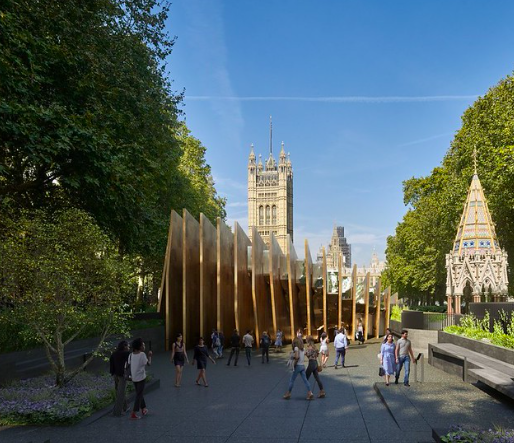
Last week’s Holocaust Memorial Day came against a backdrop of rocketing antisemitism and an increasingly dangerous world. When thinking about the Holocaust, we often begin with the depravity of the Nazi perpetrators and with the victims: the six million men, women and children murdered simply for being born Jews.
That focus is essential, but incomplete. A third group warrants attention: the bystanders. Fellow citizens, judges, doctors, teachers, accountants, housewives – ordinary people who watched and stood by. Close enough to smell the smoke, sometimes literally, they chose silence, denial, self-preservation, and convenience. Countries that could have saved Jewish lives but slammed the door in their faces.
11 years ago, I chaired then prime minister David Cameron’s commission on Holocaust commemoration that proposed a state-of-the-art Holocaust Memorial and learning centre in a prominent London location. A decade on, despite cross party support, the memorial is yet to be built due to combinations of genuine concern by some but nimbyism, scepticism and cynicism by others.
The project’s detractors often focus on location. Some argue that the Imperial War Museum would be more convenient than the proposed site near Parliament, but that misreads the Holocaust as an act of war, rather than the outcome of the dehumanisation of Jews on the one hand and a breakdown of democratic norms and values on the other.
What is truly important is the message visitors will take away from the memorial and, vitally, the learning centre, wherever it is built. If it is to be not only about “then”, but “now” — it must be understood that the Final Solution did not unfold because an evil regime willed it but because individuals, institutions and nations stood by and enabled it. Focusing on bystanders uncomfortably draws a line to the living. It asks not only “how could they?” but “how could we?”
The bystander does not begin as complicit in the worst of horrors but as someone who much earlier decides they can make no difference. They relinquish their agency at the first moment resistance feels costly, unpopular, or futile – way before the first law, boycott or deportation. But every day they do nothing, the reality hardens, the bureaucracy grows teeth, the slogans become policy and the policy becomes normal. And by the time they say, ” we should have acted,” it is too late.
The Nazis persuaded decent people that their agency had already expired, long before it had. The creation of a bystander society rarely begins with mass murder. Fear and terror play a role of course, but standing by begins with the corrupt bargain and seductive lure of a “necessary evil”.
Germans before Hitler had real and complex grievances and fears. The bitter

legacy of Versailles, economic collapse, fear of chaos and Communism. In stepped the Nazis promising national restoration, economic recovery, order and the chance to “Make Germany great again”.
It is an intoxicating offer: simple explanations for complex suffering, human scapegoats for national anger. They tolerated brutality because they believed the “goal” justified the means: the beatings in the street, the intimidation, the early camps, the destruction of opposition, the propaganda, the demonisation of minorities, the erosion of law. They told themselves it was a temporary phase — the rough work required to rebuild the nation. But step by step, such means became the end.
You cannot ring-fence immoral means. You don’t get to say: “We’ll just use terror for a while,” or “We’ll only target the outsiders,” or “The rule of law can be suspended without consequences.” Societies that normalise cruelty emerge corrupted not stronger.
It needed more than a small circle of monsters doing monstrous things to carry out the Holocaust. Atrocity on that scale needs systems, trains, paperwork, logistics, guards, drivers. Neighbours who point. Bureaucrats who stamp. Churches that say nothing. Governments that cooperate. The Holocaust required more than Nazi hatred. It required permission.
Those complicit were greater in number than signed up Nazi party members. Like in Vichy France, where during the Vél d’Hiv roundup in July 1942 over 13,000 Jews were detained and deported, largely not by German troops but French police. Or like the Henneicke Column: Dutch collaborators who hunted Jews for money. Or like the authorities in Hungary, whose complicity led to the 1944 deportation of some 437,000 Jews to Auschwitz in around two months. From Antwerp to Oslo, the pattern repeated: lists, registration, local police and mere “administration” harnessed and compliant.
But the examples of places where the Nazis were resisted show that acquiescence was a choice. In Demark, over 7000 Jews were rescued because the authorities mobilised to get Jews to safety rather than deport them to death. In the Rosenstrasse protest in Berlin in 1943, the non-Jewish wives of detained Jewish men protested to demand their release and the majority were. The French village of Le Chambon-sur-Lignon made a collective choice to protect its Jews, sheltering or helping the escape of around 5000.
What separated bystanders from those that did not stand by? A refusal to accept the first small injustice, a willingness to be seen and to publicly dissent. Institutions that chose protection over compliance and communities deciding that “they” were actually “us”. Complicity or opposition is always a choice.
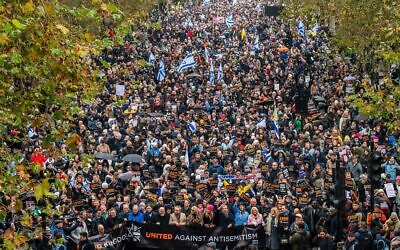
Today, humanity stands again at a crossroads. Antisemitism is at higher levels than any time since the war, a problem for Jews to be sure but also an indicator of ailing societies. The liberal democratic order is under strain. We see leaders who behave like tyrants. We see hateful propaganda amplified by new technology. Jews vilified. Minorities scapegoated. Truth bent into tribal loyalty. Cruelty rebranded as strength and democratic institutions treated as obstacles, not safeguards. And we see something else: people exhausted, struggling and feeling ignored being offered hatred and envy as consolation. “Your problems aren’t complicated. It’s their fault.”
What does “not standing by” mean, in a society like ours? Firstly, it means noticing — refusing the comfort of unseeing. Evil does not begin with gas chambers but with words, categories, jokes, exclusions. With the slow dehumanisation of a neighbour until cruelty feels permissible.
Secondly it means speaking. Challenging the lie in the meeting, the slur at the dinner table, the conspiracy online.
Thirdly it means acting. Supporting institutions that protect the vulnerable: the rule of law, an independent judiciary and a free press and insisting that your workplace, union or party doesn’t normalise hatred.
In memory of those who were murdered, and in honour of those who resisted we should, each of us, make a simple commitment – one that is within reach of every decent person: to stand up, not stand by; to be counted, not absent; and to act, not avert our eyes. And to hold fast – stubbornly, publicly, and with hope – to the idea that a values-based society is not a luxury. It is the only kind of society in which human beings can truly be safe.

Keep community journalism free.
Jewish News is free for everyone. No paywall. No barriers. Just trusted journalism for anyone who wants to stay connected to Jewish life in Britain.
If you value that, please support us.
From as little as £5 a month, you can help keep our journalism free and accessible to all.
Every day, we report on the issues that matter to our community. We celebrate achievements, support charities, challenge antisemitism and ensure Jewish voices are heard more widely.
From as little as £5 a month, you can help us continue to:
- Report on the stories shaping Jewish life in the UK and beyond
- Bring our community together through shared stories, events and campaigns
- Celebrate the people, culture and moments that define our community
- Support organisations doing vital work across Jewish Britain
You can make a one-off donation or become a regular supporter. Every contribution helps keep our journalism free, independent and accessible to all.
If everyone who values Jewish News gave a small amount, it would make a real difference to our future.