Prefer Jewish News on Google
Who will be the modern day Righteous Among the Nations?
As antisemitic violence rises, the ancient idea of the Righteous Among the Nations feels urgently relevant once more
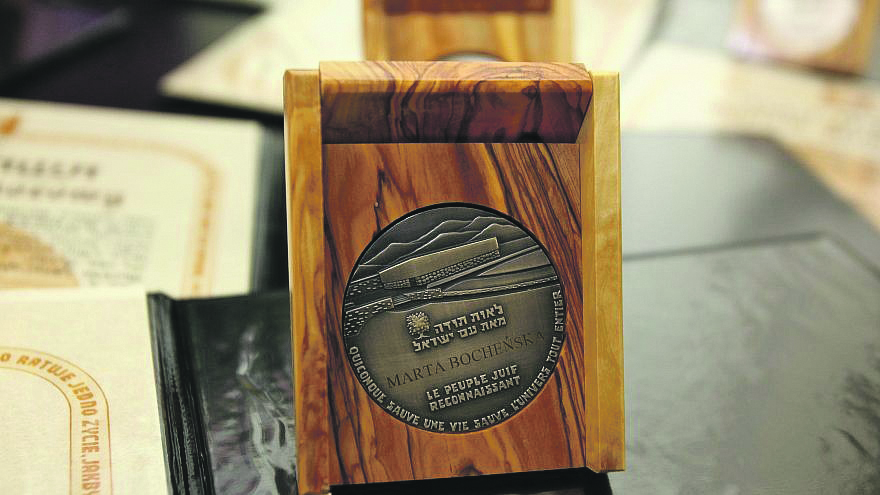
Sinking into the oversized cinema seat for a preview screening of a documentary about the Righteous Among the Nations last week, I couldn’t know just how soon these heroes – non-Jews who risked their lives to save Jews from Nazis during the Holocaust – would become prescient once more.
I learnt that the term ‘Righteous Among the Nations’ goes back to the Talmud, recognising Hasidei Umot HaOlam: non-Jews who act with justice and compassion toward Jews, often at personal risk.
After the Holocaust, when Israel sought language to honour those who hid, rescued, or defended Jews at great personal cost, it reached back to an ancient Talmudic category rather than inventing a new one. Jewish memory has always known how to recognise light when it appears in human form.
As the news of Sunday’s devastating antisemitic terror attack – again on a religious holiday – filtered through, I thought back to that documentary. Ahmed al-Ahmed, a modern stranger of conscience, risked his own life to preserve those of others. His bravery saved countless lives; he stepped into a moral lineage that Judaism has honoured since its earliest texts.
Chanukah is often described as a festival of light, but it’s also a festival of moral persistence. The light that is kindled does not banish darkness all at once. It flickers. It is fragile. And yet it is lit anyway. Even a small flame matters, especially when the surrounding world feels hostile or afraid. That light is shared, not diminished, when it is protected by many hands. When someone chooses to defend life in the face of hatred, they become part of that illumination.
Yad Vashem has recognised just over 28,000 Righteous Amongst the Nations in 51 countries. Yad Vashem separately identified 75 Albanian Muslim Righteous of the Nations: Albania stood apart from the rest of Europe during World War II as the continent’s only Muslim-majority nation, which managed to do what others could not. Nearly every Jew within its borders during the period of German control, both native Albanians and those who had fled there as refugees, survived. The Jewish population was larger at the war’s conclusion than it had been before the war began.
Antisemitism is now a global crisis. Deadly attacks against Jews are increasing, with the vanquished “Jewish Question” resurfacing in contemporary society in new forms. Now is the time to ask: who are the non-Jews who will step up to take their place as today’s Righteous of the Nations?
Antisemitic violence aims not only to kill but to isolate, to make Jews feel abandoned, surrounded by indifference, unsure of who will stand with them when it matters. Every act, small or big, matters. This weekend, we’re inviting our Jewish friends and neighbours to light their Chanukah candles in our Muslim household. Not as an act of interfaith politeness, but as a commitment: we will stand together against the darkness, safeguarding Jewish light with our hands, as long as it takes.
- Irfan Zaman is the Founding Trustee of Yad Fellowship, a campus-based charity working with students’ unions and universities to combat antisemitism and anti-Muslim hatred in UK Higher Education.

Keep community journalism free.
Jewish News is free for everyone. No paywall. No barriers. Just trusted journalism for anyone who wants to stay connected to Jewish life in Britain.
If you value that, please support us.
From as little as £5 a month, you can help keep our journalism free and accessible to all.
Every day, we report on the issues that matter to our community. We celebrate achievements, support charities, challenge antisemitism and ensure Jewish voices are heard more widely.
From as little as £5 a month, you can help us continue to:
- Report on the stories shaping Jewish life in the UK and beyond
- Bring our community together through shared stories, events and campaigns
- Celebrate the people, culture and moments that define our community
- Support organisations doing vital work across Jewish Britain
You can make a one-off donation or become a regular supporter. Every contribution helps keep our journalism free, independent and accessible to all.
If everyone who values Jewish News gave a small amount, it would make a real difference to our future.