Prefer Jewish News on Google

Why Entebbe Wouldn’t be Celebrated Today
The world has gone from celebrating the rescue of Jews to questioning whether they should have been rescued at all
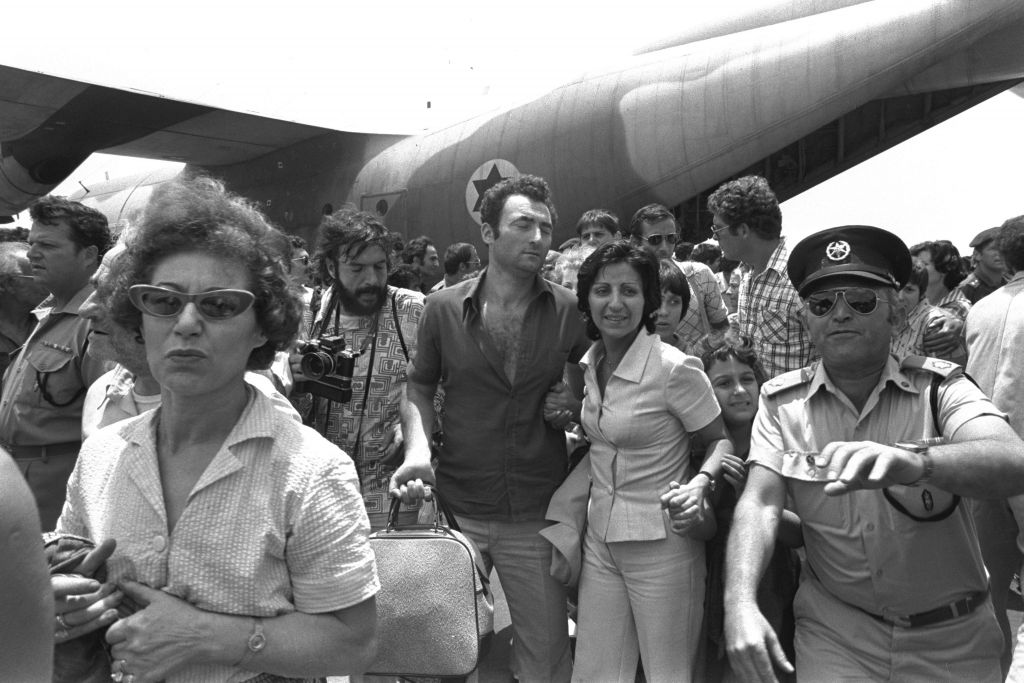
This past weekend marked the fiftieth anniversary of one of the most extraordinary military operations in modern history.
On 3-4 July 1976, Israeli commandos flew more than 2,500 miles into Uganda, stormed Entebbe Airport and rescued more than one hundred hostages in an operation so audacious that it has become the benchmark against which every hostage rescue mission since has been measured.
The anniversary made me wonder something. Not whether Israel could still carry out such an operation, but whether the world would still celebrate it. Would newspapers celebrate Israel’s courage? Would governments praise its resolve? Would commentators still describe it as a triumph of good over evil?
Then I realised we don’t need to wonder, because almost fifty years later, Israel carried out another extraordinary hostage rescue operation. This time it wasn’t Entebbe, it was Nuseirat and in the difference between those two moments lies a story not only about Israel, but about us.
Before going any further, it’s worth acknowledging something that should not need saying.


Israel is not perfect, no democracy is. Like every democratic nation, it has elected governments that have made mistakes, pursued policies worthy of criticism and produced leaders whose words and actions many people. including many Israelis, have opposed. Recent years have provided no shortage of examples.
But that isn’t what this essay is about. If the difference between Entebbe and Nuseirat can simply be explained by disagreement with one Israeli government, then we learn nothing. Democracies change governments, but if our moral principles change every time they do, they were never principles at all.
What changed over those fifty years was something much deeper. It was the moral framework through which the Jewish state came to be judged.
3 July 1976 – Entebbe
The hijacking of Air France Flight 139 began like countless acts of terrorism before it. Armed terrorists seized a civilian aircraft and diverted it to Uganda, where they were welcomed by Idi Amin’s regime.
Once on the ground, something happened that sent a chill through Jewish communities around the world. The passengers were separated, the Jewish and Israeli hostages were kept, most of the others were released.
Barely three decades after the Holocaust, Jews once again found themselves being selected by armed men. Israel refused to accept it.
Against extraordinary odds, its intelligence services located the hostages, planned an operation that military academies still study today and sent commandos thousands of miles into hostile territory to bring them home.
The raid lasted little more than an hour, more than one hundred hostages were rescued, Yonatan Netanyahu was killed leading the assault, several hostages also lost their lives. Ugandan soldiers died, others caught up in the fighting died too. Entebbe was not bloodless, innocent people died.
Yet the defining international reaction was admiration for the rescue itself. That isn’t simply hindsight, it is there in the contemporary record.
President Gerald Ford wrote to Prime Minister Yitzhak Rabin expressing the “great satisfaction” of the American people that Israel had thwarted “a senseless act of terrorism.”
The Guardian described it as “Israel’s tactically brilliant overnight raid on Entebbe Airport… [which] released the remaining 100 hostages held for a week by German and Arab terrorists.”
The language itself is revealing. The rescue came first, the terrorists came second.
Even where legal questions were raised about Uganda’s sovereignty, remarkably few people argued that Israel should simply have left the hostages where they were. The debate was over borders, not over whether Jews should be rescued.
Jewish communities responded in much the same way. There was relief, there was celebration, there was pride, not embarrassment, not apology. Entebbe became a defining expression of modern Zionism.
The Jewish state had crossed continents to save Jewish lives, that wasn’t controversial, it was exactly why so many believed Israel existed.
8 June 2024 – Nuseirat
Nearly half a century later, history presented Israel with a hauntingly familiar challenge.
On 7 October 2023, Hamas crossed into Israel, murdered around 1,200 people and kidnapped 251 others. The deadliest day for Jews since the Holocaust.
Months later, Israeli intelligence located four hostages alive in Nuseirat. Noa Argamani, Almog Meir Jan, Andrey Kozlov and Shlomi Ziv.
Like Entebbe, the rescue demanded extraordinary intelligence, breath-taking courage and meticulous planning. Like Entebbe, Israeli forces knowingly entered an operation in which innocent civilians might tragically lose their lives. Like Entebbe, innocent civilians did lose their lives. Yet the defining conversation afterwards was profoundly different and again, the contemporary record illustrates the change.
The Guardian led its coverage not with the rescue of four hostages after 245 days in captivity, but with: “Israeli attacks in central Gaza killed scores of Palestinians, many of them civilians, amid a special forces operation to free four hostages…”
Josep Borrell, the European Union’s High Representative for Foreign Affairs, responded by declaring, “The news from Gaza of another massacre of civilians is terrible. We condemn it in the strongest terms.”
On the BBC, one presenter asked why the IDF had not warned civilians before launching what was, by its very nature, a covert hostage rescue operation.
On CNN, one commentator described it as “one of the bloodiest Israeli assaults” of the war.
In 1976, the rescue was the story.
In 2024, the rescue became the context for a different story.
That does not mean concern for innocent Palestinian civilians was misplaced; every civilian death is a tragedy. It does, however, demonstrate how the moral centre of gravity had shifted.
In 1976, the dominant question was how Israel had managed to rescue the hostages. By 2024, for many, the dominant question had become whether Israel should have attempted the rescue at all.
Of course Israel made the decision to act, democracies own their decisions, but owning a decision is not the same as owning the moral dilemma. That dilemma was created by terrorists.
Remove the hijacking and there is no Entebbe, remove the kidnappings and there is no Nuseirat, remove the terrorists and there are no rescue missions.
The Terrorists Changed Their Name, Not Their Goal
There is another continuity that is too often overlooked, hidden to those who don’t want to see it, oblivious to those who refuse to. The hostage-takers changed their name, but little else.
In 1976 they belonged to the Popular Front for the Liberation of Palestine and their allies, in 2024 they called themselves Hamas. One wrapped itself in the language of Marxist revolution, the other in the language of Islamist jihad. One hijacked an aircraft, the other crossed an international border, massacred civilians and dragged babies, children, women and the elderly into Gaza.
The methods evolved, the branding changed, the objective did not. The destruction of Israel, the murder of Jews, the denial of Jewish sovereignty.
By 2024, Hamas was not simply a terrorist organisation. It had governed Gaza for almost two decades after Israel’s withdrawal in 2005 and its electoral victory the following year. Statehood did not moderate its ambitions, power did not soften its ideology.
7 October was not an aberration, but the logical expression of an ideology that had always regarded Jewish life as expendable.
Successive Israeli governments have disagreed about almost everything imaginable: Territory, settlements, peace negotiations, religion, the courts, the economy, the conduct of war. Yet across governments of the Left, the Centre and the Right, one instinct has remained remarkably constant.
When Jews are taken hostage, Israel will come for them.
That instinct predates Benjamin Netanyahu, it predates Yitzhak Rabin, it predates Menachem Begin. It is woven into the very reason the State of Israel exists.
What Changed?
In 1976, Israel was admired because it refused to abandon Jews.
In 2024, it was condemned by many because it refused to abandon them.
Almost everything that follows flows from those two sentences.
The change wasn’t simply political, it was cultural, philosophical, it was even Jewish. When Entebbe succeeded, Jewish communities around the world celebrated openly. There was no expectation that Jews should first apologise for Israel. No expectation that they should balance their relief with an explanation of why they understood the grievances of the hijackers. No expectation that rescuing Jewish hostages required a moral disclaimer.
The overwhelming emotion was simple; they’re home.
Half a century later, many Jews experienced something very different. Support for Israel’s rescue of its own hostages increasingly came with an expectation of qualification. Before expressing relief, many felt compelled to acknowledge Israel’s faults. Before celebrating the return of hostages, many felt pressure to apologise for the state that had rescued them.
Read President Ford’s words after Entebbe and the overwhelming emotion is satisfaction that innocent people had been saved. Read many official reactions after Nuseirat and a different pattern emerges.
“We welcome the release of the hostages, but…”
That single word, but, tells a story.
In 1976, relief was often the beginning and the end of the sentence. By 2024, relief increasingly required qualification.
Whether one believes that qualification was justified or not is almost beside the point. Its very existence tells us something about how dramatically the moral and political landscape had changed.
Zionism, once understood by many as the national liberation movement of the Jewish people, had become, in much of Western discourse, synonymous with colonialism, racism and oppression. The Jewish homeland became the Jewish oppressor, while Jewish self-defence became uniquely suspect.
After the deadliest massacre of Jews since the Holocaust, many Jews found themselves accused not because they celebrated murder, but because they celebrated rescue.
Think about that for a moment.
More Jews were murdered on 7 October than on any day since the Holocaust, hundreds more were kidnapped, families watched parents, children and grandparents dragged into Gaza to face torture, sexual violence and captivity.
Yet the expectation placed upon Israel by much of the international community was unlike that demanded of almost any other democracy. If rescuing your own citizens risks too many civilian casualties because terrorists have embedded themselves among civilians, then perhaps your citizens should remain where they are.
That expectation would have been unimaginable in 1976.
The Jewish state was created because Jewish history had demonstrated, catastrophically, what happens when Jews lack both sovereignty and the means to defend themselves. After the largest massacre of Jews since the Holocaust, many seemed to believe that lesson should be forgotten.
Entebbe taught the world that Jews would never again be abandoned. Nuseirat revealed how many people now believed they should have been.
This is not an argument against criticising Israel. Criticise governments, criticise military strategy, criticise political leaders. Every democracy should expect that scrutiny. It is, however, an argument against changing the moral principles by which democracies are judged.
Because if we conclude that the rescue of hostages becomes illegitimate simply because terrorists have made the rescue sufficiently costly, then we hand every terrorist organisation in the world a blueprint.
Hide behind civilians, kidnap innocents, raise the price of rescue. Wait for democracies to decide that saving their own people is no longer worth the condemnation.
Fifty years ago, the world looked at Entebbe and saw a democracy refusing to abandon its citizens. Almost fifty years later, much of the world looked at Nuseirat and asked whether those citizens should have been rescued at all.
Fifty years ago, Israel was admired because it refused to abandon Jews. Today, it is too often condemned for refusing to abandon them.
The operation changed remarkably little. It was the world that changed.

Keep community journalism free.
Jewish News is free for everyone. No paywall. No barriers. Just trusted journalism for anyone who wants to stay connected to Jewish life in Britain.
If you value that, please support us.
From as little as £5 a month, you can help keep our journalism free and accessible to all.
Every day, we report on the issues that matter to our community. We celebrate achievements, support charities, challenge antisemitism and ensure Jewish voices are heard more widely.
From as little as £5 a month, you can help us continue to:
- Report on the stories shaping Jewish life in the UK and beyond
- Bring our community together through shared stories, events and campaigns
- Celebrate the people, culture and moments that define our community
- Support organisations doing vital work across Jewish Britain
You can make a one-off donation or become a regular supporter. Every contribution helps keep our journalism free, independent and accessible to all.
If everyone who values Jewish News gave a small amount, it would make a real difference to our future.