
 Prefer Jewish News on Google
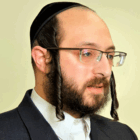
Why I, a Satmar chassid, protested outside the Israeli embassy today
The debate is not only about equality or army service, but about deeper questions of identity and the role of the State

I am standing with those demonstrating outside the Israeli Embassy in London, not as a political statement but from conscience and Torah conviction. The debate about conscripting yeshiva students has become one of the most charged in Jewish life today, touching deep emotional and religious chords.
Raised in the Satmar tradition and having lived and studied in Israel, my outlook is shaped by my Torah education and personal experience. I speak for myself, even as the protest brings together a broad cross section of Charedi communities who stand united with its core message.
Many approach the draft question through the language of civic duty. Contributing to society is a basic human obligation. Five years ago I volunteered to serve on the Magistracy, offering my time to support the wider community in which my family and I live. When the Charedi community settled on Canvey Island nearly a decade ago, we entered local life in this spirit, with many giving their time to healthcare, charity and voluntary services. For us this sense of responsibility has always felt natural.
So long as the discussion is about equality and social contribution, there is plenty to debate. I hear arguments about how the Charedi community contributes in welfare and healthcare far beyond its size, and also that the average Charedi child receives far less state funding than secular peers, even in communities that choose to accept state funding, and many do not. These debates matter even if they are seldom productive.
The real tension begins when civic responsibility becomes intertwined with political statehood. Two weeks ago I was in Israel, and friends and family spoke openly about expectations around “shivyon ba’netel” that now go far beyond the plain meaning of equality in carrying the burden. The message many hear is about being absorbed into the State and its institutions. For us the issue is not equality or army service or levels of observance. It is about identity and the nature of the State itself.
Our protest is not only about detained yeshiva students or about whatever agreements may be discussed by political machers. It speaks to something deeper. A sense that we are being forced into adopting the identity and institutions of the State, something that has never been part of authentic Torah true Jewish life.
And yet our dissent does not come from distance. It comes from a heart that has been bruised again and again. When the horrors of 7 October unfolded did we not cry? When the hostages were dragged into Gaza did we not weep? When soldiers fell and families mourned every Jewish heart broke. Our pain is for every Jew.
Anyone who knows the teachings of the Satmar Rebbe Reb Yoilish will recognise the source of this kind of emotion within our community. His weeping was sincere and uncontrollable. He cried for every Jew lost physically or spiritually, and his views were rooted in deep love for Hashem, His people, His Torah and His land. That spirit helps explain why so many in our community show an instinctive readiness to step forward in moments of need, and why the Charedi community in general is known for its chesed, practical and non-discriminatory acts of kindness and, yes, a strong sense of social responsibility extended to anyone who requires support. It is not in spite of these beliefs but because of them.
I recognise that many British Jews see this issue differently and I respect that. All I hope is that this perspective is understood for what it is. A sincere Torah view shaped by love for the Jewish people and for the Land of Israel.
My protest today is not political. It comes from values not alliances. Satmar communities have always been careful about demonstrations, especially avoiding them during wartime when they can be misused by those hostile to us. Our message to the Israeli leadership is simple. Social responsibility, yes. Losing our identity to the State, no.
Joel Friedman JP is chair of the Canvey Jewish Trust and a community leader on Canvey Island. He previously served as Director of Public Affairs at the Interlink Foundation and Pinter Trust. He writes in a personal capacity.

Keep community journalism free.
Jewish News is free for everyone. No paywall. No barriers. Just trusted journalism for anyone who wants to stay connected to Jewish life in Britain.
If you value that, please support us.
From as little as £5 a month, you can help keep our journalism free and accessible to all.
Every day, we report on the issues that matter to our community. We celebrate achievements, support charities, challenge antisemitism and ensure Jewish voices are heard more widely.
From as little as £5 a month, you can help us continue to:
- Report on the stories shaping Jewish life in the UK and beyond
- Bring our community together through shared stories, events and campaigns
- Celebrate the people, culture and moments that define our community
- Support organisations doing vital work across Jewish Britain
You can make a one-off donation or become a regular supporter. Every contribution helps keep our journalism free, independent and accessible to all.
If everyone who values Jewish News gave a small amount, it would make a real difference to our future.





















