Prefer Jewish News on Google
Why listening across divides is our strongest weapon against prejudice
Anne Frank Trust deputy chief executive Judy Silkoff reveals how difficult conversations are helping young people challenge antisemitism and build understanding
Way back in the mid-noughties I was an early adopter of Facebook. Procrastinating at my desk, little gave me more pleasure than reconnecting with long-lost school and seminary friends, inspecting photos of their children and reminiscing about the good old days. It all seems so sweet and innocent now. Spend any time scrolling on social media today, and the algorithm is likely to serve you up a main course of vile antisemitism, with side helpings of many other forms of prejudice and discrimination. Everywhere you turn, you’ll witness strident arguments in a world where nuance has no place and too many people defend their position as if it were a football team, regardless of the subject.
Unfortunately, with the CST recording 3,700 antisemitic incidents in the UK last year, the second-highest total on record, and religious hate crimes in England and Wales at their highest level ever, we know that what happens online rarely stays online. But it doesn’t have to be this way, and away from the algorithm there can be a different story to tell.
At the Anne Frank Trust, we have seen that it is possible to effect real change. Last academic year we reached over 137,000 young people in schools across the UK, and independent evaluation by the University of Kent found that 90.2 percent of those taking part in our core programmes improved their positive attitudes towards others. The biggest shift was in attitudes towards Jewish people, with 64.6 percent becoming more positive, while 55.9 percent of non-Muslim young people became more positive towards Muslims. Results like these don’t happen by chance. Our anti-prejudice model, rooted in Anne Frank’s story and the Holocaust, empowers young people to recognise and challenge antisemitism and all forms of prejudice. Our frontline educators turn the classrooms they work in into safe and inclusive spaces for respectful dialogue, where young people can listen, question and express their views in ways that build understanding and mutual respect. But we can’t ask young people to have difficult conversations with openness and respect if we aren’t prepared to do the same ourselves. As a team, we need to keep flexing those muscles too.
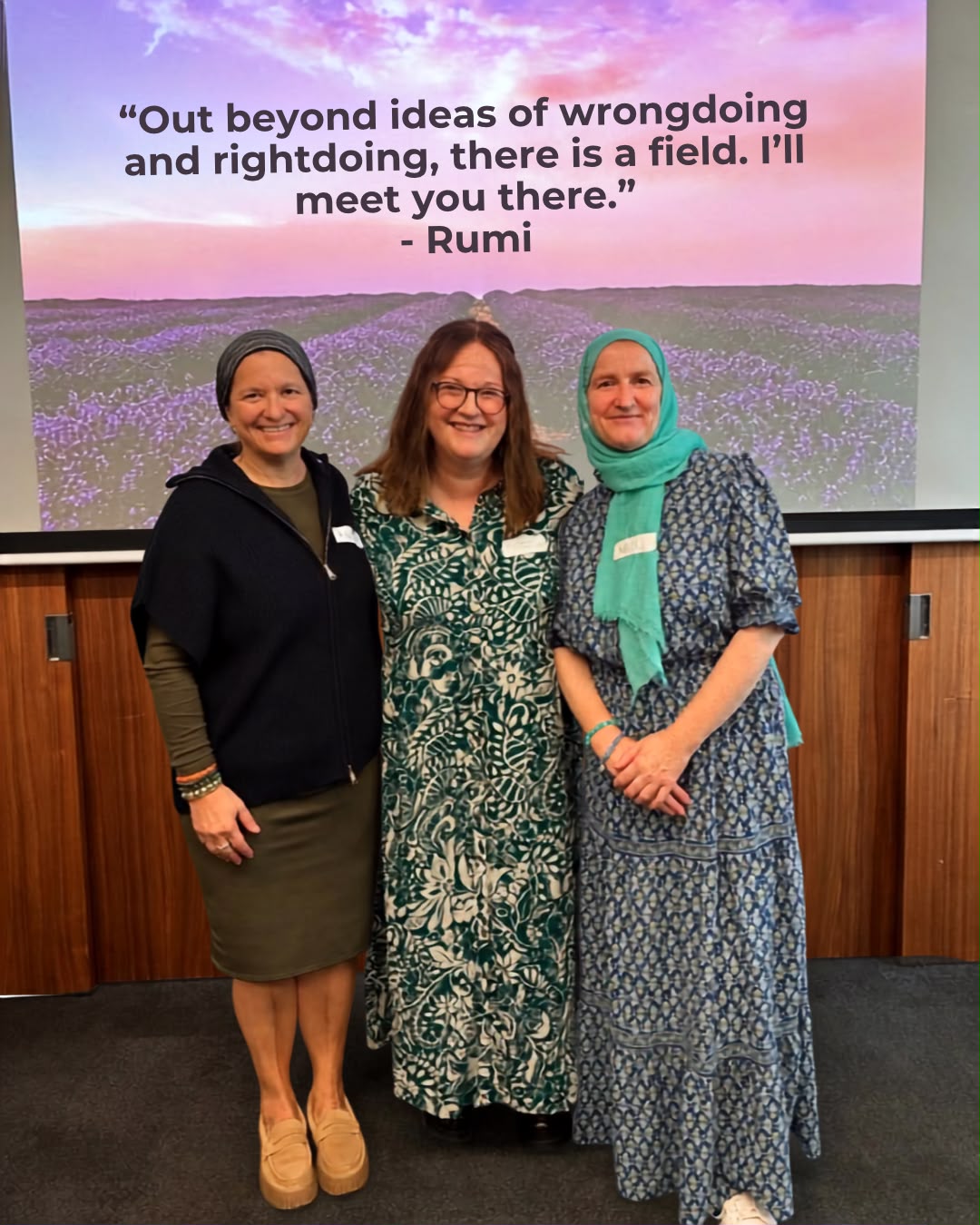
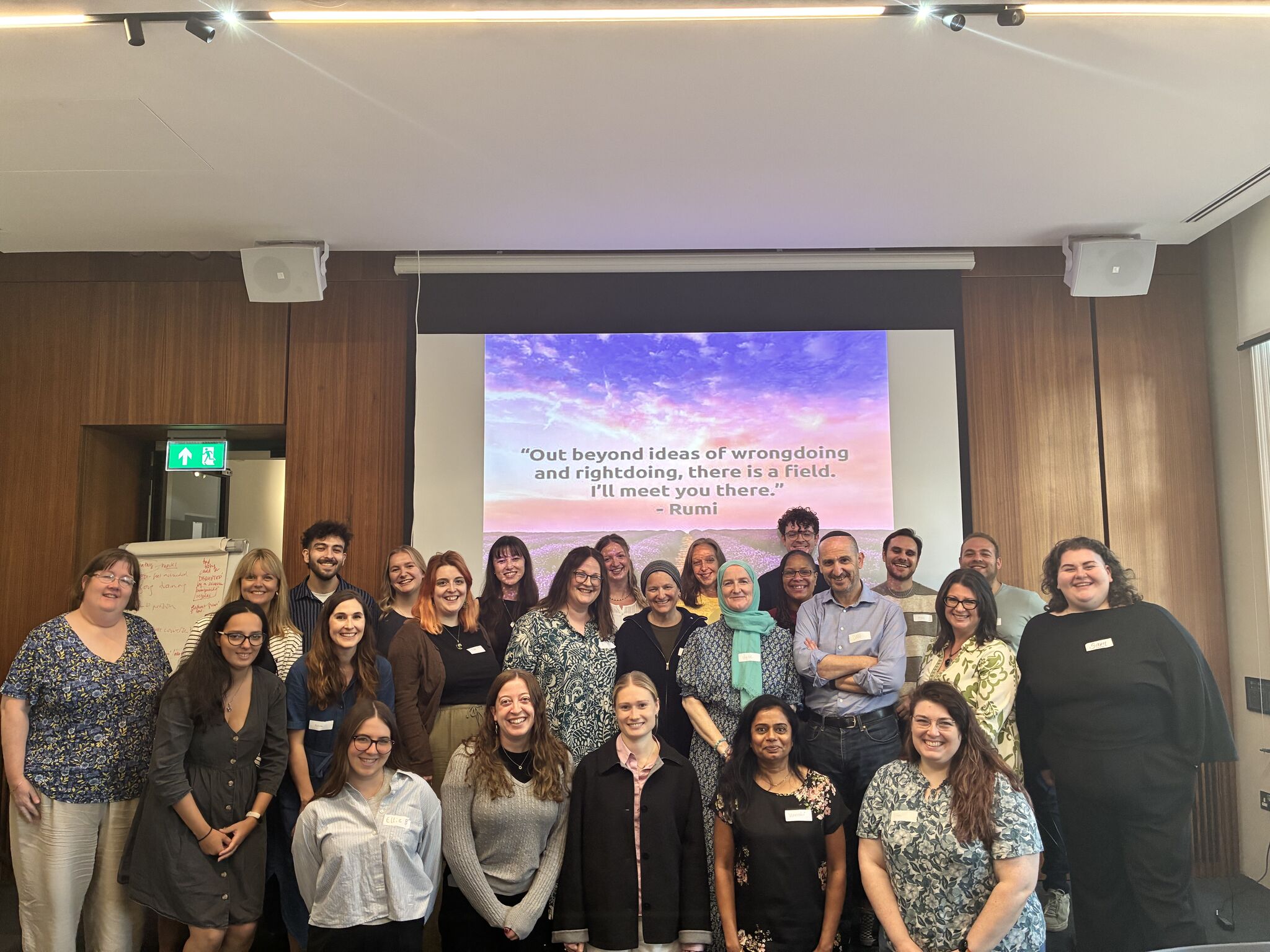
That’s why, at our recent staff away day at the Imperial War Museum, we invited two dear friends of mine, Dr Lindsay Simmonds and Julie Siddiqi MBE, to facilitate a session on community building and having difficult conversations. Julie and Lindsay have spent years building trusting relationships and open conversations between their communities, and their credentials in this kind of work would take me well beyond my word count to outline in full. But probably the most compelling thing about them as educators is the deep and genuine friendship they share. They are two women, one Jewish and one Muslim, whose opinions may, and indeed do, differ in many areas, but whose respect for each other and shared values allow them to explore complex topics with incredible sensitivity and insight and to teach others to do the same. The headlines love to shout about division, but Julie and Lindsay provide the living proof that connection is possible. Indeed, in many ways, their friendship mirrors the shift we see in the classroom and reflects what research has long shown: building relationships across difference is one of the most effective tools we have against prejudice and hatred.
With Julie and Lindsay to guide us, our team was able to spend time in small groups discussing some of the most sensitive issues touching our work. We also considered how we might embed the ability to have these difficult conversations even further into our organisational culture, so that modelling them in the classroom becomes second nature to our educators. The conversations reinforced the message that the ‘you’re either with us or against us’ mindset, forcing people to ‘pick a side’, is one of the biggest barriers to the understanding and empathy that are the first steps towards our vision of a more just and inclusive society.
As Lindsay noted, the late Rabbi Jonathan Sacks once said, “It is only when we can enter the mind of the other that we can save ourselves from inhumanity.” Today’s public discourse, sadly, pulls us in the opposite direction, rewarding certainty over curiosity and treating every issue as a match to be won. But in classrooms across the country, our educators are helping young people learn to recognise and challenge prejudice and to hear those who see the world differently from them. Twenty years on from those early days of Facebook, I’ve learnt that the connections that really create change are made not by scrolling, but by sitting across the table from someone different from you and being brave enough to listen.

Keep community journalism free.
Jewish News is free for everyone. No paywall. No barriers. Just trusted journalism for anyone who wants to stay connected to Jewish life in Britain.
If you value that, please support us.
From as little as £5 a month, you can help keep our journalism free and accessible to all.
Every day, we report on the issues that matter to our community. We celebrate achievements, support charities, challenge antisemitism and ensure Jewish voices are heard more widely.
From as little as £5 a month, you can help us continue to:
- Report on the stories shaping Jewish life in the UK and beyond
- Bring our community together through shared stories, events and campaigns
- Celebrate the people, culture and moments that define our community
- Support organisations doing vital work across Jewish Britain
You can make a one-off donation or become a regular supporter. Every contribution helps keep our journalism free, independent and accessible to all.
If everyone who values Jewish News gave a small amount, it would make a real difference to our future.