Prefer Jewish News on Google
Why Rev Jesse Jackson loved a Bar Mitzvah
The daughter of the late civil rights leader reveals how actress Mayim Bialik led her to Judaism – and why her father responded with unwavering support
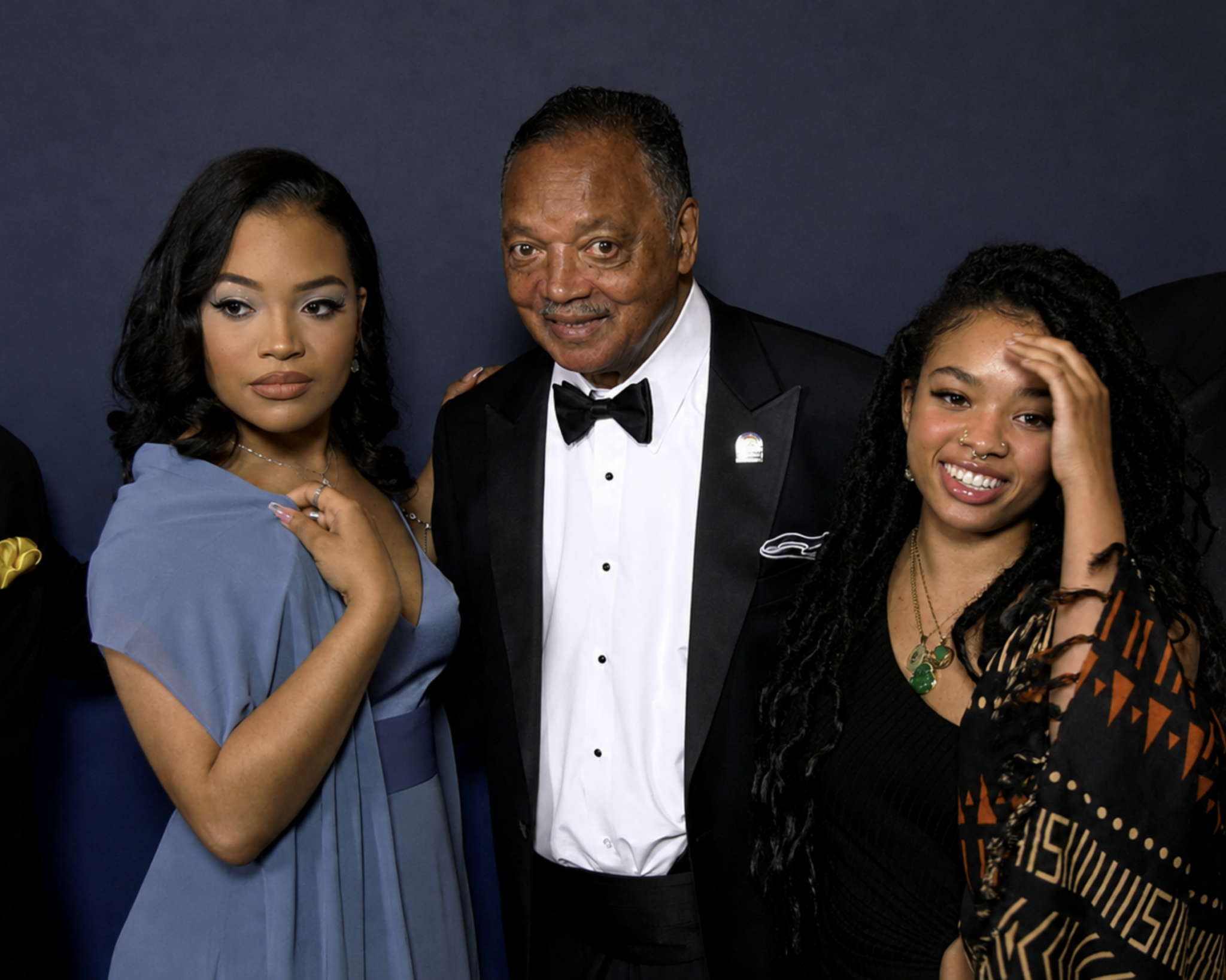
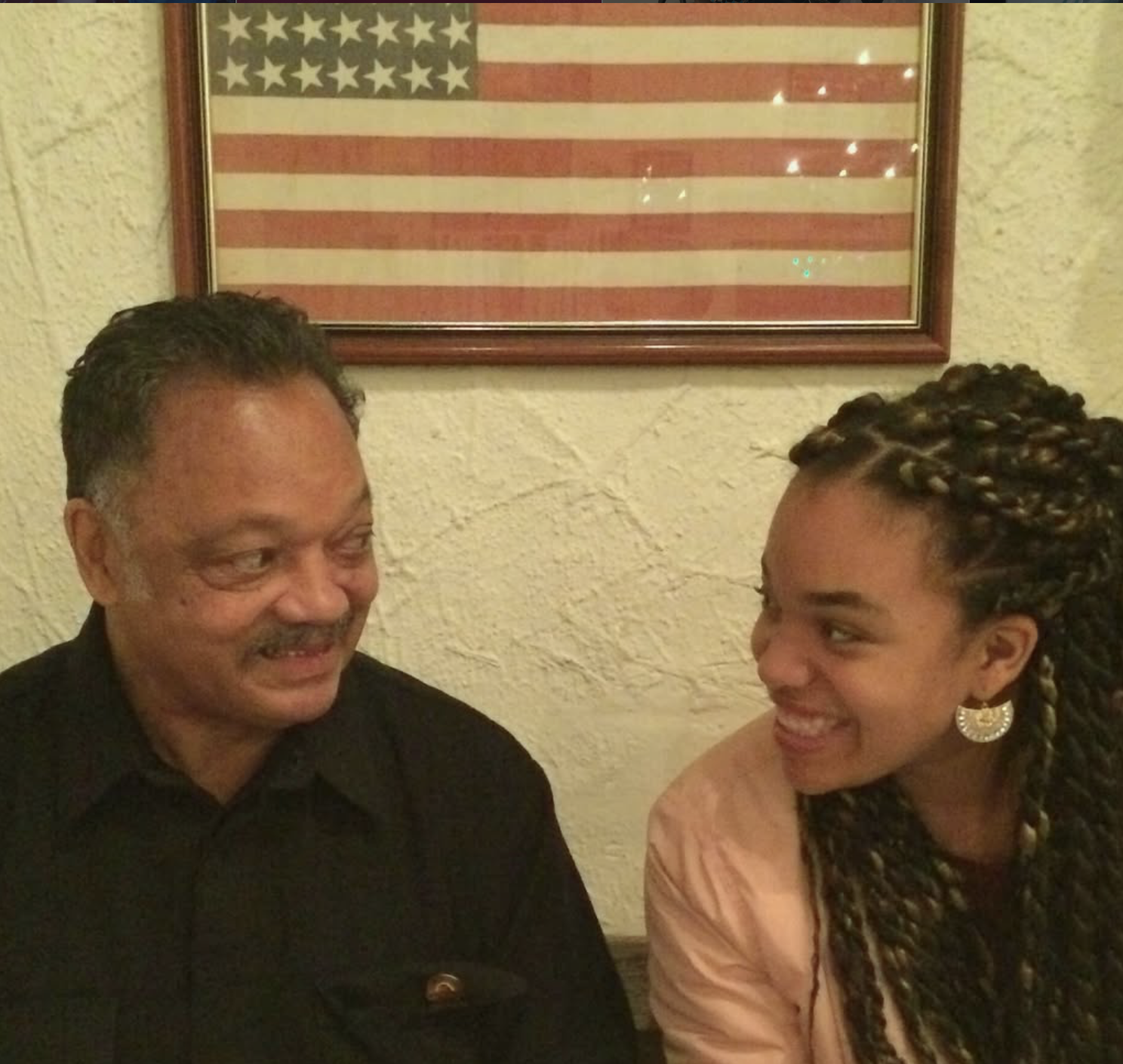
It will surprise some to learn that the Rev Jesse Jackson attended services at several synagogues and temples throughout his life. The Rev – one of America’s greatest civil rights leaders -also liked Sunkist kosher sweets which are thrown at the end of a bar mitzvah.”Seven sweets later,” his daughter Ashley laughs,“I had to tell him, ‘Dad, that’s enough.'”
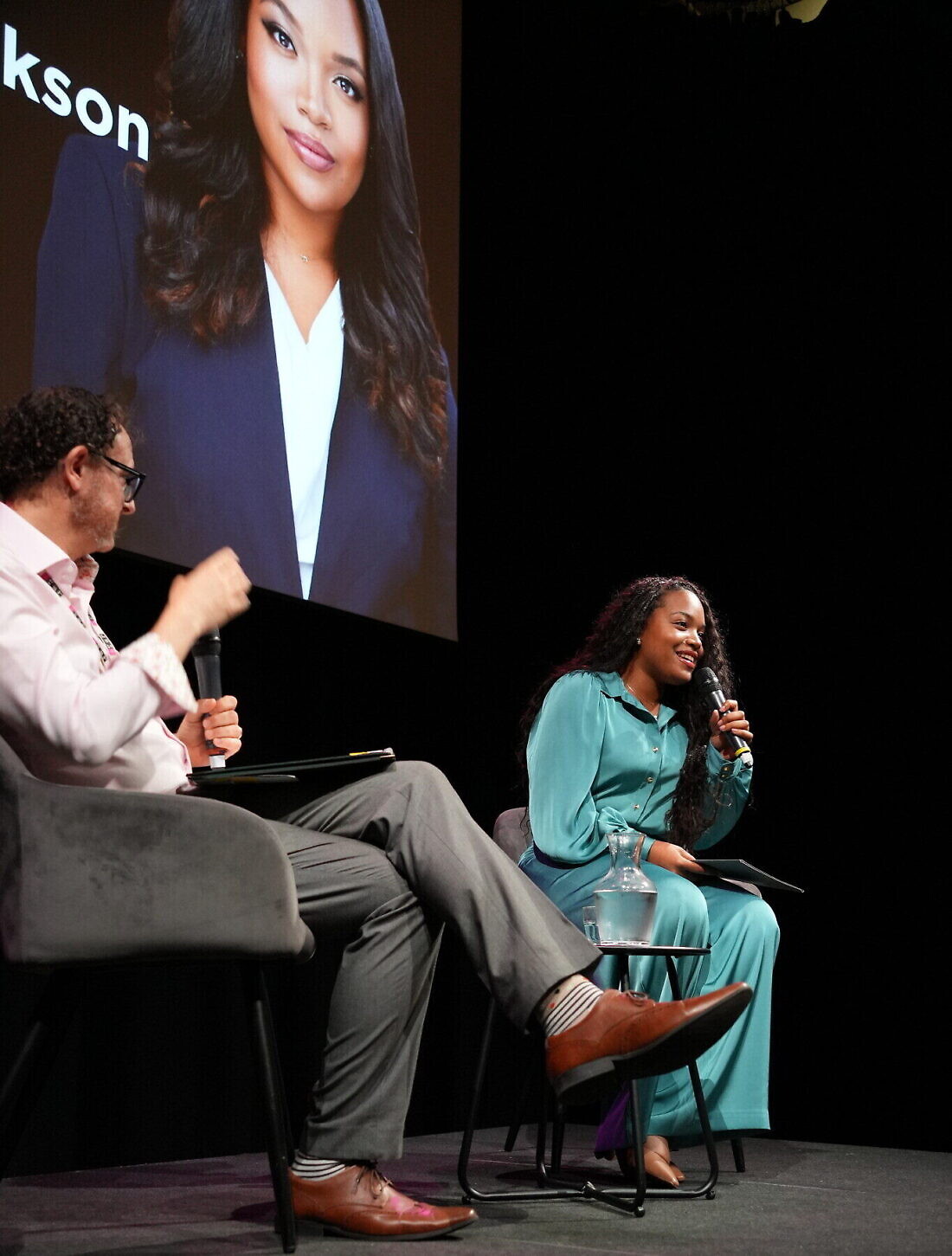
It is an affectionate memory that carries greater poignancy since Jesse Jackson’s death earlier this year. Speaking to Raymond Simonson, chief executive of JW3, during her first visit to Britain, Jackson reflected on reciting Kaddish for her father and finding comfort in the Los Angeles congregation she now calls home.
“Long before I completed my conversion, I had already begun to mourn Jewishly,” she said. “Grief is not meant to remain solitary. It is meant to be carried, witnessed and shared.”
It was a remarkable thing to hear from the daughter of one of America’s most celebrated Baptist ministers, and Simonson gently turned to the question many in the audience were wondering.
How had she arrived here? What made her decide to become Jewish? The answer was unexpected.
“Like so many people during the pandemic, I found myself binge-watching The Big Bang Theory. Then I started looking up the cast and discovered Mayim Bialik’s YouTube channel. She was talking about her family, her life, how she celebrated Jewish holidays and what being Jewish meant to her. Something about it felt deeply resonant. “So, I started reading more. I was studying quietly on my own and eventually I thought I should probably take a chance on a synagogue. The first service changed everything. I fell in love,” she said. “And I’ve never left.”

Asked by Simonson about the rabbis who had become important to her, Jackson mentioned “My Rabbi, Sharon Brous, my queen – I love her,” referring to the founding rabbi of IKAR, one of the best-known progressive Jewish congregations in the United States. She also praised Rabbi Deborah Silver – whom Raymond Simonson noted many in the audience knew from her time in the UK. “It’s kind of one of those rabbi shuls where everybody who’s not doing their own service comes there,” noted Jackson.
In response to the question about the reaction of committed Christian family and friends to her conversion, Jackson said the hostility she might have expected never came.
“It was very important to me to let my conversion process be ‘my process’, and not let it be interrupted – whether with really great support or really, really poor support, or lack thereof.
My parents knew, my siblings knew. I made sure the people who needed to know knew. But everybody else, I just let it emerge when it emerged. There were people I was calling right before the Washington Post article came out saying, ‘Oh, by the way… sorry I didn’t tell you.'”
She paused before adding: “I’ve yet to have anybody in my personal life treat me with anything but kindness and love. I’m so grateful to have such a great community at home that gave me the privacy and safety I wanted, then supported me when I was ready.”
While Judaism has transformed Jackson personally, it has also become inseparable from her work.PUSH The Next Generation is the non-profit she founded, and its Hope Mission – she told the audience – is bringing Black and Jewish communities together through education and shared experiences, “by encouraging people to confront prejudice by getting to know one another.”
She spoke about creating opportunities for churches and synagogues to meet, tackling both antisemitism and racism.
“I belong to two traditions whose stories are profoundly different, and which I love beyond measure,” she said. “I would never collapse them into one another, but I do believe that our destinies are intertwined. Both know what it is to carry memory across generations. Both know what it is to endure persecution without surrendering joy, or learning, or family, or faith, or hope.”
Then she added “I don’t think our wounds were ever meant to become walls, I think they were always meant to become bridges.”
Before arriving in London Jackson had spent time in Holland and France to have conversations with Jewish communities as part of the first Hope Mission named in honour of her father.
In Paris she explored the legacy of the transatlantic slave trade and colonialism, confronting what she described as “the bureaucratic machinery by which the unimaginable was made to appear merely administrative. I was shaken by how ordinary systems had enabled extraordinary cruelty.”
Amsterdam proved even more emotional where she visited the Anne Frank House, and secret annex where Anne wrote her diary.
“I found myself wondering how one continues writing when the future remains entirely uncertain,” said Jackson. “It was not until I stood in Anne’s room that I heard those words again with a force I could not ignore – Keep hope alive.”
Anne Frank, she realised, had changed her understanding of hope.
“We have a tendency to speak of it as though it were optimism… But Anne’s diary survived precisely because hope is something deeper than certainty.”
As the evening drew to a close, Simonson invited questions – also thoughts and statements -from the eager audience who responded with everything from antisemitism and identity to solidarity and the future of Black-Jewish relations. But Simonson’s final question that brought the conversation full circle.
“You grew up in one of America’s best-known civil rights families,” he said. “What did that teach you? Not about politics, but about people?”
Jackson admitted she had been “really, really, really scared” to publish her Washington Post essay about becoming Jewish, fearing backlash and even for her safety.
“My father, my parents always taught us to bet on people. I would say about 80 per cent of the response has been nothing but positive. I needed to bet on people because in a world that we presume is really, really dark, there are still so many lights.
“I think that’s a central message of my parents… that human beings are capable of doing divine, extraordinary things if we give them the chance.”

Keep community journalism free.
Jewish News is free for everyone. No paywall. No barriers. Just trusted journalism for anyone who wants to stay connected to Jewish life in Britain.
If you value that, please support us.
From as little as £5 a month, you can help keep our journalism free and accessible to all.
Every day, we report on the issues that matter to our community. We celebrate achievements, support charities, challenge antisemitism and ensure Jewish voices are heard more widely.
From as little as £5 a month, you can help us continue to:
- Report on the stories shaping Jewish life in the UK and beyond
- Bring our community together through shared stories, events and campaigns
- Celebrate the people, culture and moments that define our community
- Support organisations doing vital work across Jewish Britain
You can make a one-off donation or become a regular supporter. Every contribution helps keep our journalism free, independent and accessible to all.
If everyone who values Jewish News gave a small amount, it would make a real difference to our future.