Prefer Jewish News on Google
Why the Metropolitan Police need to remember how to use Section 11
Currently, an honest organiser who files paperwork has conditions attached to them and their name on the file. The anonymous one walks away. The law, as enforced, punishes compliance
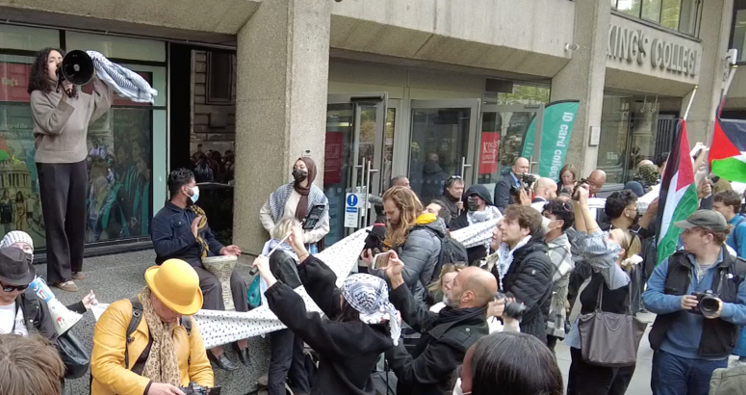
This week the Metropolitan Police made a discovery that will surprise nobody who has stood on the Strand watching a march that nobody organised. Responding to calls for a student march to be banned, the force acknowledged that under Section 11 of the Public Order Act 1986, organisers must give police a name and address. It then admitted that, despite “extensive efforts”, it could not find a single person willing to say they were in charge.
In recent days the Met has been repeatedly asked why they have chosen not to use powers they don’t have to ban a protest on the anniversary of the horrific massacres and pogrom of 7 October that would see a procession go to four universities, where they would conduct rallies outside. Last year protesters blocked the entrance to university buildings with a banner covering doorways, and whilst staff tried to maintain access a suspended student called for “Intifada”, whilst others glorified resistance.
But police cannot ban a protest. In London the Commissioner can only ask the Home Secretary to do so, and only where conditions cannot contain the risk of serious disorder. Failing to fill in a form does not turn a march into a riot. Those demanding a ban were asking for the wrong thing. The more interesting part is the offence itself.
Section 11 requires written notice of a public procession at least six clear days in advance, or as soon as reasonably practicable. The notice must give the date, time, route and the name and address of an organiser. Parliament wrote this in so that police can plan: close roads, deploy officers, impose conditions under Section 12 and, in extremis, seek a ban. An organiser who fails to give notice commits an offence. The penalty is a modest fine, but this is the provision the rest of the framework depends on. Without notice there are no planned conditions, only whatever an inspector can improvise on the pavement.
Here is how it works in practice. On 10th April 2026, a procession set off from outside King’s College London, blocked the Strand, moved onto the Embankment and finished outside the Ministry of Defence. Footage circulating online suggests armed officers challenged demonstrators there. I reported the failure to notify. I have had no response.
Such as today going on an impromptu procession through the streets of London, proudly 'shutting London down. Funny how Tabby starts the procession and is at the front of it in much of the video by @theCanaryUK.@metpoliceuk clearly Tabby is organising this procession. Did she… pic.twitter.com/Eyv2BNi0NG
— Gill ‘the Ultracrepidarian’ Levy ???????? ???????? (@fatdafevy) April 10, 2026
A week later, the Palestine Solidarity Campaign held a static rally outside Downing Street. Static assemblies need no advance notice, so PSC was not in breach. Groups in attendance then peeled off and marched, the longest procession ending in Leicester Square. I asked officers whether any of these marches had been notified. They confirmed they had not. When I asked for the failure to be recorded, the senior officer looked at me as though I had asked him to arrest the weather. Reporting it to the police, the matter was simply ignored.
The unnotified planned procession goes past many carriers unchallenged, shouting for the destruction of a nation – an offence in itself. @Metpolice when will you stand up to the challenge of the disruption these demonstrators always cause…To stop the Public Order offences… pic.twitter.com/a92Il7XL14
— Gill ‘the Ultracrepidarian’ Levy ???????? ???????? (@fatdafevy) April 18, 2026
These were not isolated incidents. Unnotified processions became routine through the hunger strike protests and the Christmas disruption in central London.
The explanation is not conspiracy. It is incentives. An officer pulled from neighbourhood duty to police a protest wants to finish and go home. Pursuing Section 11 means statements, identifying an organiser and building a file, all work that nobody measures. If they choose not to their ward’s burglary figures will not suffer and their response times will not slow. The disruption to Londoners, with buses diverted, shops emptied and roads blocked, is a statistical black hole unless an officer chooses to write it down.
The organisers have noticed. In January 2025, Maher Hajaj of Palestinian Pulse appeared on Crispin Flintoff’s show, in an episode titled “We don’t collaborate with the police”. He explained that by not notifying police or naming an organiser, the group avoids enforcement altogether. He claimed more than 50 protests without a single arrest. This is not a loophole stumbled upon. It is a method, advertised.
The result is perverse. The honest organiser who files the paperwork has conditions attached to them and their name on the file. The anonymous one walks away. The law, as enforced, punishes compliance.
The Met has used this power before. In November 2013, it arrested the then University of London Union president, Michael Chessum, under Section 11 after a student protest. So, someone in the force must remember how.
It is welcome that the Met now says publicly that “if we identify the organisers, we can consider offences under Section 11.” Identifying them should not be too hard. Officers should look at who posts the call-out, who holds the megaphone at the front calling people to set off, and who explains on YouTube how they avoid you. The law should be applied without fear or favour, to pro-Palestinian groups and far-right flash marches alike. Otherwise, Section 11 does not regulate protest so much as reward anyone willing to ignore it.
Gill Levy is a retired police officer who served for 20 years in the Met.

Keep community journalism free.
Jewish News is free for everyone. No paywall. No barriers. Just trusted journalism for anyone who wants to stay connected to Jewish life in Britain.
If you value that, please support us.
From as little as £5 a month, you can help keep our journalism free and accessible to all.
Every day, we report on the issues that matter to our community. We celebrate achievements, support charities, challenge antisemitism and ensure Jewish voices are heard more widely.
From as little as £5 a month, you can help us continue to:
- Report on the stories shaping Jewish life in the UK and beyond
- Bring our community together through shared stories, events and campaigns
- Celebrate the people, culture and moments that define our community
- Support organisations doing vital work across Jewish Britain
You can make a one-off donation or become a regular supporter. Every contribution helps keep our journalism free, independent and accessible to all.
If everyone who values Jewish News gave a small amount, it would make a real difference to our future.