Prefer Jewish News on Google
Wiener Holocaust Library unveils ‘Eldercide’ exhibition on fate of older Jews
New show exposes Nazi persecution of elderly Jews, spotlighting resilience, cultural resistance and generational memory
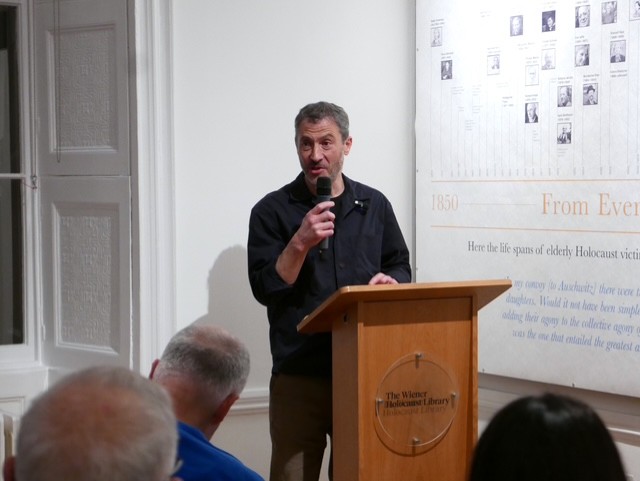
The Wiener Holocaust Library has opened a major new exhibition examining the often-neglected experiences of elderly Jews during the Holocaust, welcoming guests on Wednesday for the launch of Eldercide: Older Jews and the Holocaust. The show runs until 30 April 2026.
Developed with the Holocaust Research Institute at Royal Holloway, the exhibition is the third created under the Holocaust and Genocide Research Partnership. Co-curator and the Library’s Director of Research, Dr Christine Schmidt, told attendees the project represents “the culmination of years of path-breaking research,” describing the stories featured as “heartbreaking, but also quietly hopeful”.
She highlighted how personal objects bridge generations, noting: “We show how cherished family heirlooms bear witness across time and space… even in the face of persecution and loss, care and connection have endured.”
Her co-curator, Professor Dan Stone, said the treatment of elderly Jews “goes to the heart of what Nazism was all about,” arguing the regime targeted “the weakest members of a community” as an assault on the values older people embodied. This, he said, was about erasing “every representative of the Jewish group in Europe.”
Nicola Loftus, Senior Vice President of Jewish Care, described the Library as “a conscience” safeguarding the memories of those who endured “humanity’s darkest hours”.


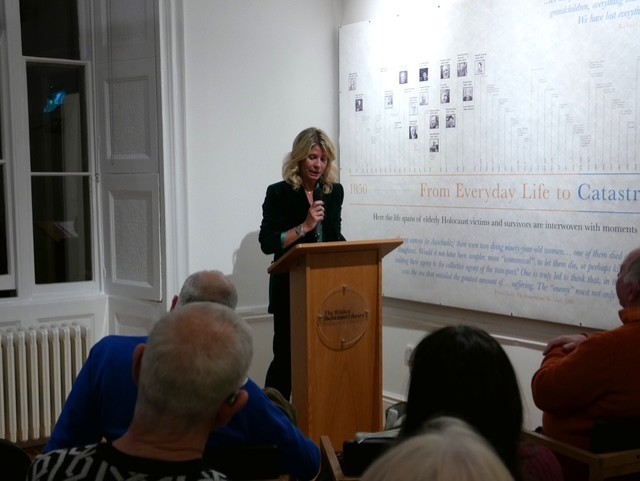
She linked the exhibition’s themes to current events, asking: ‘What does it mean to survive when the world tells you your life no longer has value?” and reflecting on the resilience shown by elderly hostages recently released from Gaza. Their dignity, she said, “reminds us of what it means to cling to life even after unthinkable suffering”.
Loftus also stressed the importance of older adults as keepers of cultural continuity, highlighting the example of Philip Manes, who organised lectures and concerts while imprisoned. “He once asked, what use are we to our children?” she said. “His answer was that meaning comes from giving, even in the darkest of times.”
She urged guests to “carry those stories forward” and to honour “not only how they suffered, but how they lived”.
Eldercide is now open to the public at the Library’s Russell Square site.

Keep community journalism free.
Jewish News is free for everyone. No paywall. No barriers. Just trusted journalism for anyone who wants to stay connected to Jewish life in Britain.
If you value that, please support us.
From as little as £5 a month, you can help keep our journalism free and accessible to all.
Every day, we report on the issues that matter to our community. We celebrate achievements, support charities, challenge antisemitism and ensure Jewish voices are heard more widely.
From as little as £5 a month, you can help us continue to:
- Report on the stories shaping Jewish life in the UK and beyond
- Bring our community together through shared stories, events and campaigns
- Celebrate the people, culture and moments that define our community
- Support organisations doing vital work across Jewish Britain
You can make a one-off donation or become a regular supporter. Every contribution helps keep our journalism free, independent and accessible to all.
If everyone who values Jewish News gave a small amount, it would make a real difference to our future.