
 Prefer Jewish News on Google

Wiener Library launches Britain’s first exhibition on Nazi camp slave labour
Survivor Eva Clarke and writer Jonathan Freedland highlight individual stories from brutal slave labour system
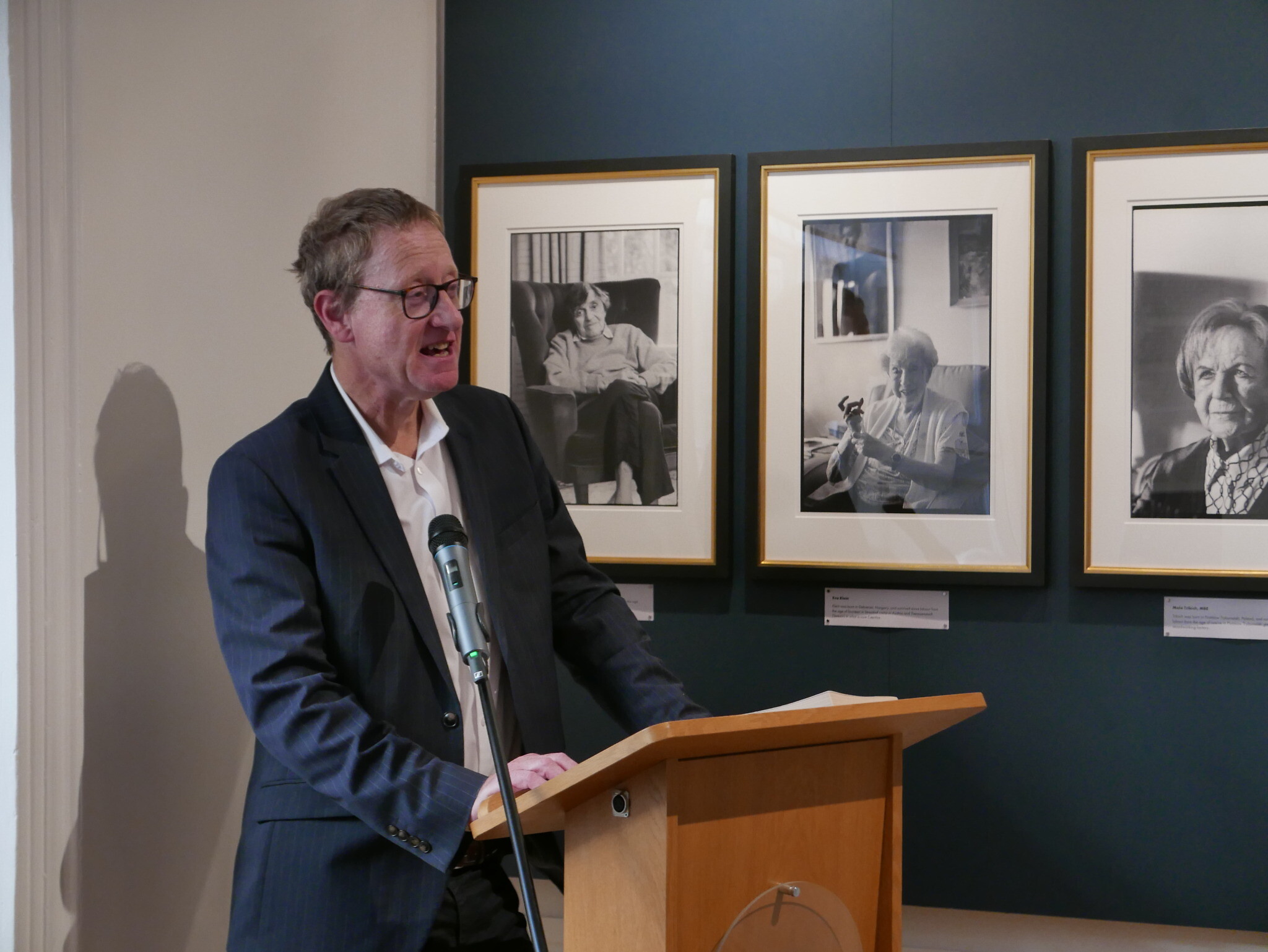
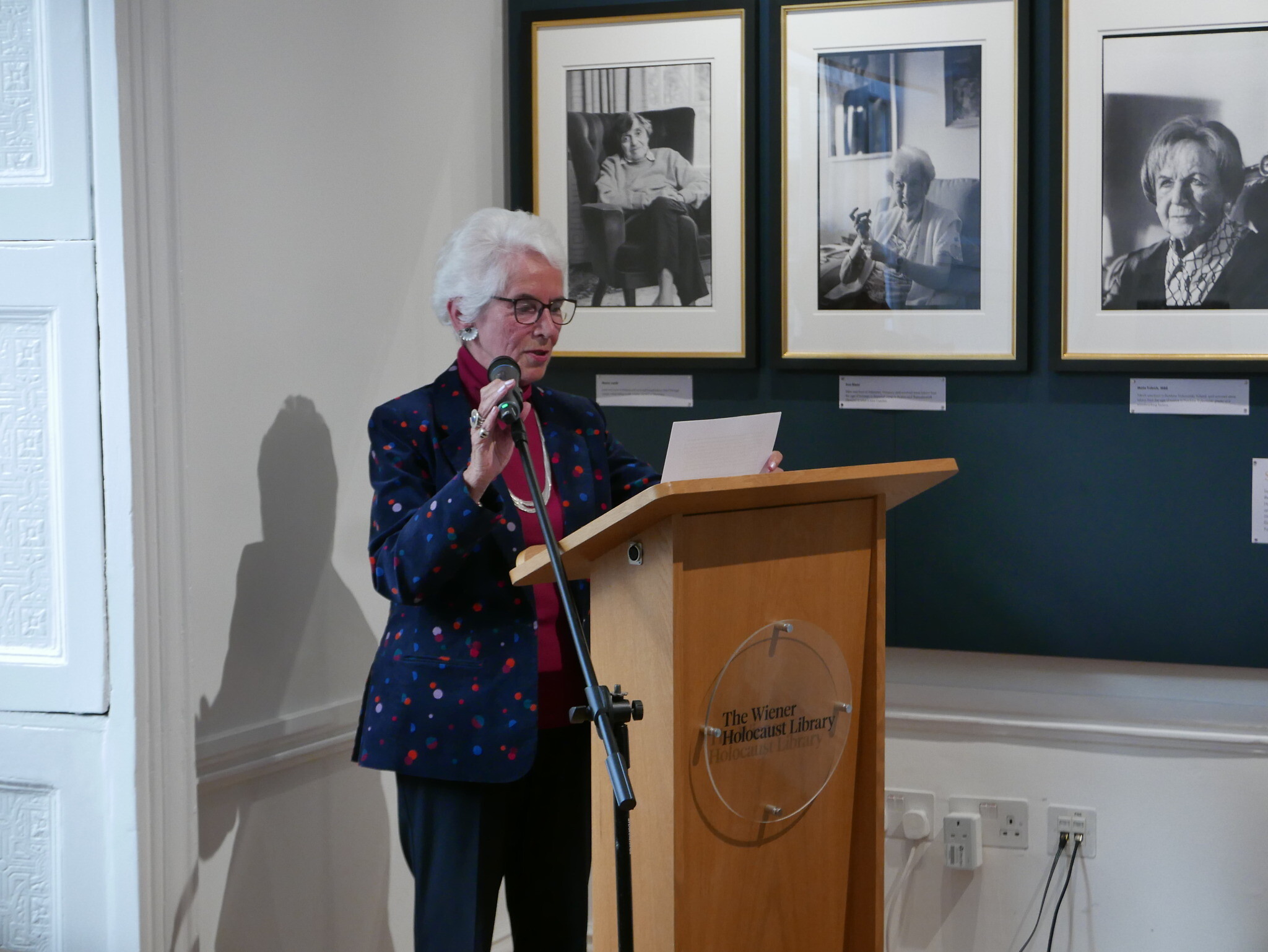
The Wiener Holocaust Library launched its latest exhibition this week, with speakers including Holocaust survivor Eva Clarke and journalist Jonathan Freedland.
Nazi Slave Labour: Perpetrators & Victims, is the latest free public exhibition on display at the Library’s Bloomsbury exhibition gallery and will run until 30 October 2026.
Eva Clark told guests the story of how her mother came to survive deportation to Theresienstadt, Auschwitz Birkenau, and a forced labour camp in Germany. She managed to survive selection in Auschwitz, despite being in the early stages of pregnancy, and by October 1944 was transported again to undertake heavy labour in an armaments factory in Freiburg.
Eva’s mother was in the latter months of pregnancy with her as she spent long days riveting the tailfins of V1 flying bombs.
In April 1945 the factory was evacuated to Mauthausen camp, and Eva’s mother spent 17 days on a filthy coal wagon, open to the elements, where she eventually gave birth.
Eva shared: “She had to climb down off the train without any help. She had to clamber onto a cart as the prisoners, unable to walk up the steep hill, were transported by carts to the camp. She had people lying all over her with typhus and typhoid fever, and she proceeded to give birth to me”, adding that her mother “really thought that this was her very last minute on earth”.
Describing the reasons she believes her and her mother survived, she said the most “chilling” is that the Nazis’ ran out of Zyklon B gas on the 28th April, and her birthday is the 29th. The camp was liberated on the 5th May by US soldiers; “had it been any later, my mother reckoned she wouldn’t have survived”.
Eva’s mother lived to celebrate her 95th birthday, during which she “expressed once again sheer disbelief she had survived” and ended her life at the age of 96 with three great grandchildren.
Jonathan Freedland discussed his research on Auschwitz escapee, Rudolf Vrba, and the lengths he went to during and after the Holocaust to highlight the appalling situation that faced slave labourers.
The Vrba-Wetzler report is the subject of Freedland’s book The Escape Artists and he said it shared the same mission of the Wiener Holocaust Library: to preserve and disseminate the facts and evidence of what happened in the Nazi camps.
Freedland said Rudolf Vrba’s later life was spent drawing the attention of the world to what he thought was an “underdiscussed, neglected, overlooked” aspect of the Nazis’ crimes. As well as the attempted extermination of the entire Jewish people he highlighted the “economic war on the Jewish people, the economic dispossession, the theft on a grand scale of everything they had”.
The exhibition was curated by Dr Clara Dijkstra, Katherine Funk, and Dr Barbara Warnock, and draws on the unique collections held in the Wiener Holocaust Library’s archive.
Co-director of The Wiener Holocaust Library, Dr Barbara Warnock said: “The Nazis’ complex wartime economic system and its huge reliance on forced and slave labour has not always received attention in wider remembrance and commemoration. This important exhibition is the first ever in Britain that focuses solely on the use of slave and forced labour, its role in the Nazi war economy and its significance in the Holocaust and the Nazi camp system.’

Keep community journalism free.
Jewish News is free for everyone. No paywall. No barriers. Just trusted journalism for anyone who wants to stay connected to Jewish life in Britain.
If you value that, please support us.
From as little as £5 a month, you can help keep our journalism free and accessible to all.
Every day, we report on the issues that matter to our community. We celebrate achievements, support charities, challenge antisemitism and ensure Jewish voices are heard more widely.
From as little as £5 a month, you can help us continue to:
- Report on the stories shaping Jewish life in the UK and beyond
- Bring our community together through shared stories, events and campaigns
- Celebrate the people, culture and moments that define our community
- Support organisations doing vital work across Jewish Britain
You can make a one-off donation or become a regular supporter. Every contribution helps keep our journalism free, independent and accessible to all.
If everyone who values Jewish News gave a small amount, it would make a real difference to our future.





















