Prefer Jewish News on Google
Would Britain have accepted Jewish refugees under today’s rules?
New government proposals risk stripping safety, stability and dignity from refugees today

Let us begin with a blunt question: had the government’s new refugee policy been in place after 1945, how many in our community would still be thriving here today?
It is a startling thought. But that is the reality of Home Secretary Shabana Mahmood’s new asylum proposals, outlined last week. If enacted, many people who need our sanctuary could be granted refugee status for just two and a half years. Alarmingly, they will also face the threat of being returned to their home country if it is deemed safe.
Germany – where David’s grandparents fled Nazism for the UK in 1938 – would certainly have met that category after WW2. His grandfather, a community GP in Luton, would have been forced out of the country that became a place of safety and a new home. It would not have been right then, and it is certainly not right now.
As leaders of two humanitarian organisations, we know that this history continues to inspire British Jewish action for displaced people. Understandably, our own experience of receiving sanctuary here guides our desire to show welcome today.
So, with this legacy of compassion in mind, we are standing together to express our deep concern about the Government’s policy direction on asylum. Both the plans announced last week and the rhetoric surrounding them will demonise and stigmatise those seeking refuge and asylum here. We should know just how that can feel.



It is not only the changes to refugee status that worry us. The Government is also proposing the introduction of a twenty-year route to permanent settlement – a startlingly long period of time for people who have already been through so much turmoil. What message will this send to refugees who want to rebuild their lives here? When people want nothing more than to get back on their feet, become members of our communities, and live as proud new Brits, this is such a cruel barrier.
Placing people in prolonged limbo risks turning refugees into strangers through no fault of their own. And from scrapping refugee family reunion as we know it to threatening to remove support from destitute people, these proposals are a clear backwards step. They will mean that people who have fled appalling circumstances may never feel a sense of certainty in this country. They will do nothing to heal the division in this country. And they will further strip dignity and respect from our asylum system.
Our fear too is that such policy will block refugees from having a fair chance to rebuild and integrate. One only needs to consider what British Jewish refugees have achieved here to see what we could miss out on. Retail heavyweight Marks and Spencer. Olympic heroes like Sir Ben Helfgott. Even that British staple – fish and chips – is believed to have been introduced by Sephardic Jews.
So much that we see as quintessentially British owes itself to refugees. And that is as true for our community as it is for the many other groups who have become a critical part of our national fabric after reaching safety here.
There is another part of our history at stake too. The UK played a leading role in helping draft the 1951 Refugee Convention. Introduced in the shadow of the horrors of the Holocaust, it exists to give refugees safety and stability, not to impose temporary protection and further insecurity. Just as we are commanded not to wrong or oppress the stranger, the UK must remember and uphold its international obligations – showing the moral leadership desperately needed in this precarious world.
Ultimately, this is about the sort of country we want to be. Is it one which builds on the legacy of the Kindertransport, which, for all its flaws, brought 10,000 children to safety? Or will it be one that closes its door on children fleeing danger today, shutting down family reunion routes and pushing young people who arrive into a childhood of uncertainty?
Amidst such a bleak policy landscape, it is easy to feel disheartened. But it is more crucial than ever that we speak out. With the far-right on the rise, now must be the time for policies that truly reflect our Jewish values of compassion, responsibility, and solidarity, which can truly bring society together.
Our community – carrying the moral clarity our own refugee history instils – must stand alongside the movement for a fairer, more welcoming approach. The challenge may appear great, but we cannot remain silent in the face of such damaging policy. We may not be able to do this alone, but as the Ethics of the Fathers tell us: “It is not your duty to finish the work, but neither are you at liberty to neglect it.”
We owe it to our own history to make our voices heard and act.
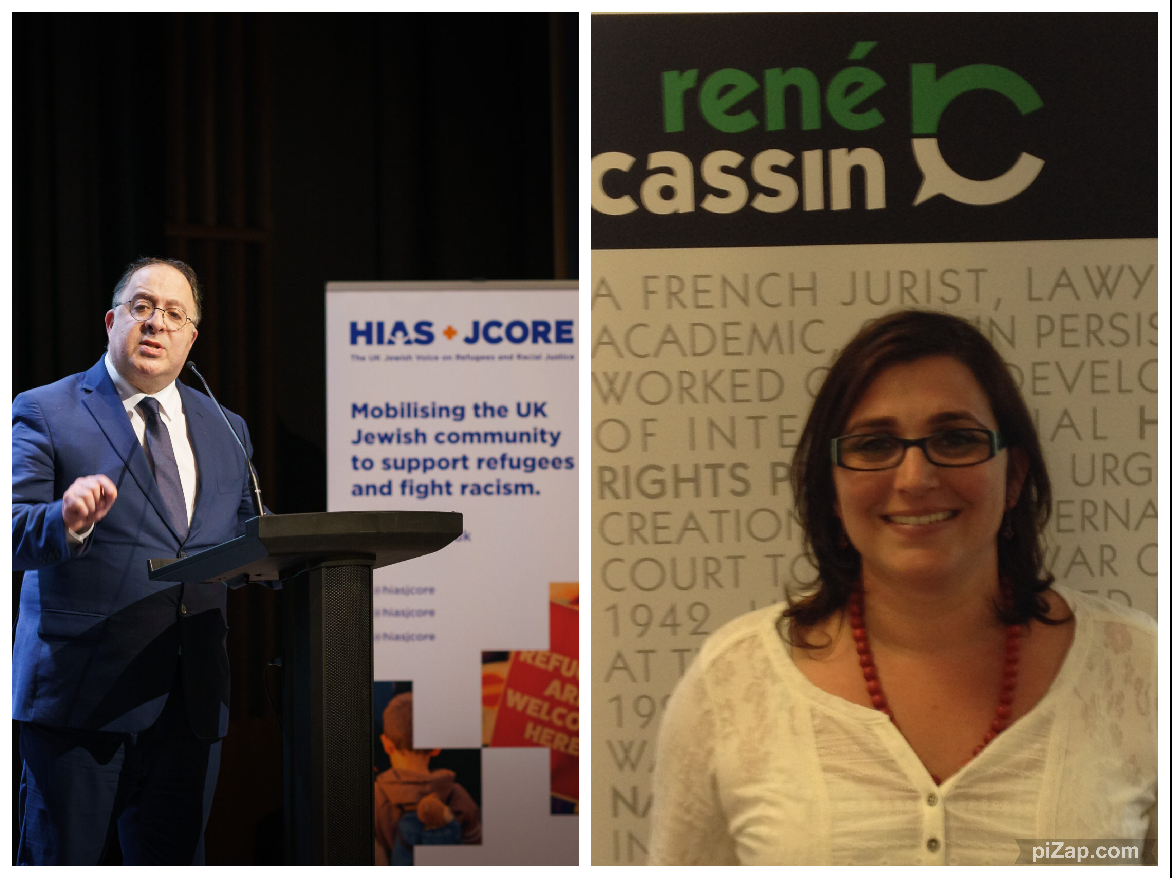
- Rabbi David Mason, Executive Director, HIAS+JCORE and Mia Hasenson-Gross, Executive Director, René Cassin

Keep community journalism free.
Jewish News is free for everyone. No paywall. No barriers. Just trusted journalism for anyone who wants to stay connected to Jewish life in Britain.
If you value that, please support us.
From as little as £5 a month, you can help keep our journalism free and accessible to all.
Every day, we report on the issues that matter to our community. We celebrate achievements, support charities, challenge antisemitism and ensure Jewish voices are heard more widely.
From as little as £5 a month, you can help us continue to:
- Report on the stories shaping Jewish life in the UK and beyond
- Bring our community together through shared stories, events and campaigns
- Celebrate the people, culture and moments that define our community
- Support organisations doing vital work across Jewish Britain
You can make a one-off donation or become a regular supporter. Every contribution helps keep our journalism free, independent and accessible to all.
If everyone who values Jewish News gave a small amount, it would make a real difference to our future.