Prefer Jewish News on Google
Yentl – but not as you know it
A non-musical stage production of Barbra Streisand's iconic movie has opened in London
Hear the word “Yentl” and what springs to mind? That film, of course, starring, in every sense, the omnipresent Barbra Streisand, singing power ballads, delighting the yeshiva student Avigdor, played by a rather gullible Mandy Patinkin, all to a script crafted by the late Jack Rosenthal. Streisand, who made the film in 1983, not only acted, but produced, directed, and also apparently co-wrote the screen play.
The film was based on a short story by Isaac Bashevis Singer, Yentl the Yeshiva Boy, published in America, slightly to my surprise, as late as 1962. It is the story of a woman who is desperate to learn, and on the death of her father disguises herself as a man and re-names herself Anshel, the name of her late brother, in order to study at a yeshiva.
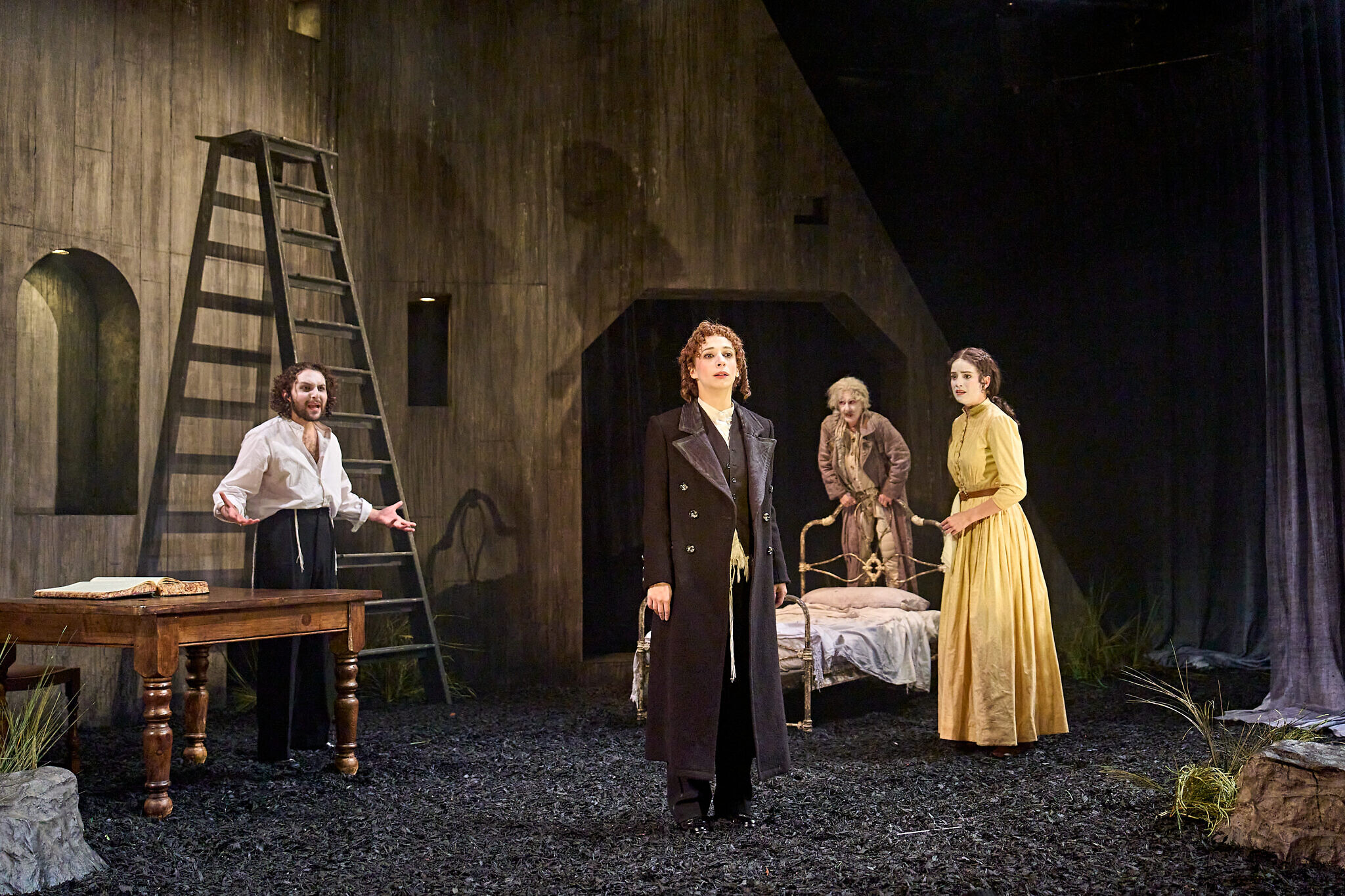
Now Londoners will have a chance to see a new and somewhat darker version of Yentl, the rights to which were acquired by Streisand in 1968. It became a passion project for her. But as Gary Abrahams, the director of this new production, explains, Yentl is just as much a passion project for him and his cast and crew.
Abrahams is the executive director of a unique and legendary Australian theatre company, the Kadimah Yiddish Theatre, which is marking its 100th anniversary this year. The idea to stage Yentl, he says, “was first the idea of Evelyn Krape, Kadimah’s artistic director. Kadimah was originally set up by Yiddish-speaking writers and actors who had come to Australia from Europe. It was established as an artistic community – they would get together and read poems and stories. One hundred years ago, they put on their first play.”
Over the years Kadimah’s fortunes waned, but about for the past five years, says Abrahams, “we have been re-invigorating it and trying to make it more of a professional company. We wanted to celebrate Yiddish culture, explore works and try to make it contemporary”.

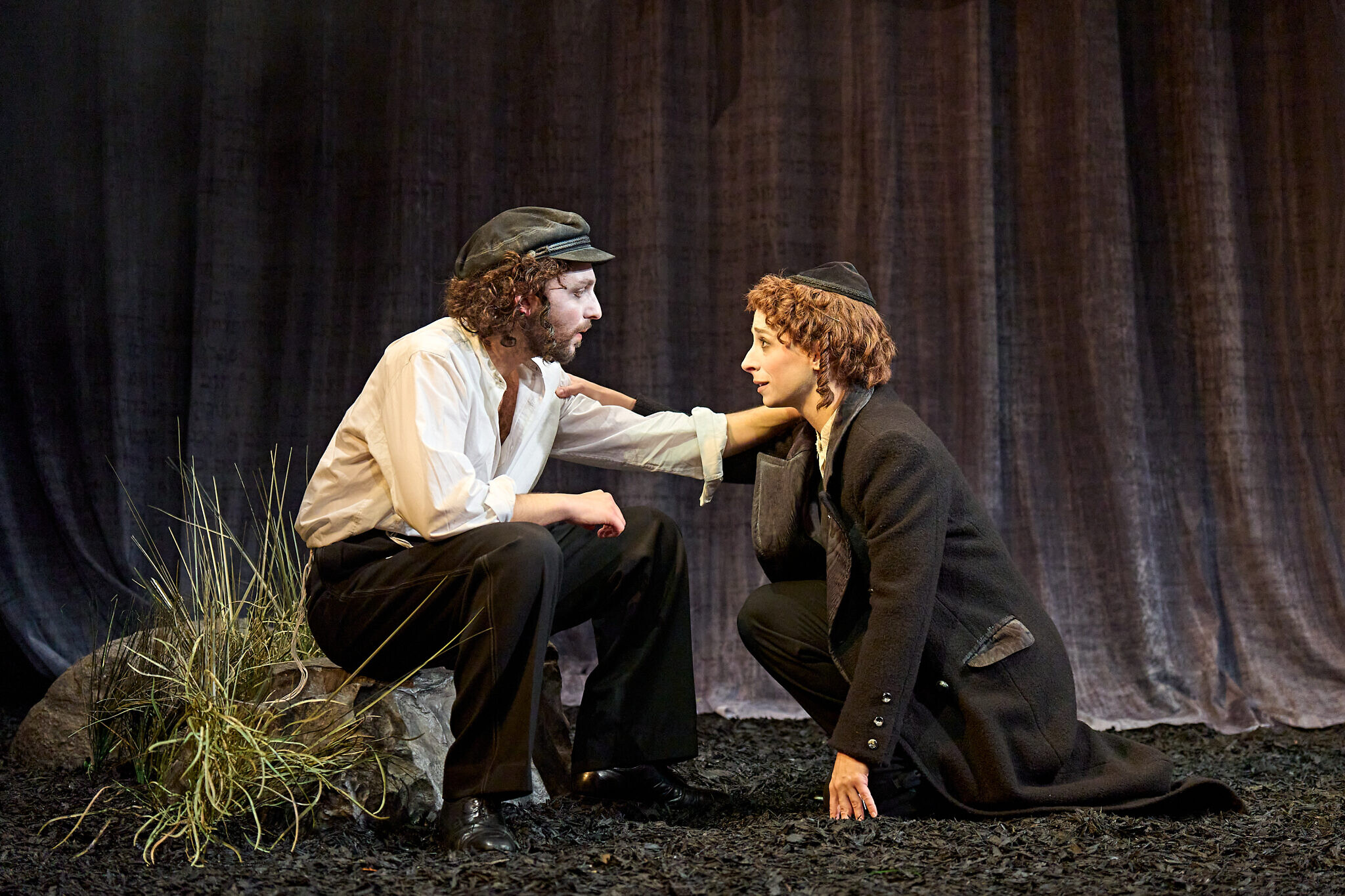
Evelyn Krape had long been familiar with the Bashevis Singer story but hadn’t read it for years. She re-read it and then gave it to Abrahams to see what he thought.
“I was so struck, on reading it, how different it was from the film and how contemporary the themes were,” says Abrahams. “Inevitably every generation will read the story through its own lens. For me, the questions about identity and sexuality really jumped out at me — and it made me realise how sanitised the film was, a very heteronormative reading of the story. Actually, the story is so different, with really deep kabbalistic questions around identity and soul.
“Bashevis Singer was steeped in Torah and Yiddish folklore — so the story involves possession and dybbuks and ghosts. It felt like an incredibly exciting contemporary story to return to, and perhaps reclaim.”
Complicating the issue of legal rights to stage Yentl in Australia, the Kadimah team realised that Bashevis Singer himself had made his short story into a Broadway play in 1975, co-written with Leah Napolin and featuring a cast of 20, including the actress Tova Feldshuh playing Yentl.
Kadimah successfully applied for the rights to stage Yentl. Abrahams says he thinks they were given the go-ahead “because we were just a small company in Australia. [Part of the conditions for granting the rights was that the new productions could not include music.] But then there was Covid and Melbourne was subjected to severe lockdown — which meant we had plenty of time to workshop and develop ideas of how to tell the story.”
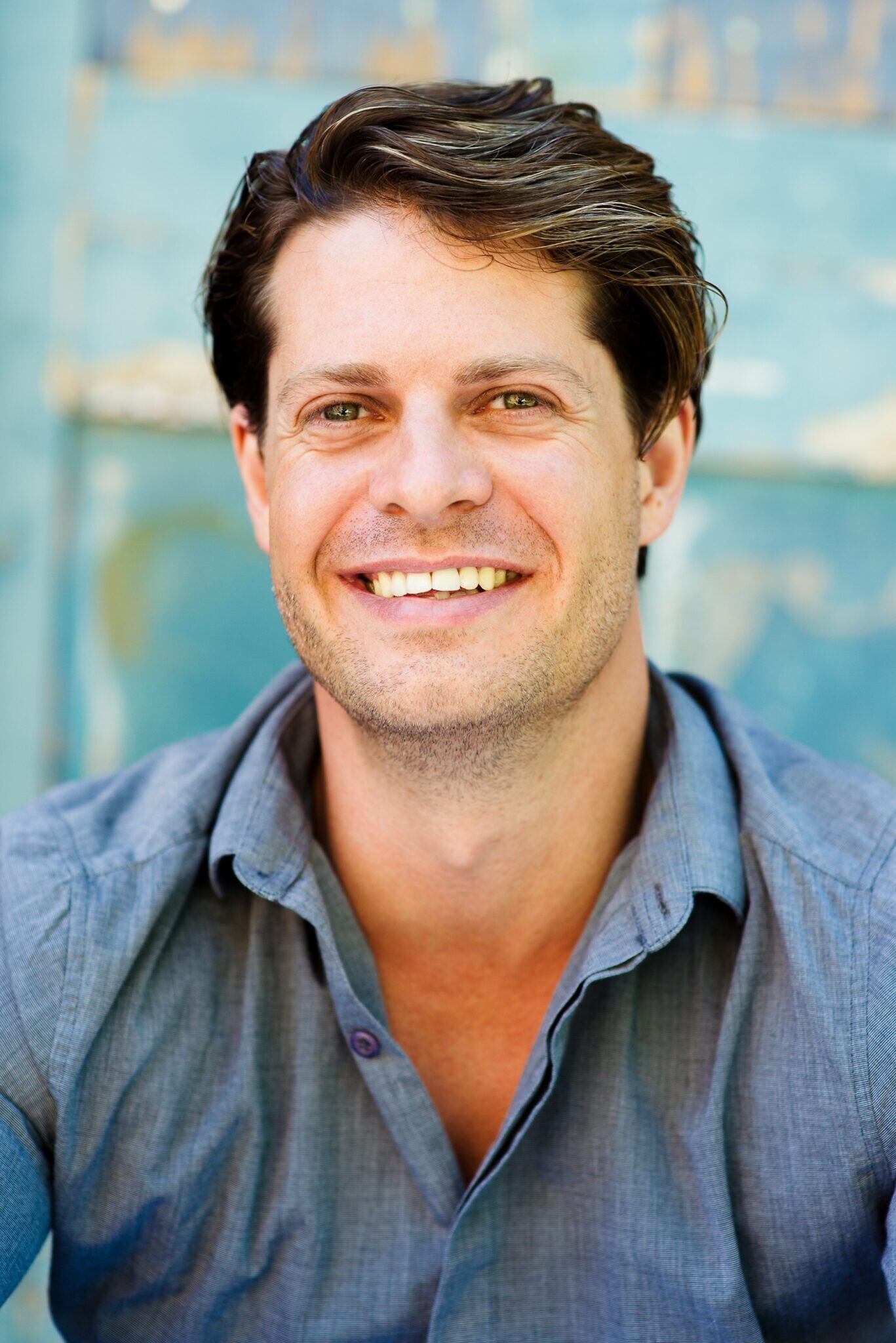
Despite his many years living in the US, Bashevis Singer always wrote first in Yiddish and then his work would be translated into English. So the Kadimah team went back to the original Yiddish version of Yentl, and, says Abrahams, found “nuances and differences and cadences” between the Yiddish and English versions.
That was not the only challenge facing Kadimah. Abrahams needed to whittle down the cast of characters to just three main roles: Yentl herself, who becomes Anshel; Avigdor, her fellow yeshiva student, who “takes her under his wing”; and Hadass, “the love interest”. This last is the strangest part of the story, that Hadass’s father encourages an Orthodox wedding between the brilliant yeshiva student Anshel (Yentl) and Hadass — who was once engaged to Avigdor.
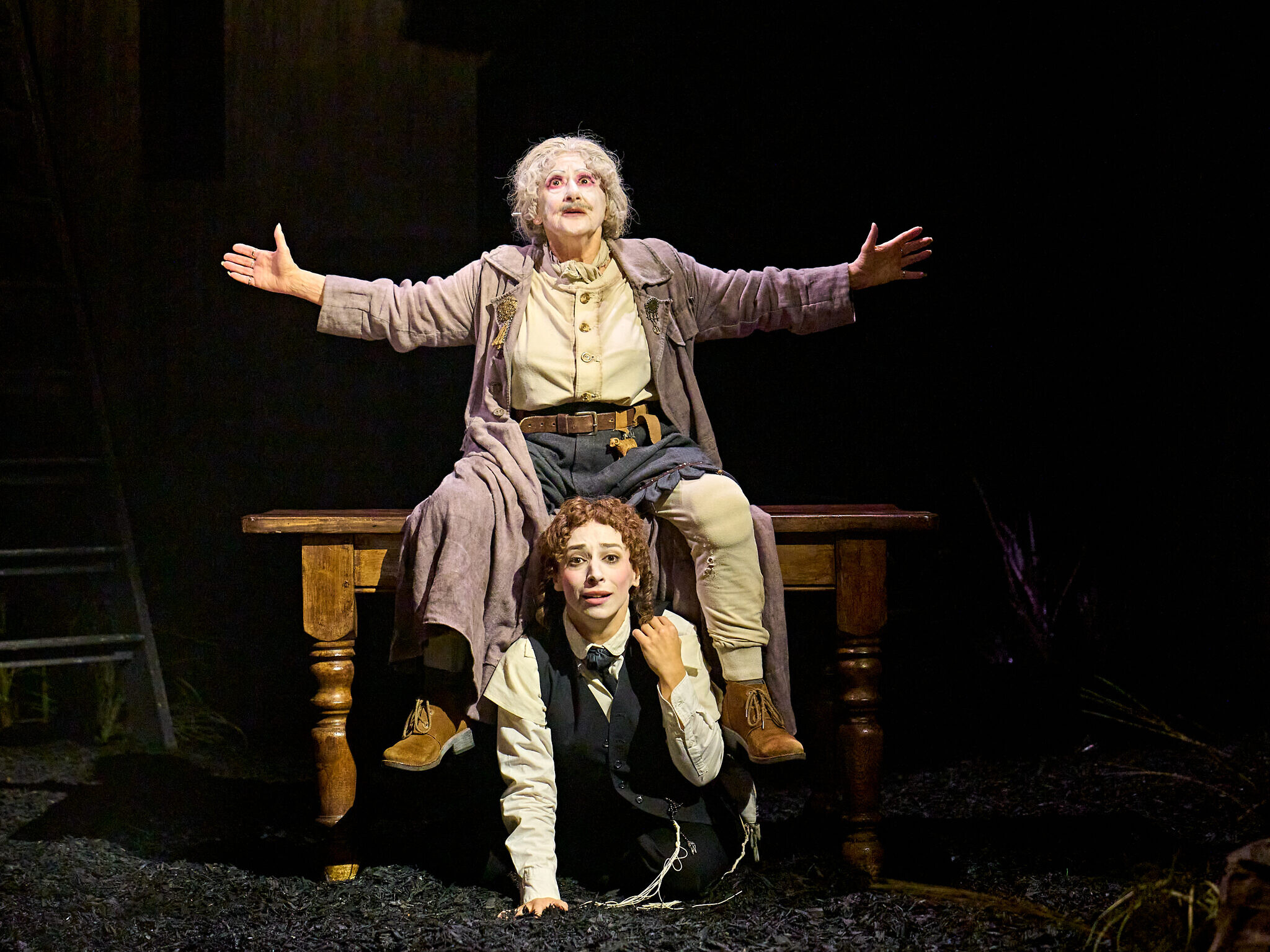
Abrahams wanted a fourth character, a narrator who, he says, “is based on the Yetzer Hara, or Evil Inclination, and use that to explore the complexity and ambiguity of the Evil Inclination in Judaism. Jewish teachings suggest that the Yetzer Hara is not necessarily evil, but it can be part of you that leads you to transgress or rebel”.
This figure is not just the narrator of Kadimah’s production but is also “Yentl’s inner voice, who cajoles her and provokes her”.
Yentl premiered in Melbourne in 2022, just after lockdown was lifted, and received a rapturous response, which appears to have startled the Kadimah team. “There were Orthodox and traditionally Jewish audiences sitting next to trans and drag queens and LGBTQ audiences”. It then transferred to the Sydney Opera House in 2024, scooping up a clutch of awards and thrilling audiences with its mixture of Yiddish (with surtitles) and English.
Abrahams himself is an Aussie immigrant, having been born and brought up in Johannesburg, South Africa. He arrived in Australia when he was just 20. His mother’s side of the family was Lithuanian and his grandparents were Yiddish speakers — but neither Abrahams nor his mother spoke the language. Now, he says, Kadimah and Yentl have awakened his interest in the language and he has begun taking Yiddish classes. “I’ve discovered the beauty of it. I hope people in London will come and see what we have done. This is Theatre with a capital T.”
Read our review of Yentl here.
Yentl runs at the Marylebone Theatre until 12 April. marylebonetheatre.com

Keep community journalism free.
Jewish News is free for everyone. No paywall. No barriers. Just trusted journalism for anyone who wants to stay connected to Jewish life in Britain.
If you value that, please support us.
From as little as £5 a month, you can help keep our journalism free and accessible to all.
Every day, we report on the issues that matter to our community. We celebrate achievements, support charities, challenge antisemitism and ensure Jewish voices are heard more widely.
From as little as £5 a month, you can help us continue to:
- Report on the stories shaping Jewish life in the UK and beyond
- Bring our community together through shared stories, events and campaigns
- Celebrate the people, culture and moments that define our community
- Support organisations doing vital work across Jewish Britain
You can make a one-off donation or become a regular supporter. Every contribution helps keep our journalism free, independent and accessible to all.
If everyone who values Jewish News gave a small amount, it would make a real difference to our future.