Prefer Jewish News on Google


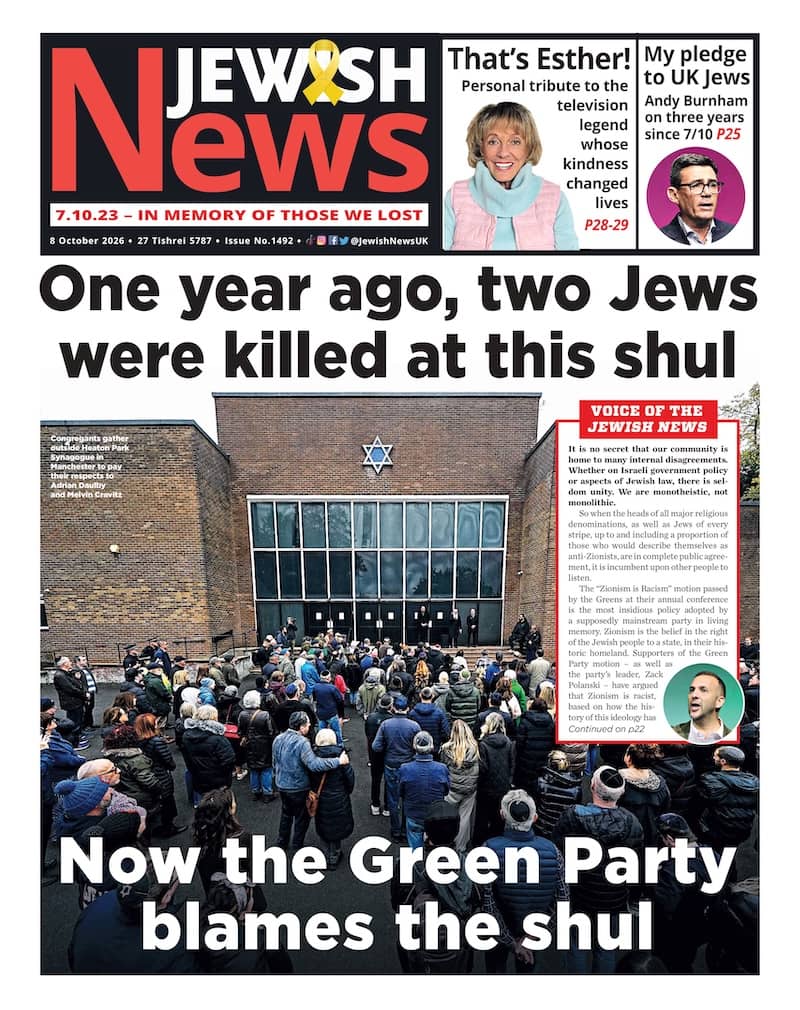
Yom Kippur in Heaton Park Synagogue, 2026
Exactly one year earlier, there had been death, destruction, injury, trauma and fear right here, simply because Jews had come together on the holiest day of our year
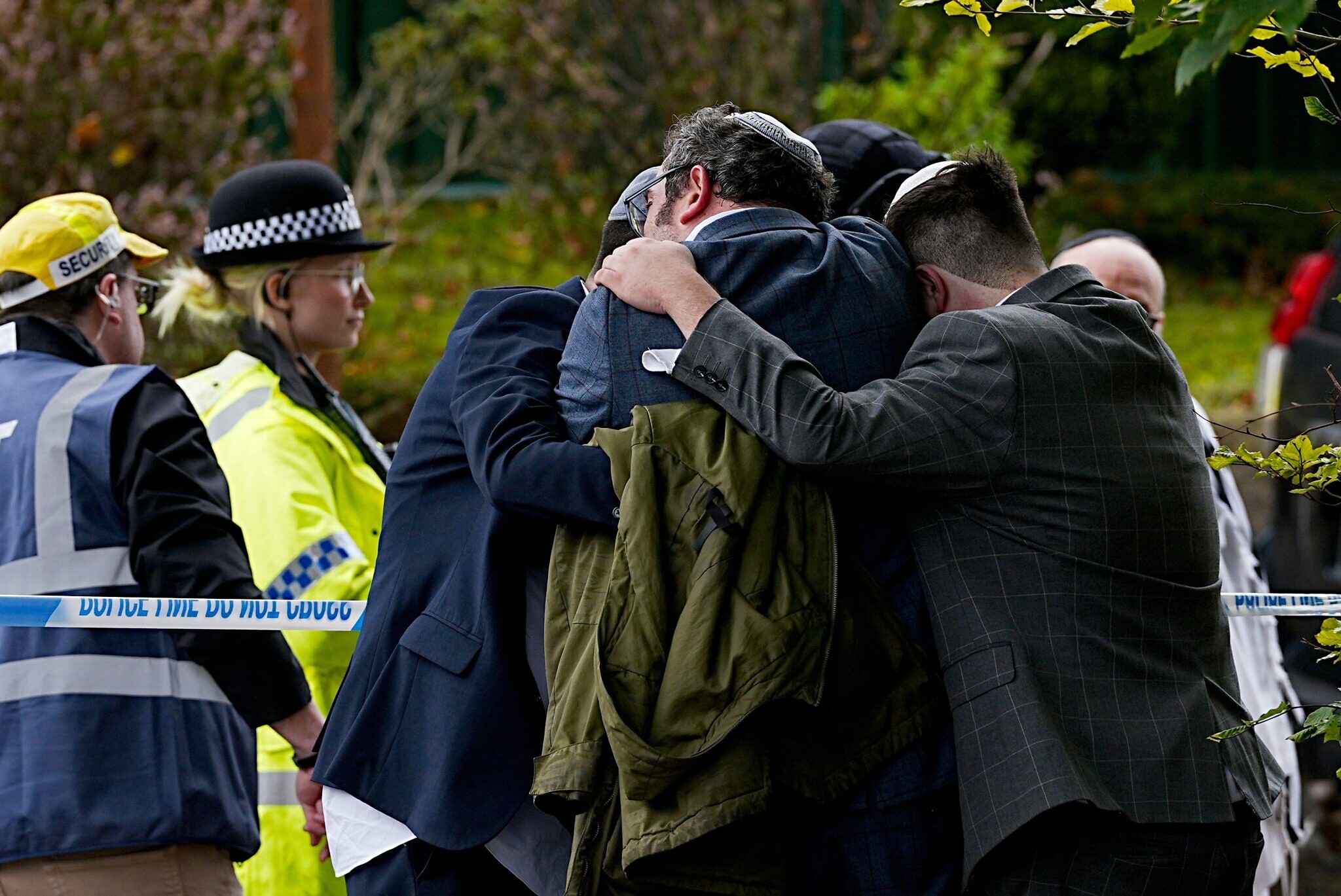
As I entered my shul, Heaton Park Synagogue, for Kol Nidre on Sunday evening, I could feel a tension and sense of responsibility in the air. Alongside the familiar greetings of “fast well” and “good Yom Tov” was a silent understanding that this Yom Kippur was very different.
People seemed to be taking longer moments to reflect on their surroundings. Not only because we had the immense honour of the presence of Chief Rabbi Sir Ephraim Mirvis, who was praying with us throughout Yom Kippur, and not only because we were entering our place of worship protected by more than two dozen uniformed police officers and armed units, which, whilst we are grateful for their protection, also serves as a reminder that the very fact we need it represents a moral stain on our British society.
Above all, however, it was because this year we were standing not only before God, as we always do, but with Melvin Cravitz z’l and Adrian Daulby z’l, may their memories be a blessing, at the forefront of our minds.
As Chazan (Cantor) Marx began Kol Nidre with the same melody being sung in thousands of synagogues around the world, you could sense the emotion in people’s prayers. When we reached the verse asking, “Who will live and who will die?”, the realisation struck me even more deeply than I had anticipated. We had all stood in these very same places the previous year and recited those words, never knowing that it would be Melvin and Adrian who, the very next day, would give their lives in God’s name as martyrs of the Jewish people.
How life can change in an instant.


The following day, as we began the traditional Yizkor (memorial) prayer, recited during the middle of the daytime service for family members who are no longer with us, we broke with tradition by first saying a special prayer composed by the Chief Rabbi for Melvin and Adrian.
My seat in shul is on the front row near the Aron Hakodesh, the Ark. As the memorial prayer began, I glanced to my right and noticed that, no more than 30 feet away, the doors to the foyer stood open. I could see the outer doors our brave congregants had held shut, the doorway through which the bullet had travelled, and the carpet where those who were injured and killed had fallen.
Directly opposite me stood Yoni Finlay and Andrew Franks, both heroes who were seriously injured in the attack. Standing immediately behind me was Alan Levy, who confronted the terrorist outside before helping to barricade the doors. To either side were Marc Magid and Andrew Cantor, who also risked their lives helping to secure the building and were in the foyer when tragedy struck. Finally, when I looked behind me, I saw the empty seats of Melvin and Adrian.
At that moment, I could not help but think that exactly one year earlier there had been death, destruction, injury, trauma and fear in this very place, simply because Jews had come together, as we were doing once again, on the holiest day of our year to stand before God, seek atonement, ask forgiveness for our sins and pray for a better year ahead.
The enormity of that thought was truly humbling.
Then came Neilah, the closing prayer of Yom Kippur, the moment when we have our final opportunity to plead with God to seal us into the Book of Life for the coming year. We had the immense privilege of having the Chief Rabbi lead this part of the service with such emotion, beautiful melodies and profound feeling.
One of the greatest rabbis of our generation and the founder of the Religious Zionist movement, Rabbi Joseph Soloveitchik z’l, delivered a seminal lecture in 1956 entitled Kol Dodi Dofek.
At the heart of Kol Dodi Dofek lies one of Rabbi Soloveitchik’s most profound insights: the distinction between two ways of understanding a single Hebrew word. The word lama means “why?” Yet with a slight change in vocalisation, those same letters become le’ma, meaning “for what purpose?” This subtle linguistic shift contains an entire philosophy of Jewish faith.
The question of lama seeks explanation; the question of le’ma demands responsibility. One asks: why did this happen? The other asks: what can we do now that it has happened?
Before this final part of the service began, Rabbi Walker addressed us and, with his voice shaking with emotion, reminded us that just as in every generation people rise up to try to destroy the Jewish people and fail, so too this evil terrorist, who sought to destroy Judaism, has failed and will not destroy us.
He told us that, as Jews, we will always be here.
I believe this is our opportunity to fulfil Rabbi Soloveitchik’s vision of lema; to refuse to let the terrorist define us and instead choose for ourselves how we respond, both as individuals and as a community.
As Rabbi Walker reminded us, we will always have unity. He challenged us to become better Jews, more passionate Jews, more connected Jews and prouder Jews because of what happened at our shul on Yom Kippur last year.
And that is exactly what we will do. We will honour the memories of Melvin z’l and Adrian z’l not simply through remembrance, but through living stronger Jewish lives.
As proud Mancunian Jews, we will always be here.
Raphi Bloom is the Director of Fundraising and Marketing and the My Voice Project at The Fed, a Management Board Member of the Jewish Representative Council of Greater Manchester and a trustee of the Jewish Leadership Council.

Keep community journalism free.
Jewish News is free for everyone. No paywall. No barriers. Just trusted journalism for anyone who wants to stay connected to Jewish life in Britain.
If you value that, please support us.
From as little as £5 a month, you can help keep our journalism free and accessible to all.
Every day, we report on the issues that matter to our community. We celebrate achievements, support charities, challenge antisemitism and ensure Jewish voices are heard more widely.
From as little as £5 a month, you can help us continue to:
- Report on the stories shaping Jewish life in the UK and beyond
- Bring our community together through shared stories, events and campaigns
- Celebrate the people, culture and moments that define our community
- Support organisations doing vital work across Jewish Britain
You can make a one-off donation or become a regular supporter. Every contribution helps keep our journalism free, independent and accessible to all.
If everyone who values Jewish News gave a small amount, it would make a real difference to our future.