Prefer Jewish News on Google
9/11: The Lesson We Forgot
Ahead of the 25th anniversary of the September 11th attacks, Leo Pearlman, who was in Manhattan when it happened, writes how the West remembers the horror, but not the warning
I am writing this one month before the 25th anniversary of 9/11, and I’m doing so deliberately.
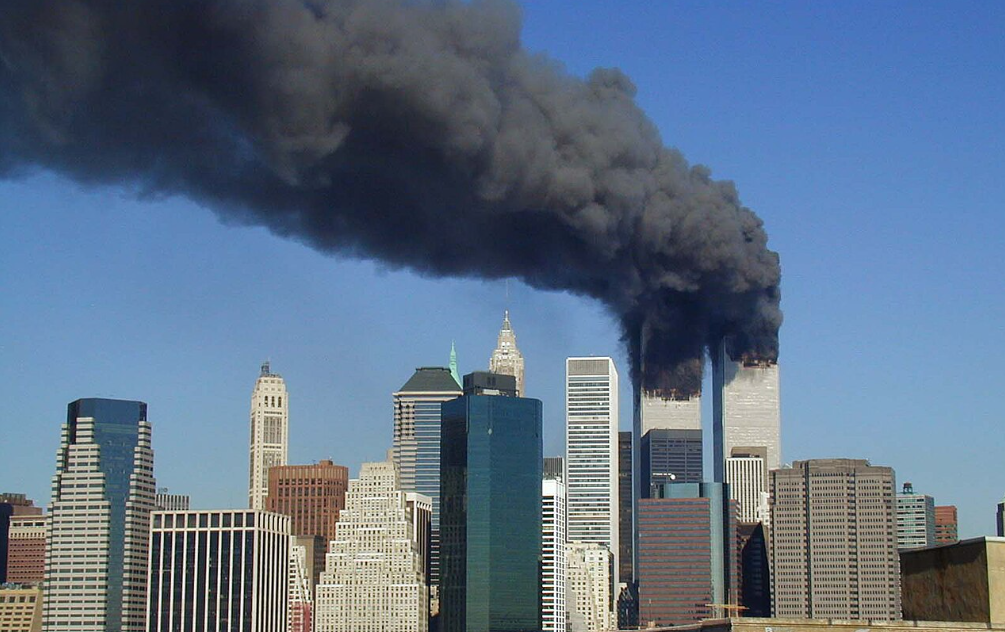
On September 11th itself there will rightly be thousands of articles, documentaries, speeches and acts of remembrance. The photographs will appear again, the footage will play again and, at Ground Zero, the names of those murdered will once more be read aloud.
I don’t want what I have to say to become lost in that noise, but more importantly, on that day I don’t particularly want to argue, I just want to remember. Because this isn’t really an essay about remembering 9/11, it is about remembering what 9/11 taught us.
For me, that day has never simply been history. I was there, in Manhattan, mere blocks from the World Trade Centre when the planes hit.
I was young, ambitious and planning to move to New York. It had always been my dream to live there and, specifically, to work on Wall Street, inspired in no small part by the film of the same name. Like many young men of my generation, I had apparently managed to watch Oliver Stone’s morality tale and take precisely the opposite message from the one intended. Yes, I missed the bit about greed being bad.

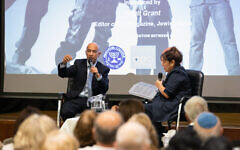
Then the towers came down, literally around me, and suddenly Wall Street didn’t seem quite so important. I remember the confusion, the fear and, above all, the incomprehensibility of what was happening. We were watching the world change around us without yet understanding quite how much it had changed.
What I don’t remember doing is crying. That took a year.
On September 11th, 2002, I was sitting alone in my car in Sunderland listening to the radio as they read the names of every person murdered that morning, one by one. People who had gone to work, people who had boarded planes, firefighters and police officers who ran towards burning buildings while everyone else desperately tried to escape them, husbands and wives, sons and daughters, mothers and fathers.
The names just kept coming and finally, I broke. It had taken a full year for whatever barrier my brain had constructed around what I had witnessed to collapse.
I have never forgotten either of those days. But twenty-five years later, I wonder whether collectively we have forgotten something else. Not what happened, but what it meant.
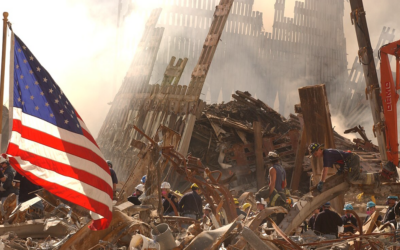
In the weeks after September 11th, two words became inseparable from the attacks: Never Forget
They were first a promise to the dead, that nearly 3,000 people would not disappear into history as a statistic, but they contained another promise too, vigilance.
Never forget how this happened. Never forget the ideology that motivated those who did it. Never assume that because someone’s beliefs appear irrational or fantastical to us, they cannot sincerely believe them.
9/11 taught us that grievance can help explain terrorism without ever justifying it, and that when extremists repeatedly tell us what they believe, who they hate and what they intend to do, we should take them seriously.
Twenty-five years later, we have honoured remembrance far better than vigilance.
9/11 did not begin on 9/11, it certainly was not the beginning of modern militant Islamism. But if one year marks a pivotal moment, it is 1979: the Iranian Revolution established a revolutionary Islamist state; the Soviet invasion of Afghanistan created a battlefield where thousands of foreign Muslim fighters converged, including Osama bin Laden; and armed fundamentalists seized the Grand Mosque in Mecca.
Different movements, different theologies, but evidence of the growing political power of religious absolutism and the willingness to sanctify violence in its pursuit.
The warnings accumulated, leading to the 1993 World Trade Centre bombing, attacks on American military targets in Saudi Arabia, the 1998 US embassy bombings in Kenya and Tanzania, and the attack on the USS Cole in 2000.
Then came 9/11.
The lesson was emphatically not that all Muslims were the enemy. Muslims themselves would become among the greatest victims of Islamist terrorism. The lesson was simpler: ideas have consequences and there was one cause that travelled remarkably easily through this ideological world.
Palestine.
The Israeli-Palestinian conflict did not cause 9/11, and Palestinian national aspirations are not synonymous with jihadism, but Palestine occupied an extraordinary place in Bin Laden’s rhetoric.
He invoked it repeatedly while directing relatively little of Al-Qaeda’s operational capacity towards Israel itself. Palestine allowed him to weave Afghanistan, American troops in Saudi Arabia and conflicts across the Muslim world into a single narrative of humiliation, injustice and resistance.
Bin Laden understood something important about Palestine; it travelled. A jihadist fighting Russia could invoke it, an extremist attacking America could invoke it. The battlefield and immediate grievance could change, yet Palestine remained. It became less the destination of jihadist ideology than its passport.
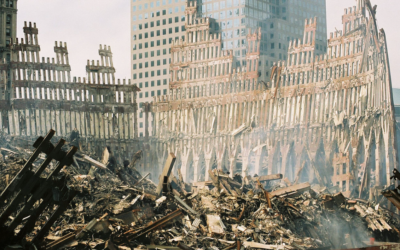
When the planes hit New York, Israel was already a year into the Second Intifada, enduring suicide bombings and shootings against civilians. Within weeks Bin Laden was invoking Palestine and the Intifada to justify a global confrontation whose principal target was not Israel at all, but America.
That distinction is important because sometimes the grievance an extremist invokes is the destination, and other times it is the vehicle.
For a while, the West understood this. In 2002 George W. Bush could simultaneously advocate for a Palestinian state and insist that terrorism against Israelis had to be defeated. Palestinian self-determination and the rejection of terrorism were not contradictory ideas. Today that distinction feels considerably more fragile.
Then on 7 October Palestine travelled again, when Hamas and other Palestinian armed groups crossed into Israel and committed the largest massacre of Jews on any single day since the Holocaust, but that was far from the end of Palestine’s journey.
In 2001 Bin Laden had invoked it to mobilise Muslims around a jihadist project. By 2023, the same cause was mobilising parts of a Western progressive movement whose social values could scarcely have been further from his own.
The language was completely different. Jihad and the umma became decolonisation and intersectionality, while religious struggle became settler colonialism, indigenous rights and oppressor versus oppressed.
These ideologies are not equivalent. Many Western progressives campaigning for Palestinians have no sympathy whatsoever for Al-Qaeda or religious fundamentalism and are motivated by genuine concern for Palestinian suffering, but radically different ideologies can attach themselves to the same symbol.
The theology disappeared, but the organising narrative survived. After 7 October, arguments that once inhabited ideological fringes moved closer to mainstream Western culture. Not simply where Israel’s borders should lie or whether Palestinians deserve a state, but whether Zionism itself is illegitimate and whether the world’s only Jewish state should continue to exist.
Actors, musicians, filmmakers, academics and athletes became participants. Anti-Zionism acquired a cultural reach in the West it had never previously enjoyed and the chronology of this journey matters deeply.
It began within hours and days of 7 October, before Israel’s military response could possibly explain it, while bodies were still being identified and hostages had only just been dragged into Gaza.
The massacre did not discredit the cause in whose name Hamas claimed to act. In parts of Western culture, it accelerated it.
There is another connection between 9/11 and 7 October; diminishment, distortion and denial. When Jews or Israel are victims of an atrocity, there seems to be a peculiar determination in some quarters not simply to allow them to remain victims.
After 9/11 came false claims that thousands of Jews had stayed away from the World Trade Centre, that Israel had advance warning, that Mossad knew, and eventually that Israel itself was somehow involved.
Twenty-five years later these theories are not confined to anonymous internet cranks. Tucker Carlson has alleged Israeli foreknowledge of 9/11. Candace Owens has gone further, publicly accusing Benjamin Netanyahu: “You murdered 3,000 Americans on 9/11.” Nick Fuentes occupies an explicitly antisemitic conspiratorial far right, while on the other political flank Hasan Piker, one of America’s most influential progressive streamers, famously declared that “America deserved 9/11”.
These are voices whose combined reach runs into many tens of millions. Different politics, strikingly familiar destinations and after 7 October, the machinery started again.
Israel’s catastrophic intelligence failure became “Netanyahu knew”, then “Netanyahu allowed it to happen”. Evidence that some Israelis were killed by Israeli fire amid the chaos became claims that Israel killed hundreds of its own citizens under the Hannibal Directive.
Legitimate questions about particular incidents became a narrative in which Israel itself was substantially responsible for the massacre. This is how modern atrocity denial works, it need not deny that anything happened. Instead, diminish it and distort it. Find an inaccurate report and use it to discredit the whole. Turn a friendly-fire death into evidence Israel committed the massacre, an intelligence failure into evidence Netanyahu authorised it.
Eventually, uncertainty about individual details manufactures uncertainty about an event whose central facts are beyond serious dispute.
For this rapidly spreading mindset, Jews cannot simply be victims. Somehow, they must also become responsible for what was done to them.
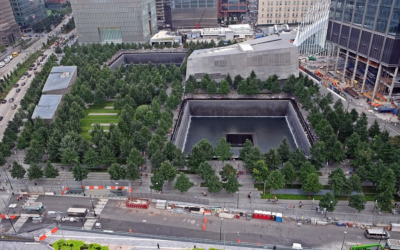
This is where the political horseshoe closes. On one side, a conspiratorial far right sees hidden Jewish power behind governments, wars and history. On another, a radical anti-Zionist left can arrive at strikingly similar conclusions through different language.
One calls it Jewish power, another calls it Zionism. One says Mossad knew about 9/11, another says the IDF committed 7 October.
The vocabulary changes, the conspiracy survives.
And now comes the warning, one we should all recognise. Consider the cultural distance travelled from “Never Forget” to Hasan Piker saying “America deserved 9/11”.
Increasingly, the question after an atrocity becomes not simply why someone committed it, but what the victim did to provoke it. Context becomes mitigation, explanation begins to resemble justification, and the ideological agency of the perpetrator disappears beneath an examination of the victim’s supposed culpability.
We saw it after 7 October, and this is one aspect of why Israel and the Jews matter to the 25th anniversary of September 11th.
Jews are sometimes described as the canary in the coal mine. What I mean by that is simple, historically, we have an uncomfortable habit of finding ourselves early in the queue.
Israel is not the only target of Islamist extremism and Jews are not its only victims. Al-Qaeda’s principal enemy was America, ISIS murdered Muslims, Christians, Yazidis and Jews, Islamist terrorists have struck London, Paris, Madrid, Manchester, Brussels, Mumbai, Bali and countless cities across the Muslim world.
The West keeps hearing “Israel” and assuming the argument ends at Israel, history suggests otherwise.
Israel is not the final destination, Jews are not the final target, Palestine is not necessarily the limit of the cause. 9/11 should have taught us that.
In a month’s time, the names will be read again, nearly 3,000 of them. I will think about sitting in my car in Sunderland, listening to those names and finally crying for something I had witnessed twelve months earlier but had somehow been unable to process.
For millions alive today, September 11th is history; for me, it never will be. I remember where I stood, I remember the confusion and the fear, I remember the towers coming down and the sensation that the world was changing around me before any of us understood what the new world would look like.
Perhaps that is why our collective amnesia troubles me so much. I was there the last time the West discovered, in the most horrific way imaginable, that an ideology incubated thousands of miles away did not intend to remain there. I watched the towers fall.
Twenty-five years later, we still remember the planes and the buildings, those who jumped and the firefighters who ran in, above all, we remember the names.
What we appear to have forgotten is the warning.
That is why I am writing this now, a month before September 11th. I don’t want to argue, I want to remember. The dead deserve that much. But remembrance without learning eventually becomes ritual.
“Never Forget” was supposed to be both a promise to those we lost and a warning to those who remained.
Twenty-five years later, we haven’t forgotten 9/11.
We have forgotten what “Never Forget” was supposed to mean.

Keep community journalism free.
Jewish News is free for everyone. No paywall. No barriers. Just trusted journalism for anyone who wants to stay connected to Jewish life in Britain.
If you value that, please support us.
From as little as £5 a month, you can help keep our journalism free and accessible to all.
Every day, we report on the issues that matter to our community. We celebrate achievements, support charities, challenge antisemitism and ensure Jewish voices are heard more widely.
From as little as £5 a month, you can help us continue to:
- Report on the stories shaping Jewish life in the UK and beyond
- Bring our community together through shared stories, events and campaigns
- Celebrate the people, culture and moments that define our community
- Support organisations doing vital work across Jewish Britain
You can make a one-off donation or become a regular supporter. Every contribution helps keep our journalism free, independent and accessible to all.
If everyone who values Jewish News gave a small amount, it would make a real difference to our future.