
 Prefer Jewish News on Google
An AfD win has panicked some Jews who fear a throwback to Nazi Germany
Jewish leader warns of “immense damage” if Alternative for Germany comes to power
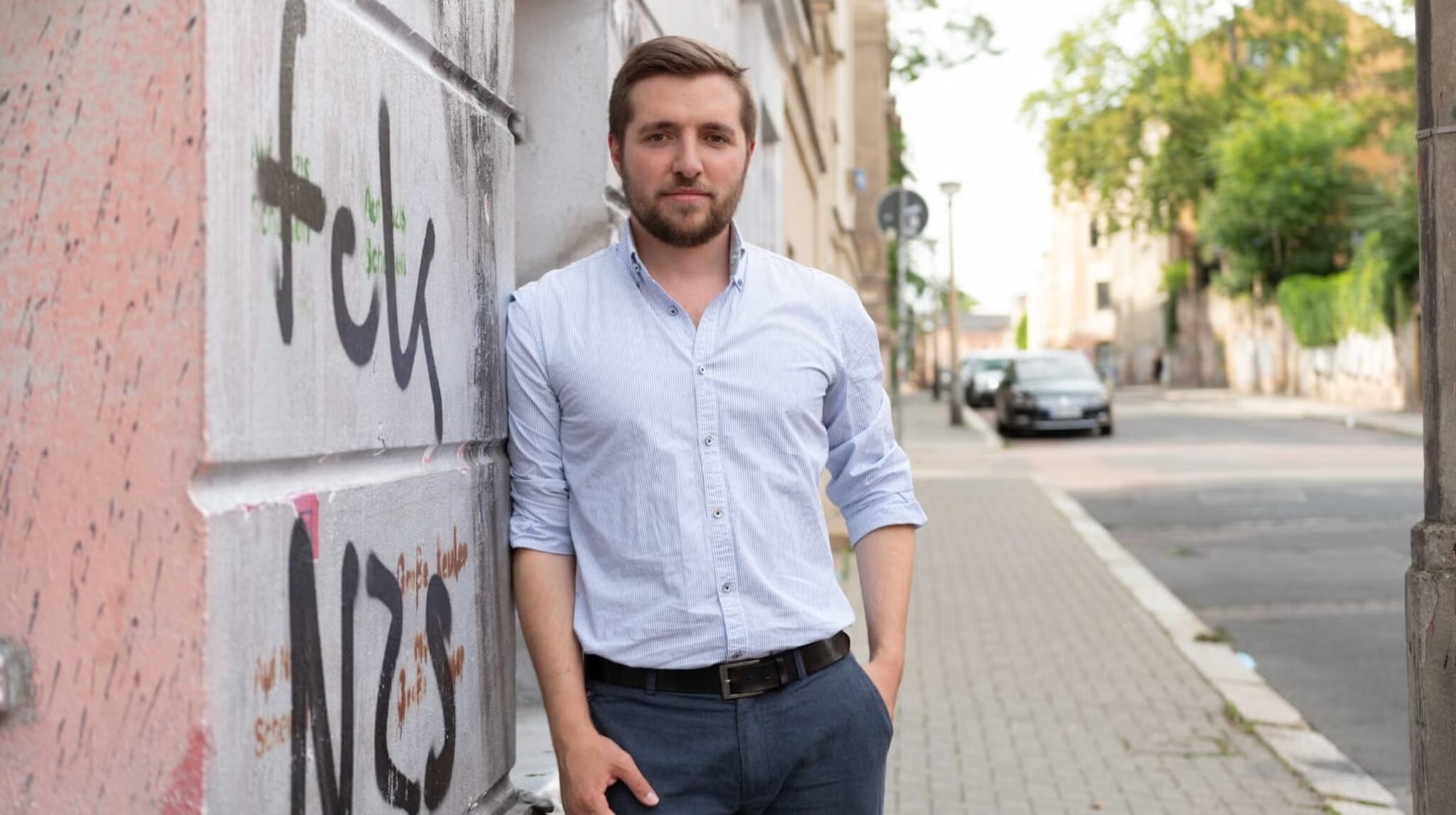
Munich resident Marian Offman, born in Germany to Holocaust survivors in 1948, is sitting on the proverbial packed suitcase. Offman, his city’s Commissioner for Interfaith Dialogue, is worried about what an AfD leadership would mean for Jews and other minorities.
“To me it is a pure Nazi party,” he told the Jewish Telegraphic Agency. “They are completely anti-religious, just like the Nazis were.”
Offman was among a number of Jews in Germany who expressed alarm at the plurality of 43.8% of the vote the Alternative for Germany party (AfD) received in Sunday’s election in the former East German state of Saxony-Anhalt.
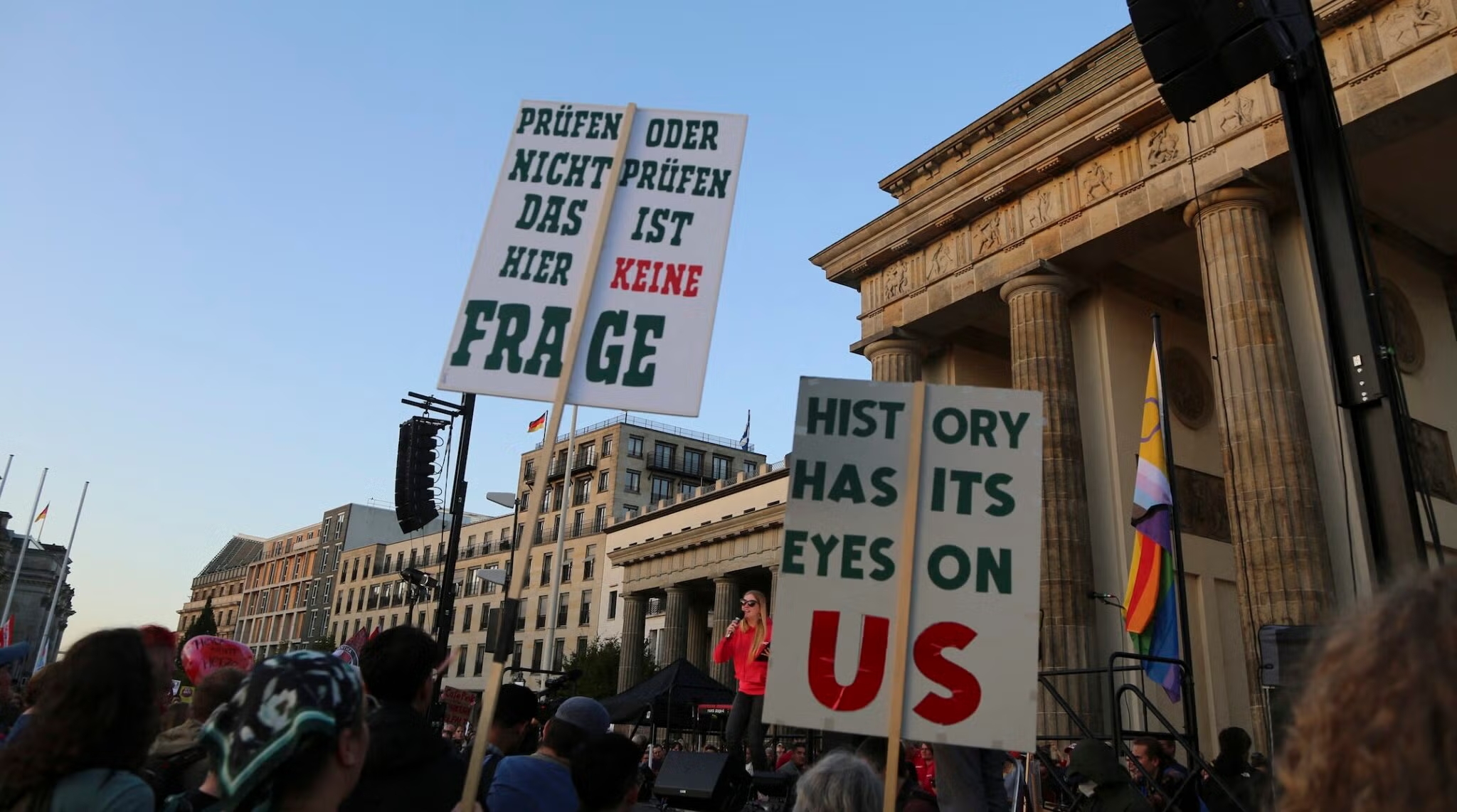
The prospect of an AfD-ruled state has many Germans, not only Jews, fearful of a resurgence of fascism in a country that has worked for decades to confront its Nazi past. Critics point to the party’s platform, which includes such points as expelling unwanted migrants; building pride in notions of German tradition and ethnicity; and stopping funding for “anti-German” art and culture.
The 13-year old AfD – with its anti-EU, anti-foreigner and nationalist stances – trounced the older established parties on Sunday, opening the door to the possibility that it could lead the government in that state.



If it succeeds, it would mark the first time since World War II that a far-right party is poised to govern a German state.
Josef Schuster, president of the Central Council of Jews in Germany, expressed shock at the election results. The party could do “immense damage” if it forms a government, particularly in the educational realm, Schuster told the German Jewish newspaper Juedische Allgemeine, the Central Council’s media organ. The AfD has expressed the goal of refocusing education on German pride.
“Germany has been known as a country that is democratic, that comes to terms with its history, very, very intensively, more than any other country,” Offman said. “And now suddenly a far-right party is in all state parliaments and in the Bundestag,” or federal parliament.
There are about 200,000 Jews in Germany. Fewer than half are members of Jewish communities. About 90% of them came since 1990 from the former Soviet Union; a small number have moved here from Israel, as well. Very few are descended from pre-war German Jewish families.
“I’m very much afraid that the atmosphere would change, and I don’t know how to cope with it,” said Flora, who was born in Hungary and has lived in Berlin with her husband for 50 years. She asked that her last name not be used out of concern for her safety.
“I’m afraid of a kind of chain reaction,” she said. “If the mood in Germany is turning, and we don’t have anything to offer to counter this, then all Germany will slide downhill.”
But not all Jews in Germany are that concerned.
“Jews get even more worked up than others,” said Hella Schapiro, an 84-year-old Berliner who dislikes the AfD but is unruffled by their victory. “They immediately start packing their bags again, and of course that’s completely wrong,” said Schapiro, who was forced to flee her home with her family as a child by the Soviets, first from East Prussia in 1944 and then from the state of Saxony in 1946.
Schapiro said it wasn’t clear that the AfD was a party to be feared. “The AfD makes pie-in-the-sky plans,” she said, adding, “It’s a party where the dullest, most base elements really have the say. …They’ll only change things in terms of the general mood, and otherwise nothing at all.”
People should stop panicking, and let the AfD show what it can, or cannot, do, she advised. “People have to experience what such an AfD government actually does in practice.”
Author Mirna Funk, whose latest non-fiction book is “Learning from Jews” and who divides her time between the German capital and Tel Aviv, said she felt one had to be worried about antisemitism on both the right and left-wing camps in Germany.
“The AfD is a completely fascist, crazy party,” but the Left Party “is much, much more anti-Zionist and anti-Jewish,” she said.
A win for the AfD would be “a horrible situation, but the same horrible situation is in Berlin when it comes to Die Linke,” Funk said, speaking of Germany’s left-wing party. “People simply do not trust the center parties, and they’re going for either radical right or radical left,” she said.
The AfD wants to be done with atonement for the Holocaust, but it’s not the only voice for change on that topic, she noted. “This is a huge, huge urge within the German society for a long time. It comes from deep inside academia and deep inside the left and deep inside even normal people in the society. They are f–king sick of the Holocaust.”
Igor Matviyets, who emigrated to Germany with his family from Mykolaiv, Ukraine, in 1999 and now works as an anti-racism consultant for a pro-migrant organization in Halle, Saxony-Anhalt, also is concerned about a change in attitude toward the Holocaust.
He pointed to the AfD’s intention to end the search for Nazi-era looted property in German institutions – the party calls it “a defamation of our museums” – and to combine Holocaust remembrance “with eulogies for fallen soldiers,” thus “wiping out the huge difference between victims and perpetrators.”
He also worries about the safety of migrants, including Jews, fearing that foreigners will be deported. He is also concerned that the AfD would not protect minorities from harassment on the streets.
Some German Jews at the other end of the spectrum, however, go so far as to back the party. “You don’t have openly anti-Zionist people in the AfD,” says Artur Abramovych of Berlin, who chairs the Jews in the AfD association, a group with about 25 members. For him, that’s reason enough to support the party.
He also expects a new AfD government to “cut off all the state money for far-left universities and colleges” and state broadcasters that he feels have an anti-Israel agenda. He dismisses what he calls the historical revisionism of some AfD leaders as irrelevant in a state with no prominent Holocaust memorials. His only beef with the party is their support for Russian President Vladimir Putin. Abramovych himself is a migrant from Ukraine.
Lorenz Beckhardt, chair of the Association of Jewish Journalists, told JTA that Jews in Germany run the gamut of political opinions.
“Jews are pluralistic, just like all other populations,” Beckhardt said. “Just as there are Jewish communists, there are also Jewish fascists. And there are also Jews who sympathize with the AfD.”
He continued, “Most know that Jewish life in all its diversity and contradictions and colors can only survive if you live in an open, liberal democracy, but sadly, a minority of Jews do argue along the lines of ‘the enemy of my enemy is my friend.’”
In particular, he pointed to AfD’s anti-foreigner stance: “They see the main problem as left-wing and Muslim antisemitism, and are somewhat blind in their right eye.”
If you keep that eye open, you’ll see links between AfD and Nazi ideology, Beckhardt said.
“Even the slogan the AfD is currently using in Saxony-Anhalt—‘Let’s take our country back’— means that the German people had their country stolen from them. And who stole this country? Obviously, migrants, the left, and in the end, of course, the Jews.”

Keep community journalism free.
Jewish News is free for everyone. No paywall. No barriers. Just trusted journalism for anyone who wants to stay connected to Jewish life in Britain.
If you value that, please support us.
From as little as £5 a month, you can help keep our journalism free and accessible to all.
Every day, we report on the issues that matter to our community. We celebrate achievements, support charities, challenge antisemitism and ensure Jewish voices are heard more widely.
From as little as £5 a month, you can help us continue to:
- Report on the stories shaping Jewish life in the UK and beyond
- Bring our community together through shared stories, events and campaigns
- Celebrate the people, culture and moments that define our community
- Support organisations doing vital work across Jewish Britain
You can make a one-off donation or become a regular supporter. Every contribution helps keep our journalism free, independent and accessible to all.
If everyone who values Jewish News gave a small amount, it would make a real difference to our future.





















