Prefer Jewish News on Google
ANALYSIS: An unexpected end-of-year fiasco for the government
Alla Abd El-Fattah was legally entitled to British citizenship. The question is why no-one in government seemed to know what he had said before they celebrated him coming here
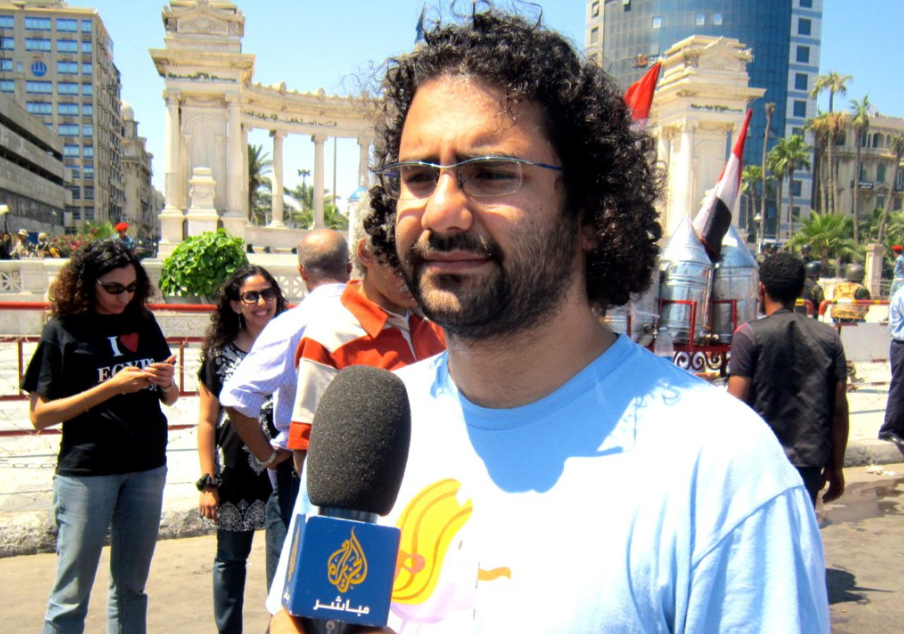
It is hard to imagine that Keir Starmer, Yvette Cooper, David Lammy or any other senior Ministers had the slightest idea about what was about to engulf them last Friday, as their social media teams coordinated to merrily light the touchpaper on the government’s latest dilemma.
For those who may have been engaging in a social media detox over the last few days, let me bring you up to speed. On Boxing Day, the Prime Minister, Foreign Secretary, Justice Secretary and various others expressed their “delight” that Alla Abd El-Fattah, a dual Egyptian-British citizen who was freed from Egyptian jail in September, had now had his travel ban lifted by the Egyptian government, allowing him to come to this country. Almost immediately, a wide range of incredulous respondents pointed out the series of repugnant social media comments made by El-Fattah over a multi-year period prior to his arrest. To mention a few among many: he described how he did not consider “Zionists” to be human and supported the killing of “all Zionists, including civilians”. Other tweets advocated violence towards the police. One said “If we can’t kill the officers, let us find a terrorist cell to kill their children and torture their mothers.”
El-Fattah has now apologised for some of his past statements while claiming that others have been misconstrued. Simultaneously, however, he was found to have liked a social media post claiming that the anger in the UK at his comments was part of a “Zionist campaign” against him – leading many to conclude that his apology was meaningless.
Citizen Pain
El-Fattah became a British citizen in 2021, three years before the current government took power. His mother was born here and legally, El-Fattah was able to claim citizenship. Up until 2019, a “good character” test existed for those who sought to exercise their option to become British citizens via this law. However, the law was changed in 2019 following two separate UK court judgements, which found that imposing the good character requirement in such cases was discriminatory and contrary to the European Convention on Human Rights.



It is at this point where politics diverges, at least for some, along two parallel lines – between what at least some feel should be done and what can be done.
Despite public calls by both the Conservatives and Reform UK to revoke his citizenship, both parties will no doubt be aware that there is no legal mechanism for doing so. It took a Supreme Court ruling to uphold the 2019 decision made by the then-Home Secretary, Sajid Javid, to strip Shamima Begum, who had travelled to join ISIS, of her British citizenship and ban her from re-entering the UK. The chances of the Supreme Court upholding any revocation of El-Fattah’s citizenship and his expulsion from the UK based on his social media posts, disgusting as they are, is close to zero.
El-Fattah’s social media comments have been reported to counter-terror police, leading to the theoretical prospect that someone released from an Egyptian jail three months ago could find himself in a UK jail next year. However, El-Fattah’s lawyers will doubtless argue that comments he made prior to becoming a British citizen should not be able to retroactively be held against him.
Double Standards?
In July 2024, after the Southport stabbing attack, in response to (false) reports that an illegal immigrant was responsible, Lucy Connolly tweeted: “Mass deportation now, set fire to all the f***ing hotels full of the b***ards for all I care, while you’re at it take the treacherous government and & politicians with them. I feel physically sick knowing what these families will now have to endure. If that makes me racist, so be it.”
Connolly subsequently received a 31-month jail sentence for inciting racial hatred. She became a cause celebre for various right wing politicians, including Nigel Farage. When she was released, 10 months after being jailed, Farage tweeted “welcome to freedom”. She was subsequently given a slot at the Reform UK party conference, and was introduced as “Britain’s favourite political prisoner”.
Some have pointed to what they saw as the draconian treatment of Connolly by the courts (for which they blame Keir Starmer and the Labour government) and have compared it to the warm welcome initially extended by the government to El-Fattah, despite his own repulsive tweets.
Others have pointed to the different responses by Farage to Connolly and El-Fattah as evidence of hypocrisy by the Reform UK leader, questioning whether his widely different reaction to the two cases was motivated by their respective ethnic backgrounds.
What happens now?
Some 72 hours after their tweets welcoming El-Fattah, leading government figures struck a different tone on social media. Keir Starmer said that “the historic tweets by Alaa Abd El-Fattah are absolutely abhorrent. With the rise of antisemitism, and recent horrific attacks, I know this has added to the distress of many in the Jewish community in the UK.” Yvette Cooper said that “the Prime Minister, the Deputy Prime Minister and myself were all unaware of those historic tweets, and we consider them to be abhorrent.”
That lack of awareness is particularly acute when it comes to the Deputy Prime Minister, David Lammy. As Shadow Foreign Secretary, Lammy took up the case of el-Fattah in 2022, at which time the activist’s mother and sister were his constituents. He repeatedly praised el-Fattah’s “bravery” and “courage”. In a letter in July that year to the then-Foreign Secretary, Liz Truss, he described el-Fattah as “a courageous voice for democracy and a prisoner of conscience” and said that “he has been on a hunger strike for 90 days. He is at death’s door”. (As Justice Secretary, Lammy has been rather less keen to associate with hunger strikers from Palestine Action.)
In a letter to the Foreign Affairs Select Committee, Yvette Cooper, who replaced Lammy as Foreign Secretary earlier this year, said that “it is apparent not only that current and former ministers were never briefed on these tweets when they spoke publicly about this case in the past, but also that the civil servants in charge of this case were also unaware.” An urgent review has apparently been commissioned.
The response from many in the Jewish community has been unenthused. Such a review, it seems fair to say based on the past, will take an inordinate amount of time, will fail to find anyone at a sufficiently senior level responsible, and will ignore the obvious – that any bureaucracy which failed to do such basic due diligence is transparently unfit for purpose. Nor, is it fair to say, has there been any public understanding shown of the longstanding reputation that the Foreign Office has within the Jewish community, of being an institution which is at best blind towards antisemitism. For a number of British Jews, the question over the latest fiasco is whether, to put it frankly, this was a case of Foreign Office incompetence or malevolence. El-Fattah’s conduct, after all, was not completely unknown. His nomination for the Sakharov prize in 2014 was withdrawn after some of his tweets were revealed – something which a simple Google search, rather than a trawling of social media, could have uncovered.
In the meantime, this saga has led to further hardening of attitudes from some in the Jewish community as to the Government’s priorities regarding the safety of British Jews – a crisis the Government could have avoided, or at least alleviated, if it had only refrained from expressing delight at El-Fattah’s arrival in this country.

Keep community journalism free.
Jewish News is free for everyone. No paywall. No barriers. Just trusted journalism for anyone who wants to stay connected to Jewish life in Britain.
If you value that, please support us.
From as little as £5 a month, you can help keep our journalism free and accessible to all.
Every day, we report on the issues that matter to our community. We celebrate achievements, support charities, challenge antisemitism and ensure Jewish voices are heard more widely.
From as little as £5 a month, you can help us continue to:
- Report on the stories shaping Jewish life in the UK and beyond
- Bring our community together through shared stories, events and campaigns
- Celebrate the people, culture and moments that define our community
- Support organisations doing vital work across Jewish Britain
You can make a one-off donation or become a regular supporter. Every contribution helps keep our journalism free, independent and accessible to all.
If everyone who values Jewish News gave a small amount, it would make a real difference to our future.