Prefer Jewish News on Google
Analysis: Hezbollah may have just sealed its own doom
Three years ago the terrorist group was the world's most heavily armed non-state actor. Now its decision to enter the Israel-Iran conflict has strengthened opponents within Lebanon
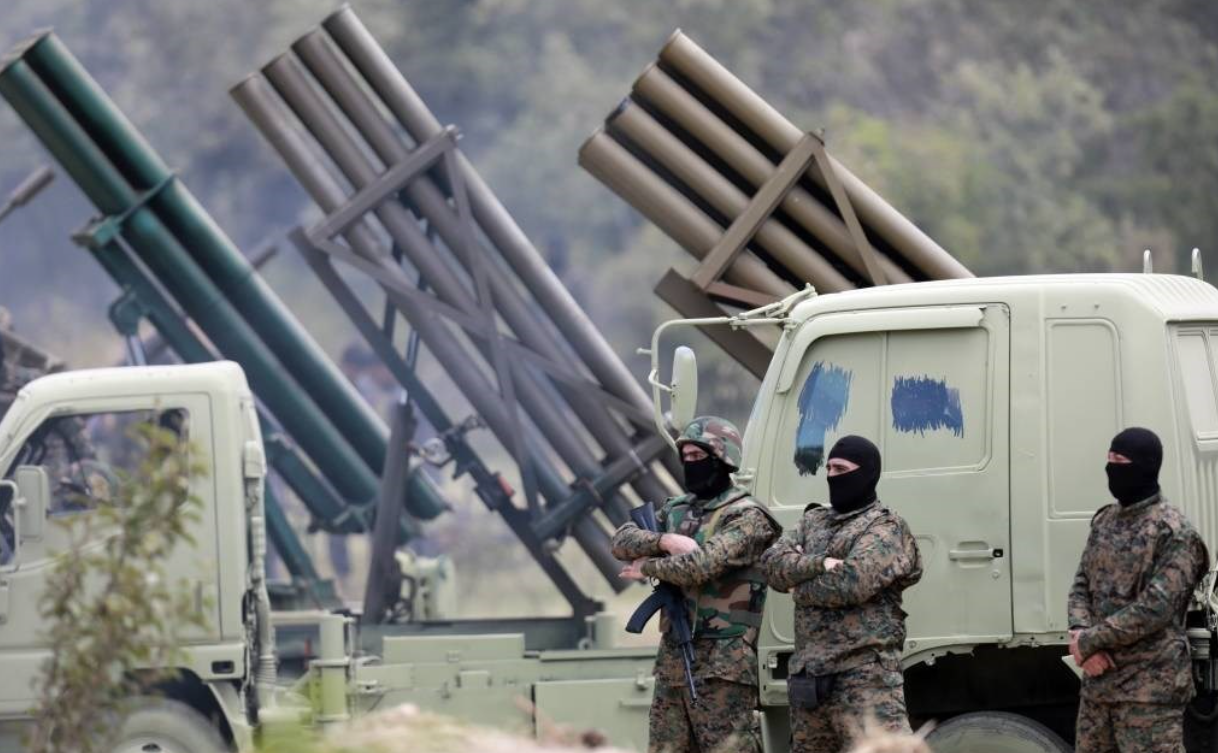
For years, dramatic headlines petrified Israelis about the Lebanese Shiite terror organisation Hezbollah. The IDF and security analysts warned the public that Hezbollah, the richest and most capable Iranian proxy in the region, would be able to launch tens of thousands of rockets all over the country and invade northern Israeli towns in a 7-October style assault with its Radwan special forces. The hateful speeches of its long-standing leader, Hassan Nasrallah, were carefully analysed, as the trauma of the Second Lebanon War (2006) was still very present.
But now, after more than two and a half years of active war between Israel and Iran and its proxies, much of that fog of fear around Hezbollah is fading. Poor decision-making, blind jihadism, and a miscalculation of Israel’s capabilities and intentions have brought the once-powerful organisation to its weakest point.
Today, an ordinary Israeli may struggle to recall the name of Naim Qassem, Hezbollah’s current leader, but will vividly remember his first nervous speech after Nasrallah’s assassination, in which he appeared to be sweating profusely. Hezbollah, once the world’s most heavily armed non-state actor, that pre-war held an arsenal of more than 150,000 rockets and missiles – larger than most of the world’s armies – now boasts an arsenal of only 11,000 to 12,000 rockets and missiles, according to recent estimations of Israeli officials who spoke to Fox News.
Since the fragile ceasefire between Israel and Hezbollah was announced in late November 2024, the Lebanese army—which for decades has been significantly weaker than Hezbollah—has been tasked with seizing weaponry and dismantling Hezbollah’s military infrastructure in southern Lebanon. Israel, for its part, has continued to strike Hezbollah targets occasionally, when Jerusalem claimed that Lebanon wasn’t acting efficiently enough in its efforts.
Meanwhile, the world opened its pockets: hundreds of millions of dollars in security assistance have been directed to the Lebanese army, in the hope that Lebanon might finally re-establish the state’s monopoly over arms like any normal country. Politically, the country’s continuing instability eased when the commander of the Lebanese army, Joseph Aoun, was elected president in early 2025, after two years of political vacuum. Hezbollah has had less room to manoeuvre as Lebanon’s sovereignty vacuum has gradually shrunk.
Yet yesterday, when Hezbollah was at its weakest, it officially broke the ceasefire and decided to join Iran in the Israel–US war against the Ayatollahs’ regime. Only on the third day of the war (in October 2023, Hezbollah joined the next day after Hamas’s attack), Hezbollah fired six missiles and launched a swarm of drones toward northern Israel. The group framed the attack as revenge for the killing of Iran’s Supreme Leader, Ayatollah Ali Khamenei. Given Israel’s containment capacity, particularly after a multi-front war in which Israelis have learned to cope, the attack was perceived as feeble, even laughable.
But even a symbolic attack gave Israel the excuse to go after Hezbollah with fewer restraints. Soon after, the IDF bombed dozens of targets, issued evacuation orders across parts of southern Lebanon and the Beqaa Valley, and launched a limited ground incursion into southern Lebanon to fight Hezbollah.
In the previous round in 2023, it took Israel almost 12 months of heavy bombardment by Hezbollah before the IDF began its ground operation. Then, in the largest mass displacement of Israeli civilians in the country’s history, about 100,000 civilians left the north. For now, Israel seems determined that there won’t be any displacement of Israelis.
A Hezbollah drone also struck, quite peculiarly, a runway at RAF Akrotiri in Cyprus, drawing more attention from the UK, NATO and the EU. Despite the direct hit, the British government has maintained a defensive-only stance, refusing to join Israeli retaliatory strikes in Lebanon to avoid full-scale escalation, at least for now.
Meanwhile, Secretary-General Qassem’s decision was no less costly on Hezbollah’s domestic front. In a dramatic announcement, Lebanese Prime Minister Nawaf Salam said his government had banned Hezbollah’s military and security activities and limited the group’s role to political work, adding that the Cabinet decided to prohibit any military operations outside “legitimate state institutions.”
Even Hezbollah’s closest Shiite ally, the Amal Movement, did not contest the government’s decision to ban its military wing. Reports claimed that Amal’s leader and Parliament Speaker Nabih Berri, whom Qassem has reportedly referred to as ‘big brother’, “had been shocked by Hezbollah’s actions”, because Hezbollah allegedly told him it would not take part in a war involving Iran.
Israeli media also cited the Hezbollah-affiliated outlet Al Akhbar as claiming that President Aoun instructed the army to avoid direct confrontation with Israeli forces, even if they cross the border, to avoid losses among Lebanese troops.
Oddly, Hezbollah’s attack on Israel has brought Lebanon together in a way it hasn’t seen for decades. By defying the interests of an exhausted country, worn down by war, instability and economic crisis across every community —Christian, Sunni, Shiite and Druze—Hezbollah may have sealed its own fate. This might be the beginning of its end.

Keep community journalism free.
Jewish News is free for everyone. No paywall. No barriers. Just trusted journalism for anyone who wants to stay connected to Jewish life in Britain.
If you value that, please support us.
From as little as £5 a month, you can help keep our journalism free and accessible to all.
Every day, we report on the issues that matter to our community. We celebrate achievements, support charities, challenge antisemitism and ensure Jewish voices are heard more widely.
From as little as £5 a month, you can help us continue to:
- Report on the stories shaping Jewish life in the UK and beyond
- Bring our community together through shared stories, events and campaigns
- Celebrate the people, culture and moments that define our community
- Support organisations doing vital work across Jewish Britain
You can make a one-off donation or become a regular supporter. Every contribution helps keep our journalism free, independent and accessible to all.
If everyone who values Jewish News gave a small amount, it would make a real difference to our future.