Prefer Jewish News on Google
Analysis: The impetus behind widespread protests in Iran
The brutal Ayatollah regime has weathered such storms in the past, but its position is arguably now weaker than it has been in decades
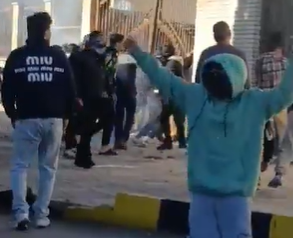
As we see an influx of videos on social media watching the brave people of Iran take to the streets – again – against the theocratic dictatorship that rules over them, a common response is “I hope I am wrong, but”. The prevailing sentiment is that Iran has seen significant and widespread uprisings before now – six in the last 16 years, by one metric – but they have all failed in ultimately toppling the regime.
There are some differences this time around, however. June saw the Iranian regime comprehensively humiliated during a 12-day exchange of strikes with Israel, in which swathes of the Iranian high command were eliminated in targeted fashion, making it clear just how deeply the regime had been compromised. The culmination of the short conflict saw the US itself strike Iran’s nuclear facilities at Fordow. Despite the endless propaganda from regime sources, the regime’s weakness was exposed in brutal fashion. For a dozen days, Iranian airspace was effectively under Israeli control. Not a single Israeli aircraft was brought down, despite a variety of fake stories to that effect.
The notion that an internal uprising against the regime would come at the same time as the Israeli attacks was always a far-fetched one. Despite Israel taking great pains to insist that the attack was directed at the regime itself rather than ordinary Iranians, few ordinary citizens would have seen a period where their country was coming under major external attack as an opportunity to mount an internal rebellion.
In the six months since, however, the general population has had plenty to spur its anger to new heights. The value of the rial, Iran’s currency, has plunged by 40% since June. The price of staple food items has consequently soared. Oil revenues have slumped, under the weight of US sanctions. The country, which has felt the effects of global warming particularly acutely, has also suffered from extended drought in the latter part of this year – its worst since before the 1979 revolution that toppled the Shah and brought the current regime to power. Rain finally fell in Tehran earlier this month, but that has done little to address the underlying issue – which has to do with decades of mismanagement and corruption by regime lackeys.
The 1979 Revolution against the Shah was primarily an internal revolt (it infamously took the CIA totally by surprise) against a dictatorship which was seen as both brutal and completely out of touch with the common people. As is so often the case with successful revolutions, what sealed the fate of the Pahlavis was the army turning against it. The Ayatollahs were acutely aware of this problem, and sought to bypass it by effectively creating their own armed forces, the Islamic Revolutionary Guard Corps – fanatical cadres of those most loyal to the regime. Today, Iran effectively operates with two different armed forces – the IRGC (which has army, navy and air force branches, as well as a paramilitary group, the Basij, which operates as a public auxiliary force opposing civil rebellion), and its conventional armed forces, known as Artesh.

Without significant elements of the Artesh actively turning against the regime, the chances of the Ayatollahs being toppled are slim. There are tens if not hundreds of thousands of protestors on the streets, certainly, but they are unarmed. Military defections are a key way to gauge the ongoing stability of the regime, because in most cases, those defecting will have made a simple calculation of safety – is the regime likely to survive and wreak vengeance on myself and my loved ones? The more officers who conclude that the answer to that question is “no”, the more will defect, until enough momentum is created to initiate a domino effect.
Regime collapse is often unexpected right up until the moment that it happens, with many experts caught out. The so-called “Arab Spring” was largely unexpected before it happened. Few people expected the dramatic and total collapse of the Assad regime in December last year. So it is understandable that many will be cautious rather than exuberant at the latest protests in Iran, especially given the regime has weathered such storms before. Social media observers would be wise to remember that on social media – particularly Twitter – there will be those who, deliberately or mistakenly, will circulate old footage of protests in Iran and elsewhere as if it is new. Reliable accounts which I would recommend on this issue who will only circulate confirmed current footage include Shayan Sardarizadeh and Ghoncheh Habibiazad.
Above all, let us hope that if the protests succeed and the regime is toppled, it is achieved without bloodshed, in a way which enables Iran to emerge from brutal paralysis and rejoin the wider world.

Keep community journalism free.
Jewish News is free for everyone. No paywall. No barriers. Just trusted journalism for anyone who wants to stay connected to Jewish life in Britain.
If you value that, please support us.
From as little as £5 a month, you can help keep our journalism free and accessible to all.
Every day, we report on the issues that matter to our community. We celebrate achievements, support charities, challenge antisemitism and ensure Jewish voices are heard more widely.
From as little as £5 a month, you can help us continue to:
- Report on the stories shaping Jewish life in the UK and beyond
- Bring our community together through shared stories, events and campaigns
- Celebrate the people, culture and moments that define our community
- Support organisations doing vital work across Jewish Britain
You can make a one-off donation or become a regular supporter. Every contribution helps keep our journalism free, independent and accessible to all.
If everyone who values Jewish News gave a small amount, it would make a real difference to our future.