Prefer Jewish News on Google

Apartheid-era play The Moth has unsettling parallels to today’s world
South African playwright Paul Hertzberg explores race, war and the limits of forgiveness
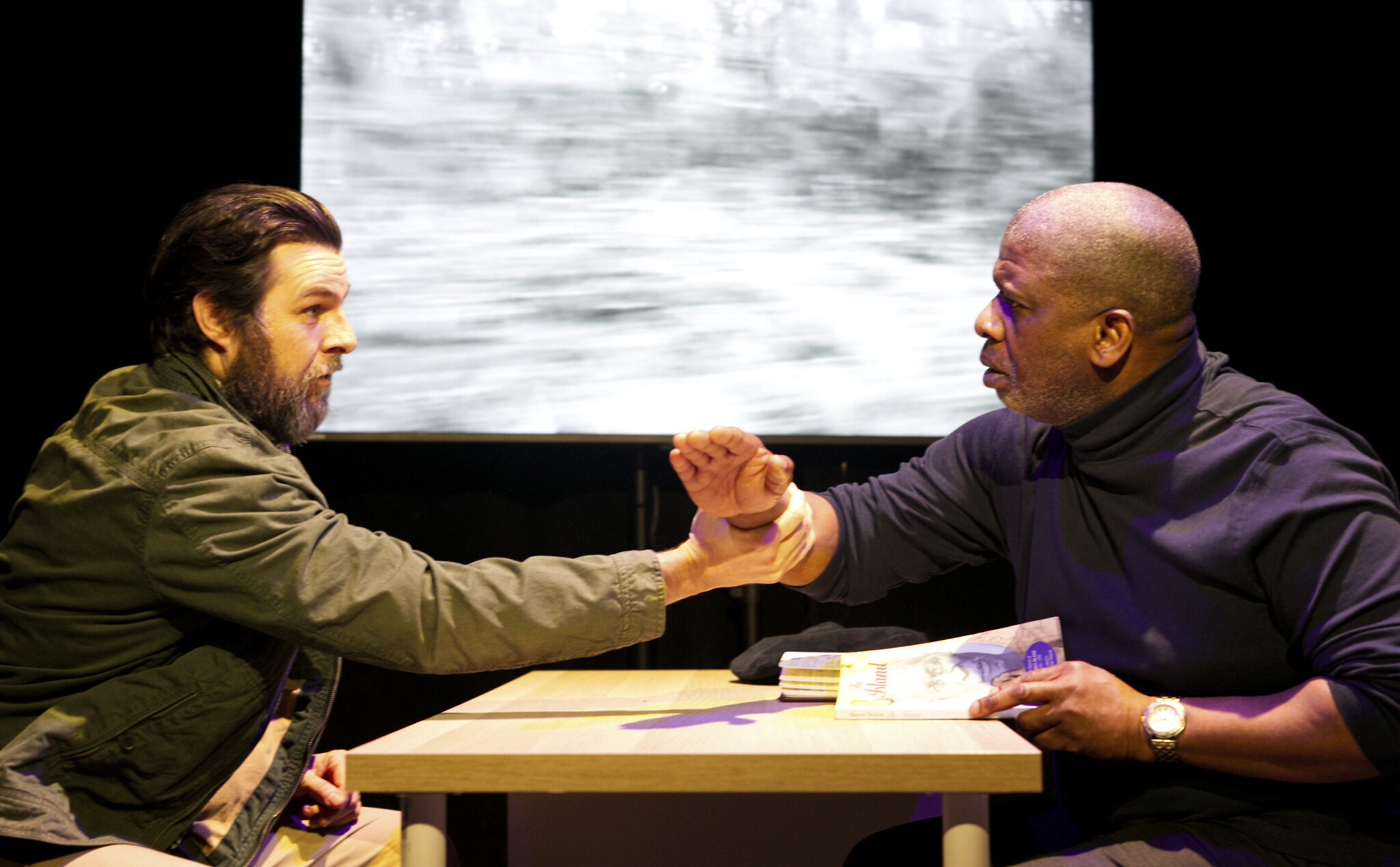
Paul Hertzberg’s new play The Moth starts conversations and challenges the audience. Set in the aftermath of apartheid, it creates many parallels with what is happening in the world today.
The story centres on a chance meeting on a train between John, a black British journalist, and Marius, a white South African ex-soldier. Their meeting sets in motion an escalating chain of events that reshapes their lives over the next thirty years – as John withholds forgiveness and Marius becomes increasingly obsessed with seeking it. Finally, before the nation’s television cameras, they face each other to confront the past and lay bare their conflicting truths.
South-African born Paul, who now lives in Crouch End, says the play is inspired by a true story. It is a psychological thriller of memory, race, war, trauma the legacy of apartheid and the limits of forgiveness.
Written before the events of October 7, The Moth started out as a 10-minute monologue. It went on to be selected for 26 festivals across the world, winning the Kwanzaa Film Festival Best Monologue Award in New York City.
“I wrote the initial monologue during lockdown,” said playwright Paul, “but in the aftermath of October 7, I could see the parallels of how antisemitism falls within the area of how contemporary racism is galloping toward us. As a Jewish man, one who did not have a conventional traditional religious upbringing, I am appalled at the rise in antisemitism. People seem to mistake deep feeling for truth.


“The Moth looks at racism through the eyes of two men in the present, who are forced to confront their troubled past after a chance encounter. It explores the nature of forgiveness: what it really is, who has the right to confer it, whether it has any meaning in the context of human progress.”
Paul not only writes plays, he also performs in them. He played Israeli Prime Minister Shimon Peres in the West End play Oslo. Born in Cape Town, he is one of a coterie of South African Jewish performers and playwrights who were anti-apartheid and political activists, and who left the country and came to the UK to train in theatre.
Paul says his upbringing was not a religious one, but he nonetheless very much had a Jewish identity.
“I did feel different from my contemporaries,” he explains, “and I was lucky enough to not personally experience any antisemitism. But when I was forced to go into the army as a young conscript, there was a significant Jewish intake, and I saw the antisemitism some of my fellow conscripts experienced.”
When the Angolan war reached its zenith Paul was recalled as a reservist and it was only after he was demobbed that he came to England to study at LAMDA.
Paul says he is proud of The Moth. “The play seems to have touched a lot of people. It comes to London after a sell-out Northern tour and in many ways, it has opened up conversations; started dialogues, and given people who had felt they were muzzled an opportunity to speak.
The Moth is at Finborough Theatre until 21 November. finboroughtheatre.co.uk

Keep community journalism free.
Jewish News is free for everyone. No paywall. No barriers. Just trusted journalism for anyone who wants to stay connected to Jewish life in Britain.
If you value that, please support us.
From as little as £5 a month, you can help keep our journalism free and accessible to all.
Every day, we report on the issues that matter to our community. We celebrate achievements, support charities, challenge antisemitism and ensure Jewish voices are heard more widely.
From as little as £5 a month, you can help us continue to:
- Report on the stories shaping Jewish life in the UK and beyond
- Bring our community together through shared stories, events and campaigns
- Celebrate the people, culture and moments that define our community
- Support organisations doing vital work across Jewish Britain
You can make a one-off donation or become a regular supporter. Every contribution helps keep our journalism free, independent and accessible to all.
If everyone who values Jewish News gave a small amount, it would make a real difference to our future.