Prefer Jewish News on Google

REVIEW: The Pianist, Park Theatre
Extraordinary revival of story of loss, memory and survival is destined to be a hit
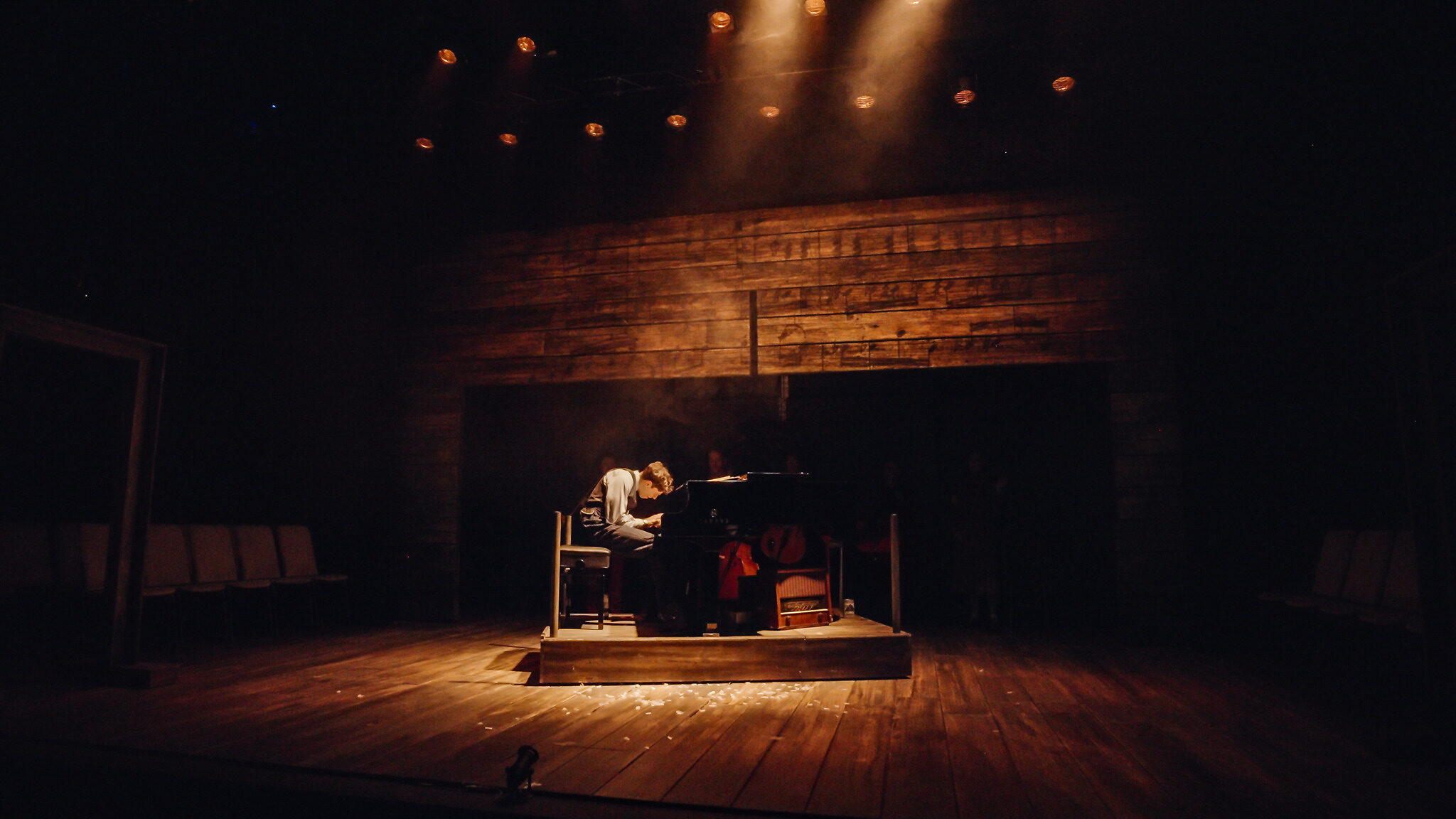
The audience on press night at the Park Theatre’s world premiere of The Pianist stumbled out in shock. Most of them will never have seen a production like this before — billed as a musical, but not the kind of thing we normally associate with that word.
This was a play with music, but not just any music. This was an extraordinary revival of, and tribute to, the work of the Polish-Jewish composer and musician, Wladyslaw Szpilman. By arrangement with his son Andreas — Szpilman himself died in 2000 — The Pianist is based on his harrowing memoir of his Holocaust survival.
Adaptor and director Thom Southerland has done a fine job in reimagining Szpilman’s story, so that the music — played by a talented ensemble identified as his family — comes to the fore in a way Szpilman could only have hoped for, during his long time in hiding in the ruins of 1940s Warsaw.
Southerland’s conceit is almost never to have Daniel Krikler, as Szpilman, actually playing the piano. Instead, we have the grave and impressive figure of the production’s musical director, Malcolm Forbes-Peckham, resplendent in white tie and tails, seemingly unflappable as cast members clamber over the piano.
Krikler doesn’t just play Szpilman, he inhabits him. From his very first appearance, when he looks like any sweet Jewish man that we might know, just out of his teens, to his last agonising memories when his face looks gaunt with starvation, Krikler gives us a survivor of power.



In the early domestic scenes we meet Szpilman’s family, each in their own way suffering from a delusion that they won’t become victims of the Nazis. There is his poet brother, Henryk, raging at Szpilman for making the family fall in line with his choices; his fond mother, bringing in an armful of Magen David armbands for the family to wear as the Nazis crack down on Polish Jewish life; his two sisters, Regina and Halina; and almost worst of all, his fantasising father, who appears to believe that the new Polish rulers will keep their promises. And even though Szpilman, who works for Polish National Radio, might at first seem selfish, it soon becomes clear that it is only he who is keeping this family together.
Throughout the narrative we hear Szpilman’s music, given lyrics by a talented eight-strong team whose experience includes writing for Dolly Parton, Chaka Khan and the Doobie Brothers. We begin to get a sense of why Szpilman was so popular in Poland, with some of his songs echoing Cole Porter-ish traits, dance music, and his signature interpretation of Chopin.
The family, like so many others, is forced to live in the Jewish ghetto, whose walls Szpilman is forced to build. Andrzej Goulding’s clever set of sliding doors allows the audience to imagine the sensation of claustrophobia as the family adjusts to its new existence.
But nothing equips them to deal with “transportation to the East”, when Szpilman’s entire family is sent off to Treblinka in cattle cars. At the last minute, the musician escapes — but the price he pays is to be left alone in Warsaw.
I did not get a real sense of Szpilman’s Jewish identity in the first act: rather, it is expressed through outside forces imposing their cruel will on his family, like so many others. But Szpilman himself does not really appear to know why he is being persecuted, other than to vow that he will not work for the Germans.
This makes the transformative encounter with the German officer who finds him at the war’s end so extraordinary. For the officer — who helps Szpilman by first giving him his warm winter coat, and then bringing him some food — is revealed as another human being, sickened by conflict and seduced by music.
Throughout the production Southerland shows how Szpilman was helped, often at great risk to themselves, by Poles who loved him and his music. Above all, this is a show asking tough questions about the choices we make — and what the results might be. As Southerland says in the programme notes, this is a story of “loss, hope, memory and ultimately survival.”
It is heartbreaking, but I think the Park has a hit on its hands.
The Pianist runs at the Park Theatre until 28 November. parktheatre.co.uk
Read our interview with Daniel Krikler about playing the role of Wladyslaw Szpilman in The Pianist here.

Keep community journalism free.
Jewish News is free for everyone. No paywall. No barriers. Just trusted journalism for anyone who wants to stay connected to Jewish life in Britain.
If you value that, please support us.
From as little as £5 a month, you can help keep our journalism free and accessible to all.
Every day, we report on the issues that matter to our community. We celebrate achievements, support charities, challenge antisemitism and ensure Jewish voices are heard more widely.
From as little as £5 a month, you can help us continue to:
- Report on the stories shaping Jewish life in the UK and beyond
- Bring our community together through shared stories, events and campaigns
- Celebrate the people, culture and moments that define our community
- Support organisations doing vital work across Jewish Britain
You can make a one-off donation or become a regular supporter. Every contribution helps keep our journalism free, independent and accessible to all.
If everyone who values Jewish News gave a small amount, it would make a real difference to our future.