Prefer Jewish News on Google
Unique chance to enjoy Schubert’s much-loved Trout Quintet at JW3
Five outstanding musicians will perform the single most popular work in chamber music
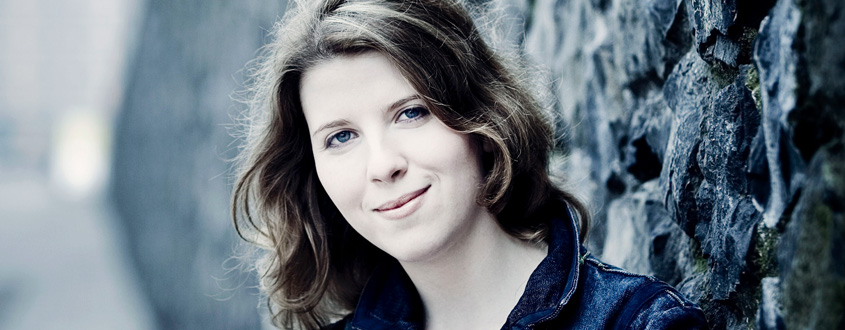
Franz Schubert’s Trout Quintet is a masterpiece that combines stunning melodies with the intimacy of chamber music. On 28 October, five outstanding musicians – pianist Polina Leschenko, violinist Aylen Pritchin, violist Ami-Louise Johnsson, cellist David Waterman and double bassist Enno Senft – come together at JW3 to bring this much-loved work to life.
Composed in 1819, when Schubert was just 22, the Piano Quintet in A major, D.667, owes its nickname to the fourth of its five movements, which takes as its starting point the composer’s own song Die Forelle (The Trout). Its playful melody, bubbling accompaniment and constantly changing textures evoke the movement of a fish through water, making it one of the most recognisable themes in the chamber music repertoire.
The work is unusual in its instrumentation. Rather than the conventional piano quintet combination of piano and string quartet, Schubert replaces the second violin with a double bass, giving the ensemble richness and buoyancy. The result is a conversation between five instruments, each with its own personality, in music that moves effortlessly between exuberance, tenderness and mischief.
At the piano is Polina Leschenko, the Russian-born virtuoso celebrated for her interpretations of Chopin, Liszt and Mendelssohn. Joining her is Russian-Vietnamese violinist Aylen Pritchin, whose international reputation has been built on performances spanning early music, the classical repertoire and contemporary works.
The viola voice belongs to Swedish-Japanese musician Ami-Louise Johnsson, who has performed as a soloist and chamber musician across Europe and Scandinavia.



Cellist David Waterman, artistic director of JW3’s classical music series, provides some of the work’s most expressive passages. Alongside him is Enno Senft, principal double bassist of the distinguished Chamber Orchestra of Europe.
The quintet unfolds across five movements, from the sunny opening Allegro vivace to a graceful Andante, a fast-paced Scherzo and the celebrated variations on The Trout, before a spirited finale.
More than two centuries after its creation, the Trout Quintet remains a musical delight: intimate yet exuberant, technically demanding yet wonderfully accessible. In the hands of five musicians with such varied backgrounds and complementary talents, it promises a very special evening that darts, shimmies and sparkles, just like the fish that inspired its name.
The Trout Quintet is at JW3 on 28 October. Tickets at jw3.org

Keep community journalism free.
Jewish News is free for everyone. No paywall. No barriers. Just trusted journalism for anyone who wants to stay connected to Jewish life in Britain.
If you value that, please support us.
From as little as £5 a month, you can help keep our journalism free and accessible to all.
Every day, we report on the issues that matter to our community. We celebrate achievements, support charities, challenge antisemitism and ensure Jewish voices are heard more widely.
From as little as £5 a month, you can help us continue to:
- Report on the stories shaping Jewish life in the UK and beyond
- Bring our community together through shared stories, events and campaigns
- Celebrate the people, culture and moments that define our community
- Support organisations doing vital work across Jewish Britain
You can make a one-off donation or become a regular supporter. Every contribution helps keep our journalism free, independent and accessible to all.
If everyone who values Jewish News gave a small amount, it would make a real difference to our future.