Prefer Jewish News on Google
Daniel Auteuil’s new film is a powerful true story of Jewish rescue
When The Night Falls recounts dark chapter of French history
There are actors whose names you know and faces you recognise, and for British audiences Daniel Auteuil is both, while remaining unmistakably French. If you saw Jean de Florette and Manon des Sources — and in the 1980s it seemed everybody did — you’ll remember him as Ugolin, the tragic farmer in Claude Berri’s films – a role that transformed Auteuil from popular comic actor to serious star and won him his first César.
At 76, after more than half a century on stage and screen, he has long since earned the cliché “legend of French cinema” – and in his case, it fits. But Daniel Auteuil is not interested in looking backwards.
“I know I’m 75, but I don’t know who that 75-year-old guy is,” he said last year, and rather than settle into elder-statesman roles, has increasingly moved behind the camera.
His latest film, When the Night Falls (La Troisième Nuit), which he co-wrote and directed, take shim into one of the darkest chapters of French history and it’s a story many French people don’t know.
Set in August 1942 when France was under occupation and the Vichy government was rounding up foreign Jews at Vénissieux, near Lyon, hundreds of men, women and children were detained while a commission decided their fate.
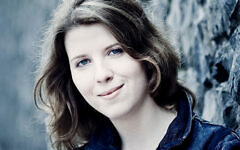
Among those trying to save them were Gilbert Lesage, a civil servant (Antoine Reinartz) and Father Alexandre Glasberg, played by Auteuil himself. Glasberg was a Catholic priest born Jewish in Ukraine who had experienced pogroms before converting to Christianity – a history Auteuil believes was crucial.
“He recognises what is happening and knows what will follow,” says Auteuil who made the priest’s Jewish past one of the film’s most affecting moments with Glasberg asked to pray.
“He, as a Jew who converted, rediscovers his old prayer, the one he grew up with,” says Auteuil. “He lives with that ambivalence. These are his people.”
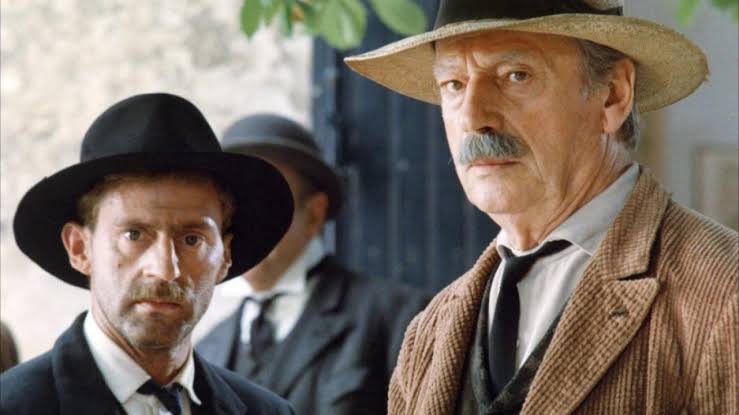
For Auteuil, what happened at Vénissieux is not safely confined to history. Speaking to the French newspaper Corse-Matin, he said: “I don’t think there is a resurgence of antisemitism; it has always existed.”
He was profoundly affected by discovering as a teenager that France had participated in the elimination of Jews but appreciates there was another France too.
“We must recognise that in France anonymous women and men were everyday heroes without knowing it and saved Jews who were victims of these despicable laws. You can resist without a weapon. That form of resistance appealed to me.”
At Vénissieux, parents faced unimaginable choices as they tried to save their children from deportation. It raises the question that hangs over every film about the Occupation: what would we have done?
“We’ve all asked ourselves the question – would I have collaborated or resisted?” says Auteuil. For him, the distinction is clear.
“When it comes to a genuine moral duty, we must resist.”
And he is adamant that When the Night Falls should not be filed away as history.
“This isn’t a period film,” he says. “It’s a modern-day film that uses a moment in history to tell the story of today.”
When the Night Falls has its UK premiere as UKJFF’s Opening Night Gala film at the BFI Southbank on Thursday 5 November with an introduction by producer Adrien Nussenbaum. Tickets at ukjewishfilm.org

Keep community journalism free.
Jewish News is free for everyone. No paywall. No barriers. Just trusted journalism for anyone who wants to stay connected to Jewish life in Britain.
If you value that, please support us.
From as little as £5 a month, you can help keep our journalism free and accessible to all.
Every day, we report on the issues that matter to our community. We celebrate achievements, support charities, challenge antisemitism and ensure Jewish voices are heard more widely.
From as little as £5 a month, you can help us continue to:
- Report on the stories shaping Jewish life in the UK and beyond
- Bring our community together through shared stories, events and campaigns
- Celebrate the people, culture and moments that define our community
- Support organisations doing vital work across Jewish Britain
You can make a one-off donation or become a regular supporter. Every contribution helps keep our journalism free, independent and accessible to all.
If everyone who values Jewish News gave a small amount, it would make a real difference to our future.