Prefer Jewish News on Google
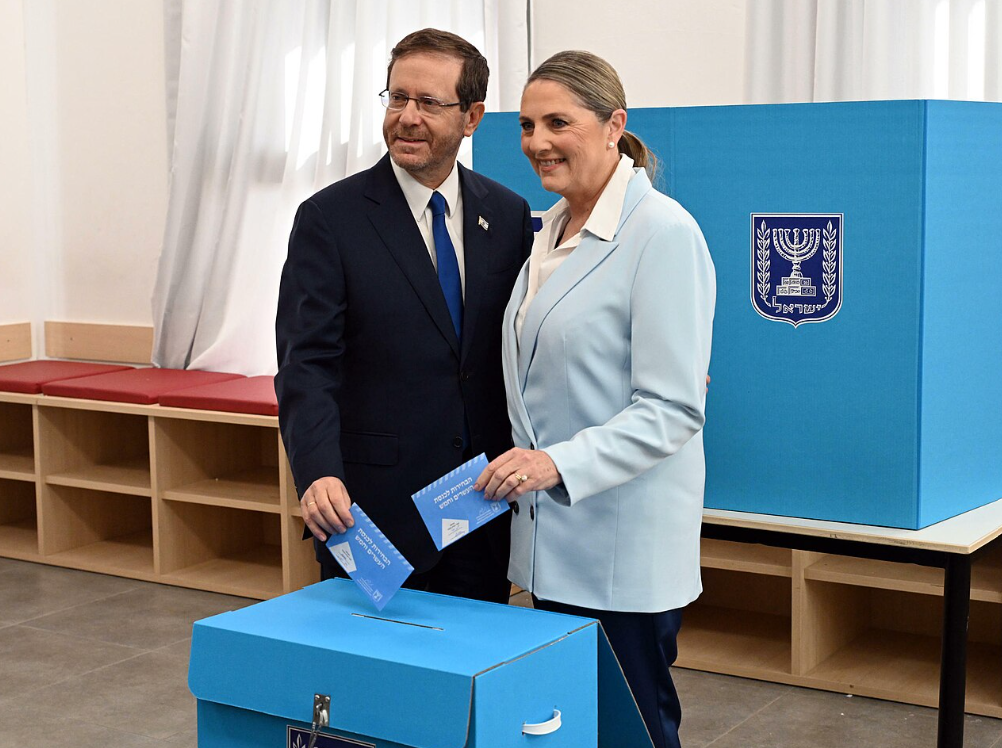
On Tuesday 27 October, Israel will hold its legislative elections, which will determine all 120 seats in the Knesset, the country’s Parliament. The result of this vote will determine who leads the next Israeli government.
However, the Israeli political system is very different from that of some other democracies – notably, the UK and the USA. This explainer will set out how the Israeli electoral system works, provide information about different political parties, and show how a variety of different options may be possible, depending on the overall result.
The Electoral System
Israel has a unicameral system, meaning that its Parliament has one legislative chamber with the power to pass laws (as Denmark, New Zealand or Greece), rather than two (as in the UK, France or Australia). Israel’s Parliament is called the Knesset (the Hebrew word for Assembly); a direct reference to the Knesset HeGedolah, the Great Assembly, which was present in Israel from roughly 520 BCE-335 BCE. The membership of that body, comprised of the wisest and most respected of the Jewish people, were known as the Anshei Knesset HaGedolah – the men of the great assembly – and there were 120 of them, a number deliberately chosen for the Knesset in the modern State of Israel to mirror that earlier period.
Israel also uses a Proportional Representation voting system. One of the direct consequences of this is that no single party in Israel’s political history has won an outright majority of Knesset seats, meaning that the country has never had a government which was not a coalition made up of a number of different parties – some with very different viewpoints on certain issues. Such coalitions can also shift, with different parties entering or leaving, depending on circumstance and political climate. Like most Parliamentary democracies, in Israel the Prime Minister must themselves be a member of the Knesset.


Unlike some other countries, including the UK and USA, Knesset seats are not connected to an individual constituency or district. Approximately eight weeks before an election, each political party submits a list of ranked candidates. The number of candidates who get elected to represent that party in the Knesset will depend on the percentage of the overall vote which that party receives, meaning that the higher up the list you are, the more likely you are to be elected.
Israel’s voting system also contains an electoral threshold – since 2015, parties must receive at least 3.25% of the votes (equivalent to 4 seats) in order to receive any Knesset seats at all.
In response to this, smaller parties will sometimes form short-term alliances, becoming a joint entity specifically with the intention of clearing the electoral threshold, and often breaking into their component parts again post-election. This is not viewed as breaking any rules, and parties from the entire breadth of the political spectrum will regularly do this.
The Political Parties
While the early decades of Israeli politics were dominated by the Left – until 1977, every Prime Minister of Israel was either from the Labor party or its predecessors – in recent decades the Left in Israel has shrunk considerably, with various right-wing parties having held the balance of power for most of the 21st century.
Some of Israel’s political parties are longstanding, while others have formed only recently. As opposed to many other democracies, individuals will often found their own political parties, based on the strength either of their personality or their record.
In a country where military service is compulsory for secular people, former senior military officers will often run for political office, with their national service forming a major part of their campaigns. Among other candidates, the upcoming election will see two parties led by former IDF Chiefs of Staff (Benny Gantz and Gadi Eisenkot), two other parties led by former generals (Yair Golan and Ofer Winter), as well as other parties led by individuals who previously served in Israel’s elite commando units (Benjamin Netanyahu, Naftali Bennett and Yoaz Hendel).
However, senior security officials – those with the rank of Major general and above, as well as the heads of Israel’s security services – the Shin Bet and Mossad – there is a legally required “cooling off period” of three years before they can run for political office. This law is specifically designed to create a clear separation between the military and politics.
For reasons of brevity, the following list will contain only the parties who are considered to have a chance of reaching the 3.25% threshold:
The Democrats – Led by Major General (res) Yair Golan, they are a merger between the much-diminished centre-left Israeli Labor Party, and the left wing Meretz party.
The Joint List – An alliance of the Arab Israeli Hadash, Ta’al and Balad parties
The Likud Party – led by Prime Minister Benjamin Netanyahu, it is the longstanding and largest party of the right. It has moved further rightward in recent years.
Otzma Yehudit – a far right party (Otzma Yehudit literally means ‘Jewish Power’) headed by Itamar Ben-Gvir
Religious Zionist Party-Zehut – An alliance between two far right parties – the Religious Zionist Party, led by Bezalel Smotrich, and the Zehut Party led by Moshe Feiglin,
Shas – A strictly Orthodox party which traditionally represents the interest of Charedi Sephardi and Mizrachi Jews, founded by the former Sephardi Chief Rabbi of Israel Rabbi Ovadia Yosef. While ultimate authority is in the hands of a Rabbinical council (led by Rabbi Yosef’s son), its leading politician is Aryeh Deri.
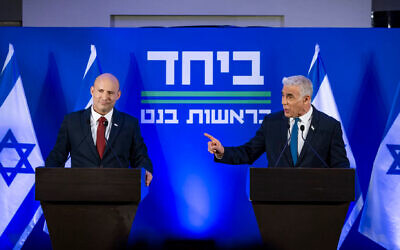
Together – An alliance between the right wing party founded by Naftali Bennett (Bennett 2026), and the centre-right party led by Yair Lapid (Yesh Atid).
United Arab List (Raam) – An Arab party led by Mansour Abbas. Made headlines recently after Yoav Segalovitz, a former senior Israeli police officer and MK for Yesh Atid, announced that he would be joining the Raam party list for this election.
United Torah Judaism – A longstanding strictly orthodox political alliance, traditionally seen as representing Charedi Ashkenazi Jews.
Yashar – A new centre-right party led by former IDF Chief of Staff Gadi Eisenkot, which is considered likely to win the largest number of seats in the upcoming election.
Yisrael Beiteinu – originally founded to primarily represent secular immigrants from the former Soviet Union, this right wing party has been led since its inception by Avigdor Lieberman.
In 1992, a Parties Law mandated that only legally registered parties can submit a list of candidates for inclusion in the choices which voters will receive on election day – meaning that the array of independent candidates that run in individual constituencies in the UK, for example, are not present. However, the “Alei Yarok” (Green Leaf) party, was a fixture in Israeli elections in the 2000s, coming relatively close to what was then the threshold for Knesset seats. Similarly, Israel’s Pirate Party will be one of those contesting the October election, as it has done since its founding in 2012.
Polling Day
Israel’s election day is a national holiday, and absentee voting is largely prohibited. This means that, apart from diplomats serving abroad, any Israeli citizens who are outside the country must return to Israel in person to cast their ballot.
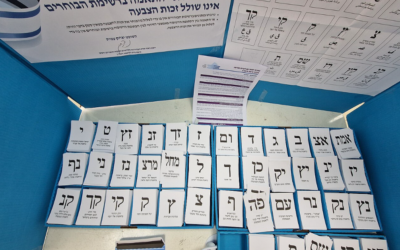
In the polling booth, voters are presented with multiple slips of paper, each with Hebrew specific Hebrew letters on, representing the different party lists. Sometimes this can be the party name in Hebrew – for example, the slip representing the Shas party has the letters שס. Sometimes the letters form an acronym – מחל, the letters associated with Likud, reference different parties which eventually joined together to form the party known as Likud today.
The system can be complex, because parties which have a longstanding use of a certain letter have the right to prevent another party using a similar name. For example, Yair Lapid’s “Yesh Atid” party originally wanted to use the letters יש (“Yesh”), but the Shas party’s use of the letter ש entitled it to prevent Yesh Atid from using that letter – which it did.
To cast their ballot, the voter simply picks the slip which has the letters linked to the party they wish to support, puts it into an envelope, which they then seal, and place it in the ballot box.
Once the polls have closed, the Israeli Elections Committee is responsible for hand-counting the votes.
The Aftermath
After the votes are counted and the Knesset seats are all allotted, the horse trading begins.
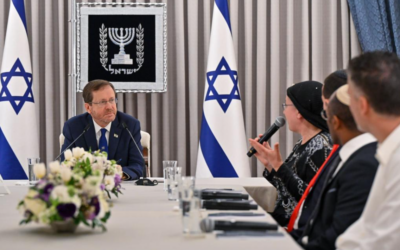
The President of Israel, who is meant to be apolitical, will consult all the different party leaders. They will give one of those leaders (usually the one either with the most seats or who is deemed to have the best chance of forming a coalition), the chance to attempt to form a governing coalition – although all parties will have already been in discussions on the subject.
In 2022, Benjamin Netanyahu managed to negotiate a coalition of 64 seats, giving him a majority which meant he was able to form the government. Prior to that, however, Israel had experienced four years of political crisis, with repeated elections held in that period due to a persistent inability to effectively form a governing coalition.
In theory, the party leader chosen by the President will have four weeks to attempt to build a coalition (with the possibility of a further two week extension if it can be reasonably shown that the chances of forming a working coalition if such an extension is given are high).
If that leader fails to do so, the President can then give another party leader the opportunity to try, or can decide to send the decision to the Knesset.
It is tempting to look at the array of parties competing in the election and broadly categorise them as either pro-Netanyahu or anti-Netanyahu. But despite election-time rhetoric, once the votes have been counted, practicality may reign. To give two examples, the spiritual leader of Shas reportedly wanted his party to consider allying with anti-Netanyahu parties post-election, while Itamar Ben Gvir accused Benjamin Netanyahu of potentially trying to form an alliance post-election which would not include him.
If Gadi Eisenkot is given the first chance to form a government, he will have to consider how many seats various parties have won. The most straightforward path would be for his party, Yashar, to form a coalition with Together, Yisrael Beitenu and the Democrats, forming a coalition united by its opposition to Benjamin Netanyahu and the various policies enacted by the previous government, which he led.
However, if these parties do not reach 61 seats, Eisenkot may have to consider forming a coalition with the one Israeli-Arab party which is open to the idea (Ra’am), which would open himself up to attacks from the wider Right of Israeli politics. Alternatively, he could seek to do a deal with Charedi parties (Shas and UTJ), but the price they would want for their support – a moratorium on attempts to draft strictly Orthodox students into the IDF – would run counter to a key issue that many of Eisenkot’s own supporters are pushing for.
On the other side, Netanyahu would likely seek to form a coalition with those he partnered with for the 2022-2026 term – namely Otzma Yehudit, the Religious Zionist Party-Zehut alliance, Shas and UTJ. However, if he were unable to reach 61 seats, he might seek to appeal to more right wing elements of some of the other parties, particularly Together, where some of those MKs elected alongside Naftali Bennett might be coaxed away.
Likud was successful in its efforts in 2022 to peel away various MKs affiliated with Bennett, enabling it to collapse the previous wobbling coalition and triggering the November 2022 election.
The Israeli election – and ultimately, its results, will be closely monitored around the world, in the full knowledge that their results could impact the wider Middle East and beyond.

Keep community journalism free.
Jewish News is free for everyone. No paywall. No barriers. Just trusted journalism for anyone who wants to stay connected to Jewish life in Britain.
If you value that, please support us.
From as little as £5 a month, you can help keep our journalism free and accessible to all.
Every day, we report on the issues that matter to our community. We celebrate achievements, support charities, challenge antisemitism and ensure Jewish voices are heard more widely.
From as little as £5 a month, you can help us continue to:
- Report on the stories shaping Jewish life in the UK and beyond
- Bring our community together through shared stories, events and campaigns
- Celebrate the people, culture and moments that define our community
- Support organisations doing vital work across Jewish Britain
You can make a one-off donation or become a regular supporter. Every contribution helps keep our journalism free, independent and accessible to all.
If everyone who values Jewish News gave a small amount, it would make a real difference to our future.