Prefer Jewish News on Google
New documentary about IDF strikes in Gaza causes anger in Israel
"NAZA", directed by Yuval Abraham and Rachel Szor, has been vehemently criticised by the Israeli military
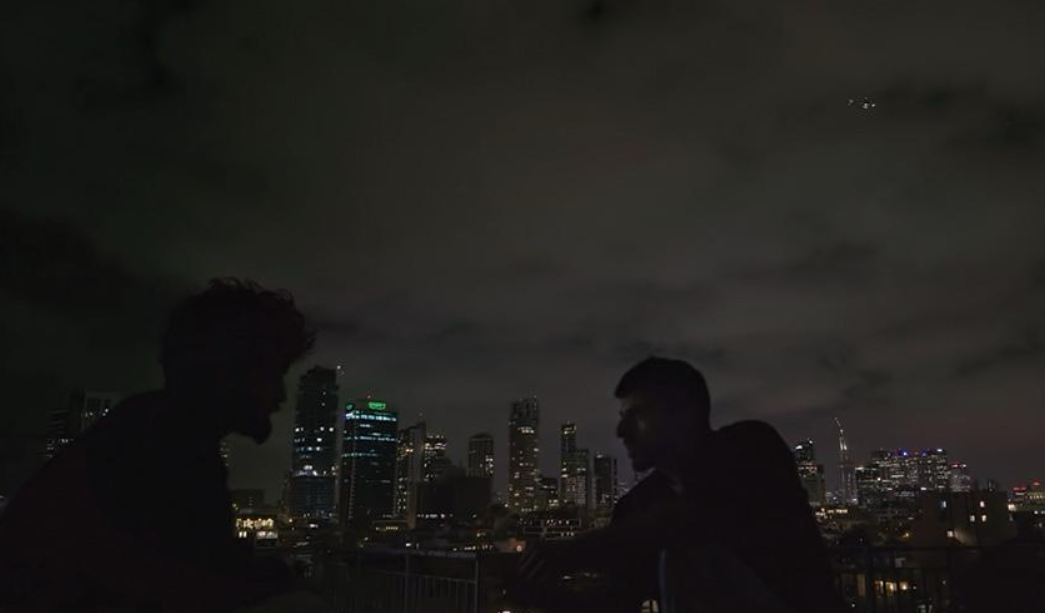
A film which accuses the IDF of having conducted strikes against Hamas members in Gaza with the full knowledge that there would be large numbers of civilians hit as a result has been widely criticised within Israel, with calls for its directors to face consequences as a result.
NAZA, which debuted at the Venice Biennale last week and subsequently won the film festival’s special jury prize, is directed by Yuval Abraham and Rachel Szor, who previously won an Oscar for their 2024 documentary about the West Bank, No Other Land.
The pair’s latest documentary, whose name is based on the acronym for the Hebrew words “Nezek Agavi”, used by the IDF to refer to risk of collateral damage, features what it claims are a series of Israeli intelligence and military officials describing their wartime service, post 7 October. The filming, which takes place on the rooftops of Tel Aviv, does not identify any of those alleged to have been involved in the IDF’s targeting processes in Gaza. The documentary received a 24 and a half minute standing ovation, timed so as to become the longest in the festival’s history, outpacing a similarly timed effort for another documentary on Gaza, The Voice of Hind Rajab, at last year’s festival.
The documentary, which will now premiere at other film festivals before eventually becoming available to a wider audience, has been vocally criticised by the IDF in an extensive statement, with the Israeli military’s spokesperson, Brigadier Effie Defrin, saying:
“The film “NAZA” has not yet been released in full [in Israel]. However, based on what can be seen in the promotional material, it presents a series of serious and false allegations regarding the IDF and its personnel. The claims presented in the promotional material are inaccurate, some of which are portrayed in a distorted and misleading manner, disconnected from the reality on the ground.
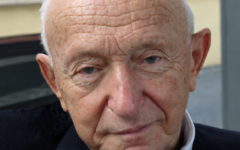
“I want to emphasize: the IDF is a military guided by values, operating in accordance with international law and binding professional standards and principles. This is how we have operated over the past three years, and this is how we will continue to operate, even under the most complex combat conditions.
“To enable a substantive, professional, and fact-based discussion, rather than one based on misleading portrayals, I invite the filmmakers to allow IDF representatives to view the film in full so that we can address each of the allegations it raises on its merits. The public discussion surrounding this film should be based on facts—not misleading portrayals or false accusations.
“Since 7 October, the IDF has worked relentlessly to defend the State of Israel and its civilians. Together with the IDF’s commanders, I stand firmly behind our soldiers, commanders, and personnel, and unequivocally reject the baseless accusations directed against them. Those who have made sacrifices and have defended our country, and continue to do so, deserve our full support and protection in return.”
A variety of senior Israeli politicians condemned Abraham and Szor, with Prime Minister Benjamin Netanyahu describing their behaviour as “shocking. We are fighting global antisemitic incitement and when it comes from within us it is intolerable.”
Israel’s Culture Minister, Miki Zohar, took an even harsher line, calling for the pair to be stripped of their citizenship, saying that “the self-loathing that burns in the creators, who are willing to harm their homeland just to get applause from antisemites around the world, is inconceivable and constitutes a betrayal of the state.”
In response, more than 1,000 Israeli filmmakers signed a petition in support of the directorial pair, saying that “The central role of art and journalism is to hold a mirror up to the society in which they exist, to create discourse and discussion without assumptions, even when the reality is difficult.”
In his first interview with an Israeli outlet, Channel 13, in the wake of the film’s premiere, Abraham clashed with veteran Israeli TV journalist Raviv Drucker, who has watched the documentary.
“As noted, the testimonies are in silhouette, which means we don’t have the identities of those 24 people from the intelligence corps”, Drucker said.
“And I have to tell you that as a journalist, I don’t think I would have aired this. Because you bring no supporting evidence for the very, very grave things that they describe. We don’t have their names, their units, to know that they were really exposed to the information they’re talking about. We don’t have dates of events, places, who was hit – we basically have nothing to hold on to refute or confirm the grave testimony.”
Abraham responded saying that “in the interviews themselves, there was a much greater degree of specificity. Obviously, as you see how they attack us, you can understand why, to protect sources, it is sometimes necessary not to go down to that level of specifics.”
The director then made the point that the film was created together with the UK’s Guardian newspaper, saying that there were “a team of editors who also had access to the raw material. The identities of the people in it were verified.”
He went on to ask why Israeli investigative TV programmes had not, in three years, aired “not even one item…dealing with the army’s fire policy in Gaza.” As the questioning continued, Abraham’s answer as to why the film had, for example, not included any videos of hostages in Gaza, or discussion of how other countries have dealt with situations where terrorists are embedded into civilian populations, by encouraging Drucker to make his own film in which he could present things the way he wanted to.
The Guardian published a statement in response to the criticism of Abraham and Drucker in Israel, saying ““The Guardian is disturbed to see the authoritarian response to NAZA in Israel.
“Yuval Abraham and Rachel Szor are brave journalists and filmmakers. The attacks against them come from people who have not yet seen the film.
“NAZA is based on more than three years of investigative journalism. The testimonies it contains are true and we believe they deserve to be heard. The interviews were given by confidential journalistic sources.
“We will robustly defend NAZA – and the team behind it – from any attacks or attempts at censorship.”

Keep community journalism free.
Jewish News is free for everyone. No paywall. No barriers. Just trusted journalism for anyone who wants to stay connected to Jewish life in Britain.
If you value that, please support us.
From as little as £5 a month, you can help keep our journalism free and accessible to all.
Every day, we report on the issues that matter to our community. We celebrate achievements, support charities, challenge antisemitism and ensure Jewish voices are heard more widely.
From as little as £5 a month, you can help us continue to:
- Report on the stories shaping Jewish life in the UK and beyond
- Bring our community together through shared stories, events and campaigns
- Celebrate the people, culture and moments that define our community
- Support organisations doing vital work across Jewish Britain
You can make a one-off donation or become a regular supporter. Every contribution helps keep our journalism free, independent and accessible to all.
If everyone who values Jewish News gave a small amount, it would make a real difference to our future.