Prefer Jewish News on Google
EXCLUSIVE: Bevis Marks faces new threat from property developers
Leaders of Britain's oldest synagogue will give evidence at newly announced public inquiry
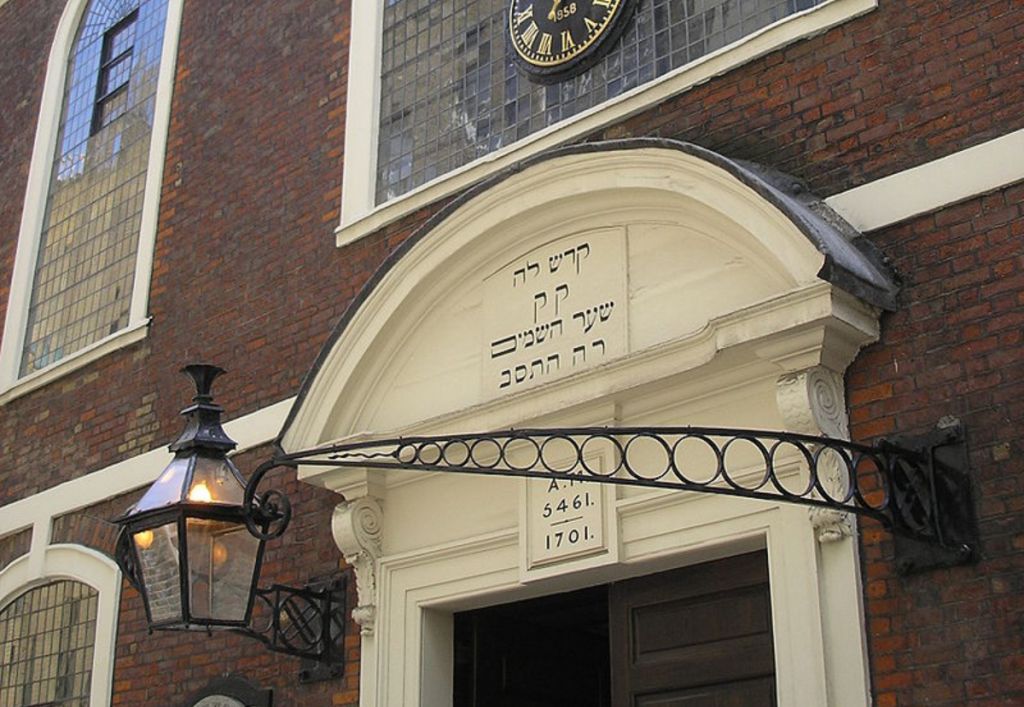
A new attempt has been made by property developers to build a tower block in the City of London which would have the effect of blocking out the light to Britain’s oldest synagogue, Bevis Marks.
Last December, in a nail-biting vote concluded only an hour before Shabbat, the City of London Planning Committee turned down — by 14 votes to eight — an application by property developers WELPUT to erect a 43-storey tower block which would have overshadowed the 300-year-old synagogue.
It was the second time in two years that the Planning Committee, sitting in Guildhall, had rejected the property developers’ bid, after a two-hour-long debate. Previously the developers had hoped to build an even taller building of 47 storeys, but had scaled back their plans for this second attempt.
The proposal — which it was claimed would provide 2,400 office jobs — also contained a variety of community “sweeteners” such as two “multi-faith centres” and an external climbing wall at the tower, sited over three buildings, which would be demolished, next to the synagogue. One of the buildings is a Grade 2 Heritage building, Holland House.
There were more than 1,000 objections to the proposal by supporters of the synagogue. including Chief Rabbi Sir Ephraim Mirvis. Bevis Marks campaigners repeatedly told the City authorities that the project would effectively cut out both daylight and sunlight to the synagogue and its courtyard, and make it difficult to see the moon on occasions when special prayers had to be recited. The developers insisted that their surveys found that the impact of the tower on the synagogue would be “negligible” or “minor”, a conclusion which was successfully challenged by the synagogue.
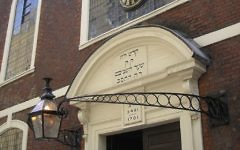
Now, however, the developers are making a renewed attempt to persuade the City authorities to acquiesce to their proposal, and their appeal means the Planning Committee will have to defend its decision to reject WELPUT’s scheme on two separate occasions.
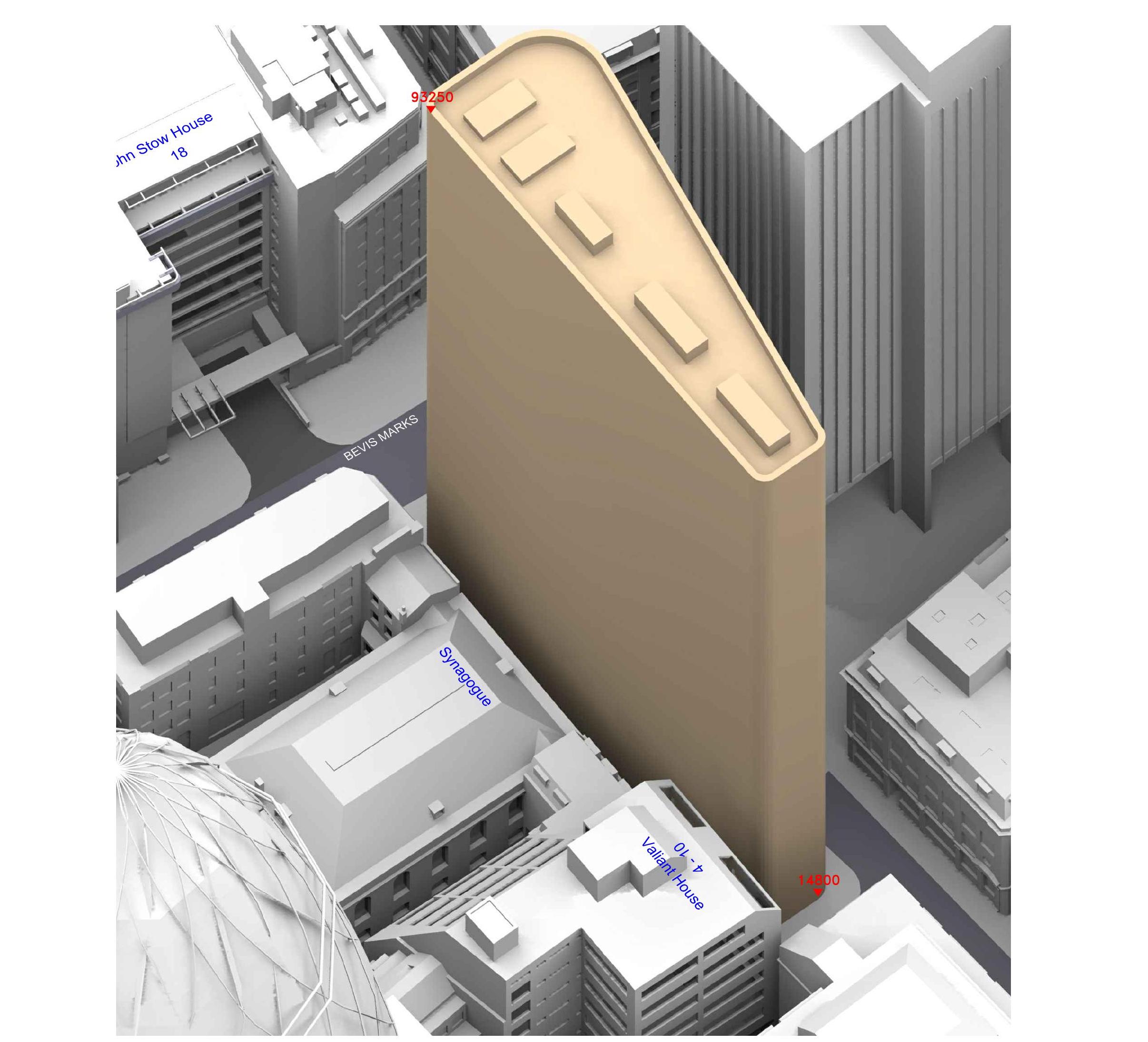
Ironically the synagogue — and the buildings which would have to be demolished if the tower block is to be built — lie in the City of London’s own Heritage Conservation Area, whose policies say no tall buildings can be granted planning permission.
The developers have written to the Secretary of State to appeal against the December 2024 refusal of their application, and there is now to be a public inquiry, with people having until November 11 2025 to make representations on the matter. A planning inspector will be appointed and the matter is now in government hands.
At the December 2024 hearing, Sir Michael Bear, a former Lord Mayor of the City of London, called the tower block bid “audacious” and spoke of the potential damage, not only to Bevis Marks but also to the nearby Tower of London.
The synagogue, he told the planning committee, was “a unique piece of architecture”, a living centre of Jewish worship and the only such non-Christian place in the City.
It was left to the synagogue’s Rabbi Shalom Morris to spell out exactly what the impact would be on his congregation’s ability to worship — the tower, he said, would effectively block out the night sky for six months of the year, “leaving us in a perpetual cloudy evening”, and that the blocking of daylight into the synagogue would reduce it to “a perpetual winter morning”. Rabbi Morris also said that Bevis Marks’ own studies had indicated that the light available to the synagogue would “plummet” — a word with which the developers profoundly disagreed.
This week, Rabbi Morris told Jewish News: “We acknowledge that WELPUT has elected to appeal the decision. The synagogue is reviewing its position and will comment further in due course.”

Keep community journalism free.
Jewish News is free for everyone. No paywall. No barriers. Just trusted journalism for anyone who wants to stay connected to Jewish life in Britain.
If you value that, please support us.
From as little as £5 a month, you can help keep our journalism free and accessible to all.
Every day, we report on the issues that matter to our community. We celebrate achievements, support charities, challenge antisemitism and ensure Jewish voices are heard more widely.
From as little as £5 a month, you can help us continue to:
- Report on the stories shaping Jewish life in the UK and beyond
- Bring our community together through shared stories, events and campaigns
- Celebrate the people, culture and moments that define our community
- Support organisations doing vital work across Jewish Britain
You can make a one-off donation or become a regular supporter. Every contribution helps keep our journalism free, independent and accessible to all.
If everyone who values Jewish News gave a small amount, it would make a real difference to our future.