Prefer Jewish News on Google
Bevis Marks launches public consultation over development safeguarding proposals
Oldest synagogue in UK tries to protect its future and engage with City of London developers
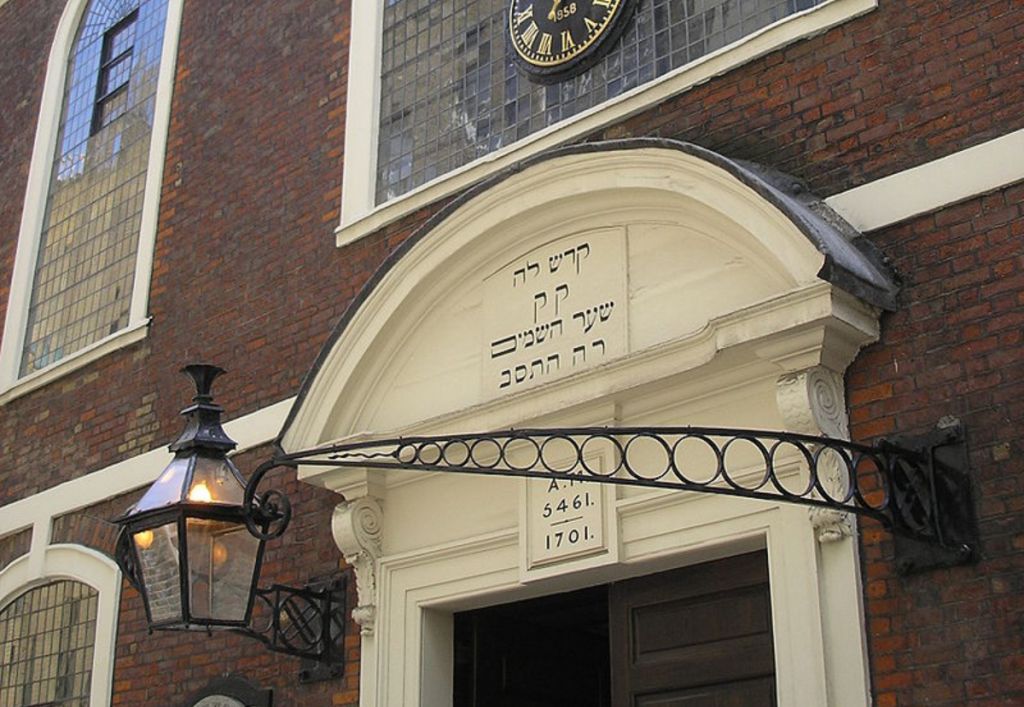
Bevis Marks, Britain’s oldest synagogue, has launched a public consultation on proposals it has made to safeguard the Grade 1 listed building from future development plans in the City of London.
The synagogue, the heirloom community in the S&P movement, has faced threats from developers in recent years, after plans were put forward to build a multi-storey tower block, which would overshadow Bevis Marks and prevent worshippers from accessing both the daylight and moonlight necessary for prayers in the 18th century building.
In December 2024, Welput, an American-owned development company, received its second setback after its proposal to build a 43-storey building — an amended proposal from its previous plans of 47 storeys — was again rejected by the City of London planning committee in a nail-biting Friday afternoon session at Guildhall.
Welput announced it was going to appeal to the Secretary of State, who at the time was Angela Rayner MP. Rabbi Shalom Morris, Bevis Marks’ minister, said he hoped this appeal would not proceed — and in fact the developers withdrew their appeal.
It is understood that in the ensuing months, close consultations have taken place between Bevis Marks and Welput. The synagogue says that “it understands the economic importance of the City of London, and wishes to be supportive of it, not stand in the way of progress. The synagogue says that it has put forward its proposed ‘guiding principles’ to encourage discussions that will result in changes to the built environment that it can support.”

Rabbi Morris said: “The Grade I listed Bevis Marks Synagogue is one of the great treasures of London. It is an important place of Jewish worship and congregation that has maintained its regular, uninterrupted traditions for over 300 years, and is still the thriving heart of a minority community in the 21st century.
“The synagogue understands the need for economic growth and for new buildings to shape the future, but we cannot support ‘progress at any cost’ and our proposed guiding principles are put forward for discussion to help everyone understand what is of special significance at the synagogue, and what steps need to be taken to protect it.”
“We hope that after discussion and deliberation, the planning system and the development industry will adopt the three guiding principles so that the synagogue’s future can be protected from inappropriate development.”
Bevis Marks launched its three “guiding principles” earlier this week, aimed at getting prospective developers to understand the serious concerns of the congregation, together with an exhibition showing the potential impact of a skyscraper tower block on the synagogue.
In a carefully worded 22-page document, Bevis Marks explains: “Developers must recognise the unique importance of the synagogue from the outset, and ensure their design teams appreciate that the setting, the sky view, daylight and sunlight, and the functioning of the courtyard are major contributors to the significance of the heritage asset”.
It points out that precisely because the sky view and the setting are “so significant”, even development on sites some distance away from Bevis Marks can have an effect on blocking out the light.
Urging consultation as early as possible, Bevis Marks says it “welcomes early engagement with potential developers, with a view to identifying potential harms at the outset, and hopefully finding mutually acceptable solutions.”
Most important of all, says Bevis Marks, is “prevention of harm. Development proposals must form a positive relationship with the synagogue and its courtyard, both in the Immediate Setting area and beyond. Assessing the potential effect upon the ability to see the moon and stars from the courtyard is a particularly important matter. Developers must recognise that the synagogue needs to remain a fundamentally daylit building. Impacts on daylight must be considered at the earliest stages of design development. Development proposals must avoid overshadowing and overlooking that would degrade the utility and enjoyment of the courtyard, which functions as an essential extension to the synagogue, or compromise its security”.
Among Bevis Marks’ concerns is the about-to-open Dangoor Visitors’ Centre in the courtyard of the synagogue building, which it hopes will attract thousands of tourists.
The synagogue has arranged a public consultation on its proposed guiding principles, with an online consultation for four weeks from July 2. For more details visit www.protectbevismarks.co.uk.

Keep community journalism free.
Jewish News is free for everyone. No paywall. No barriers. Just trusted journalism for anyone who wants to stay connected to Jewish life in Britain.
If you value that, please support us.
From as little as £5 a month, you can help keep our journalism free and accessible to all.
Every day, we report on the issues that matter to our community. We celebrate achievements, support charities, challenge antisemitism and ensure Jewish voices are heard more widely.
From as little as £5 a month, you can help us continue to:
- Report on the stories shaping Jewish life in the UK and beyond
- Bring our community together through shared stories, events and campaigns
- Celebrate the people, culture and moments that define our community
- Support organisations doing vital work across Jewish Britain
You can make a one-off donation or become a regular supporter. Every contribution helps keep our journalism free, independent and accessible to all.
If everyone who values Jewish News gave a small amount, it would make a real difference to our future.