Prefer Jewish News on Google
Gaza documentary breached BBC editorial guidelines of accuracy, review finds
The programme was removed from BBC iPlayer after it emerged that the child narrator, Abdullah, is the son of a Hamas minister

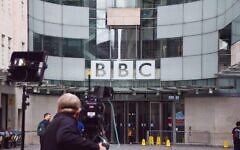
The BBC’s investigation into the screening of a highly controversial Gaza documentary has found that the Corporation only breached one of its editorial guidelines, despite widespread criticism of the flaws which led to the programme being broadcast.
The BBC pulled the Gaza: How to Survive a Warzone documentary after it was revealed that the programme’s principal child narrator, Abdullah, was the son of a prominent Hamas official, the organisation’s Deputy Minister for Agriculture. The BBC said that Al-Yazouri’s narration was scripted.
The investigation published today, which was carried out by the BBC’s own director of editorial complaints and reviews, Peter Johnston, found that the Corporation had only breached one of its editorial guidelines on accuracy, by failing to disclose information about the child narrator’s father’s position. The report placed much of the blame on the independent production company which produced the documentary, HOYO Films, saying that it “is the party with most responsibility for this failure”, but that the BBC “does also share some responsibility”. It confirmed that “at the time that the programme was first broadcast, the critical information regarding the narrator’s father’s position was known by three members of the Production Company, but not anyone within the BBC”. However, it stated that HOYO films had not intentionally misled the BBC, saying that “the Production Company has been consistently transparent that, notwithstanding their belief that the father’s position was a civilian or technocratic one, as opposed to a political or military position in Hamas, they made a mistake and should have informed the BBC about it.”
The review found no other breaches of the editorial guidelines, including any breaches of impartiality, and no evidence that outside interests “inappropriately impacted on the programme”. It added: “that careful consideration of the requirements of due impartiality was undertaken in this project given the highly contested nature of the subject matter.”
The review also recommended that the BBC’s previous default position, which was to translate the word “Yahud/Yahudi” when said by Palestinians as “Israeli/Israelis”, should be reversed, with the word now translated as “Jew/Jews”. This recommendation has come despite the continued claim, as mentioned in the report, that “the evidence suggests people in Gaza often use the word ‘Yahud’ when referring to the actions of the IDF, the Israeli state or Israeli citizens”, and that in the context of this programme, “translating a contributor’s words to give the impression they meant to refer to Jewish people generally would therefore also risk misleading audiences.”


The Israeli embassy in the UK responded, saying: “While the in-house BBC
investigation acknowledged that the Gaza documentary breached its own accuracy guidelines, to assert that there was no breach of impartiality when the protagonist of the documentary was the 13-year-old son of a paid-up Hamas member is beyond comprehension. The question also remains, how much money ended up with UK-prescribed terror group, Hamas? Given the boy’s family was paid hundreds of pounds.
“Whether the Gaza documentary, the Glastonbury coverage, the repeated promotion of unverified Hamas claims as news stories, the countless number of BBC staff who have posted, shared or liked antisemitic content on social media, the refusal to refer to Hamas as “terrorists”, the misreporting of the Islamic Jihad rocket attack on al-Ahli hospital, the Oxford Street Chanukah bus misreporting, the list of instances of the BBC’s anti-Israel bias goes on. Ultimately, the irrefutable BBC shortcomings over this Gaza documentary represent a product of the BBC’s anti-Israel bias, and not the root cause, given we are dealing with a systematic issue.”
Former director of BBC Television Danny Cohen said: “The serious journalistic failings of this documentary have severely damaged public trust in the BBC. This is not an isolated incident but part of a pattern of systemic bias in the BBC’s coverage of the war. The BBC’s failure to recognise this and take real action is a serious leadership failure. This looks like a classic case of ‘deputy heads must roll’ and that is nowhere near good enough. As head of news, Deborah Turness has questions to answer.
“Statements from the BBC that it takes antisemitism seriously have become utterly meaningless. Action not words is required. Without urgent action now, this systemic bias will continue to fuel the antisemitism and hate which saw its expression in the death chants broadcast to the nation by the BBC at Glastonbury.”
Regarding the policy change on the translation of ‘Yahud/Yahudi’, Mr Cohen said he welcomed the ruling, “but the real question is why it has taken more than a decade of gaslighting the Jewish community for this change to happen? This is highly symptomatic of the BBC’s failings to confront antisemitism in its coverage and within the organisation.”
Claudia Mendoza, CEO of the Jewish Leadership Council said: “The airing of this documentary was a serious failure of the BBC to uphold basic journalistic standards. This is part of a series of incidents which has undermined trust in the BBC among the public and particularly the Jewish community. Action must now be taken to restore trust and ensure such errors are not repeated.
“We welcome the report’s recommendation that the literal translation of ‘Yahud/Yahudi’ (Jews/Jewish) be used as default in the future. It is not the job of the BBC to sanitise language to hide antisemitism.”
Tim Davie, the BBC Director General, said: “Peter Johnston’s report identifies a significant failing in relation to accuracy in this documentary. I thank him for his thorough work and I am sorry for this failing.
“We will now take action on two fronts – fair, clear and appropriate actions to ensure proper accountability and the immediate implementation of steps to prevent such errors being repeated.”
The BBC board also thanked Johnston for his report, calling it a “comprehensive examination of a complex programme”, and saying that “nothing is more important than trust and transparency in our journalism.”
HOYO films apologised for “the mistake that resulted in a breach of the Editorial Guidelines”, and expressed happiness that “the report found that there was no evidence of inappropriate influence on the content of the documentary from any third party.”
The production company said it was “working closely with the BBC to see if we can find an appropriate way to bring back to iPlayer the stories of those featured in the programme.”

Keep community journalism free.
Jewish News is free for everyone. No paywall. No barriers. Just trusted journalism for anyone who wants to stay connected to Jewish life in Britain.
If you value that, please support us.
From as little as £5 a month, you can help keep our journalism free and accessible to all.
Every day, we report on the issues that matter to our community. We celebrate achievements, support charities, challenge antisemitism and ensure Jewish voices are heard more widely.
From as little as £5 a month, you can help us continue to:
- Report on the stories shaping Jewish life in the UK and beyond
- Bring our community together through shared stories, events and campaigns
- Celebrate the people, culture and moments that define our community
- Support organisations doing vital work across Jewish Britain
You can make a one-off donation or become a regular supporter. Every contribution helps keep our journalism free, independent and accessible to all.
If everyone who values Jewish News gave a small amount, it would make a real difference to our future.