Prefer Jewish News on Google
British forces defend Israel and other allies from Iranian attacks
Defence Secretary John Healey confirmed UK defensive actions at Cabinet meeting
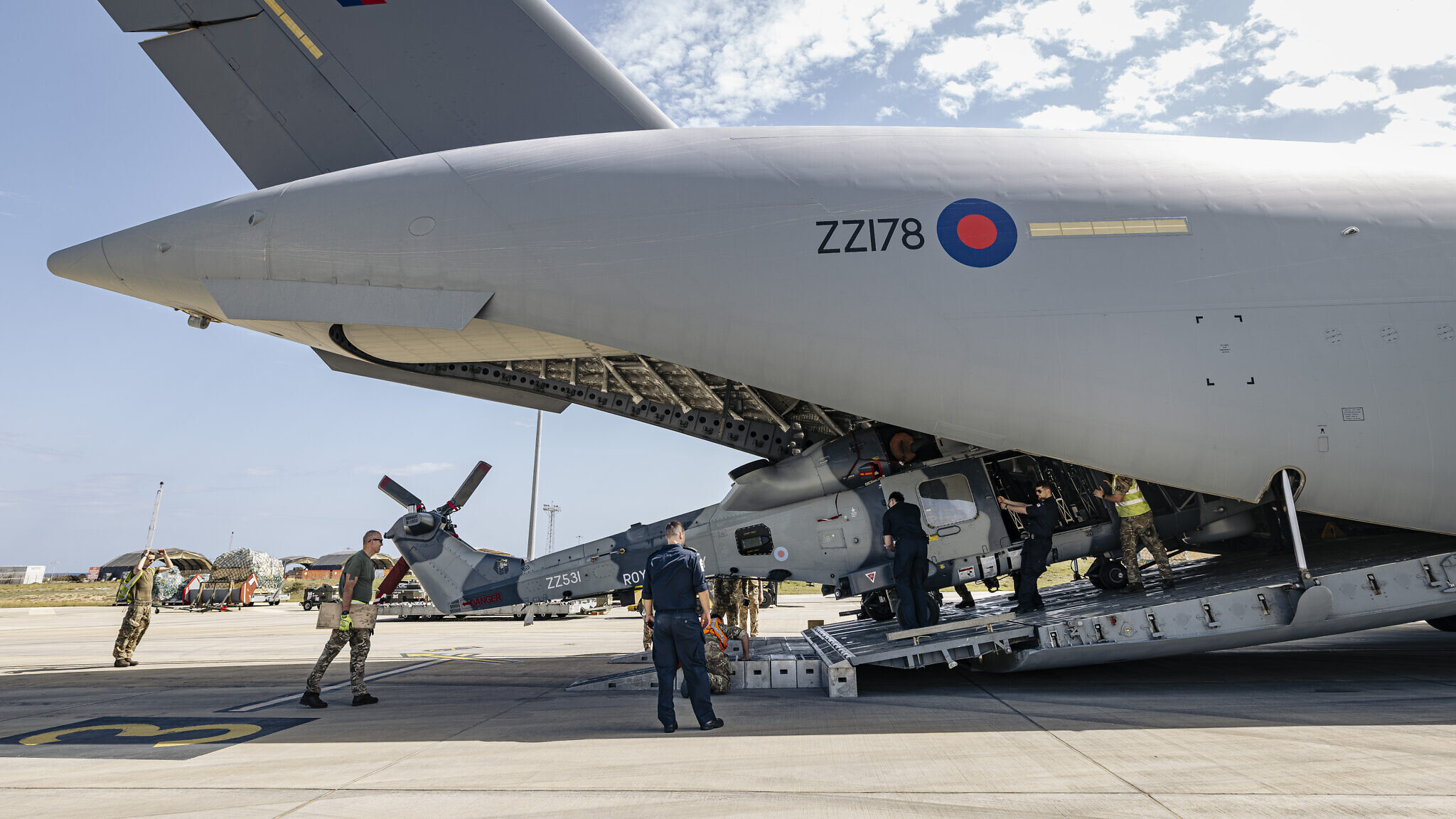
British forces have defended allies including Israel from Iranian attacks on Monday night, it has been confirmed.
At Tuesday’s weekly meeting of the Cabinet, Defence Secretary John Healey told colleagues British forces had been involved in a range of defensive activity, while a counter-drone team had brought down 13 drones.
Healey said UK pilots had now flown nearly 900 hours defending UK interests and its allies over the past four weeks.
A readout from the Cabinet meeting confirmed Healey told Keir Starmer’s senior team that “the UK had defended allies in Israel, Saudi Arabia, Kuwait, Bahrain and Jordan from attacks overnight.”
As many as 14 drones were reportedly shot out of the night sky by troops from the elite Royal Air Force Regiment, who are specialists in protecting bases using ground-to-air rocket systems.



During the meeting Keir Starmer warned his Cabinet colleagues that “the risk of escalation was higher the longer the conflict went on” in the Middle East.
A Downing Street readout of the meeting between senior ministers on Tuesday morning said: “The Prime Minister re-emphasised the defensive, limited and specific basis under which the UK had allowed the US to use its bases to take out Iran’s capability to strike our interests, and those of our allies.
“The Prime Minister said the UK was prepared to defend our interests and those of our allies, but not to be dragged into the war.”
It added: “The Chancellor said the range of outcomes from the conflict for the UK was uncertain, but that the decisions taken at the Budget and Spring Statement meant that the country was in a better position as a result.”

The RAF Regiment practised intercepting enemy drones during an exercise in Wales before deploying to northern Iraq.
In a post on Facebook, the RAF Regiment said its specialists were playing a vital role in defensive operations in the Middle East.
It said: “They are actively detecting, tracking and neutralising airborne threats, working closely with coalition partners to ensure the safety of personnel and the continuity of operations.
‘Through precision, professionalism and coordination, they remain committed to protecting people and critical infrastructure in a complex and evolving environment.”
Officials have confirmed that while the UK and France are leading international efforts to form a naval coalition to secure the Strait of Hormuz, no Royal Navy warships will deploy to the crucial waterway before the warring parties have agreed on a ceasefire.
Shipping through the strait has already slowed to a standstill, with around 150 freight ships, including oil tankers, reported to be stalled.
The UK has not participated in offensive strikes against Iran. In addition to ground-based counter-drone operations, UK aircraft have been deployed in a defensive role to intercept missiles and projectiles in Qatar, Jordan, Iraq and Cyprus.
The UK’s RAF base in Cyprus was itself struck by an Iranian drone earlier in the conflict.
The E3 — the UK, France and Germany — have also resolved to back, if needed, “proportionate military defensive measures” against Iranian drones and ballistic missiles, signalling the potential for broader European involvement if attacks continue.
The UK plans to procure additional Martlet multirole missiles to further bolster British forces in the region against the ongoing Iranian drone threat.

Keep community journalism free.
Jewish News is free for everyone. No paywall. No barriers. Just trusted journalism for anyone who wants to stay connected to Jewish life in Britain.
If you value that, please support us.
From as little as £5 a month, you can help keep our journalism free and accessible to all.
Every day, we report on the issues that matter to our community. We celebrate achievements, support charities, challenge antisemitism and ensure Jewish voices are heard more widely.
From as little as £5 a month, you can help us continue to:
- Report on the stories shaping Jewish life in the UK and beyond
- Bring our community together through shared stories, events and campaigns
- Celebrate the people, culture and moments that define our community
- Support organisations doing vital work across Jewish Britain
You can make a one-off donation or become a regular supporter. Every contribution helps keep our journalism free, independent and accessible to all.
If everyone who values Jewish News gave a small amount, it would make a real difference to our future.