Prefer Jewish News on Google
British Museum defies intimidation to host ancient Israel lecture
Rescheduled Jewish Culture Month lecture proceeds without interruption
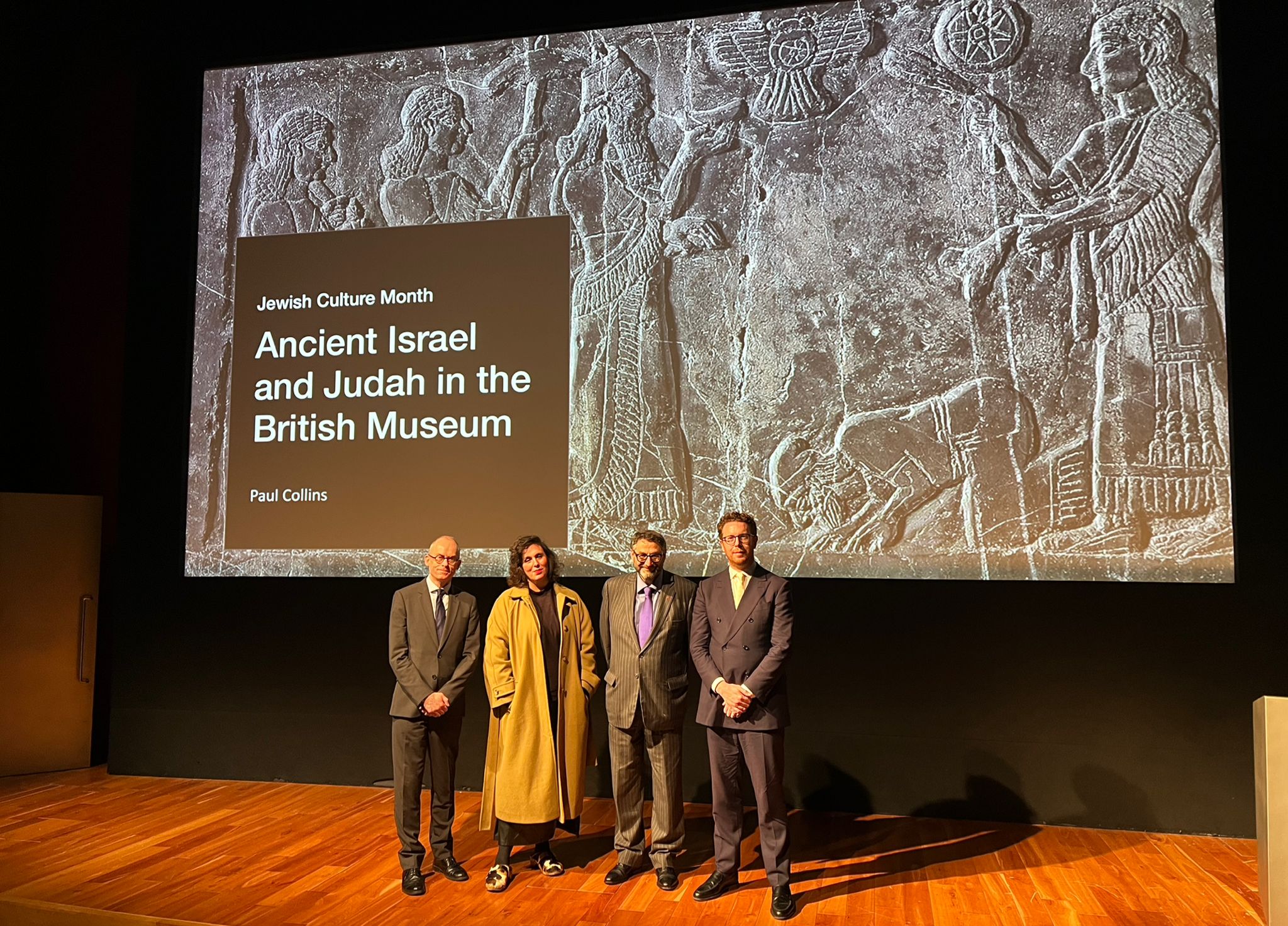
The director of the British Museum emphasised the institution’s “enduring commitment to free speech, inquiry and enduring scholarship” as he introduced a lecture on ancient Israel and Judah, given as part of Jewish Culture Month.
The lecture, given by the British Museum’s Keeper of the Middle East, Dr Paul Collins, had originally been due to take place at the end of May, but the museum authorities said they had received “credible information” that there were plans to disrupt it.
This time, the museum was taking no chances and had layers of security which ensured that only ticket-holders to the lecture were able to get into the building.
Everyone was then funnelled through a security tent for a first bag search, before being asked to go through a second bag search, immediately outside the lecture theatre.
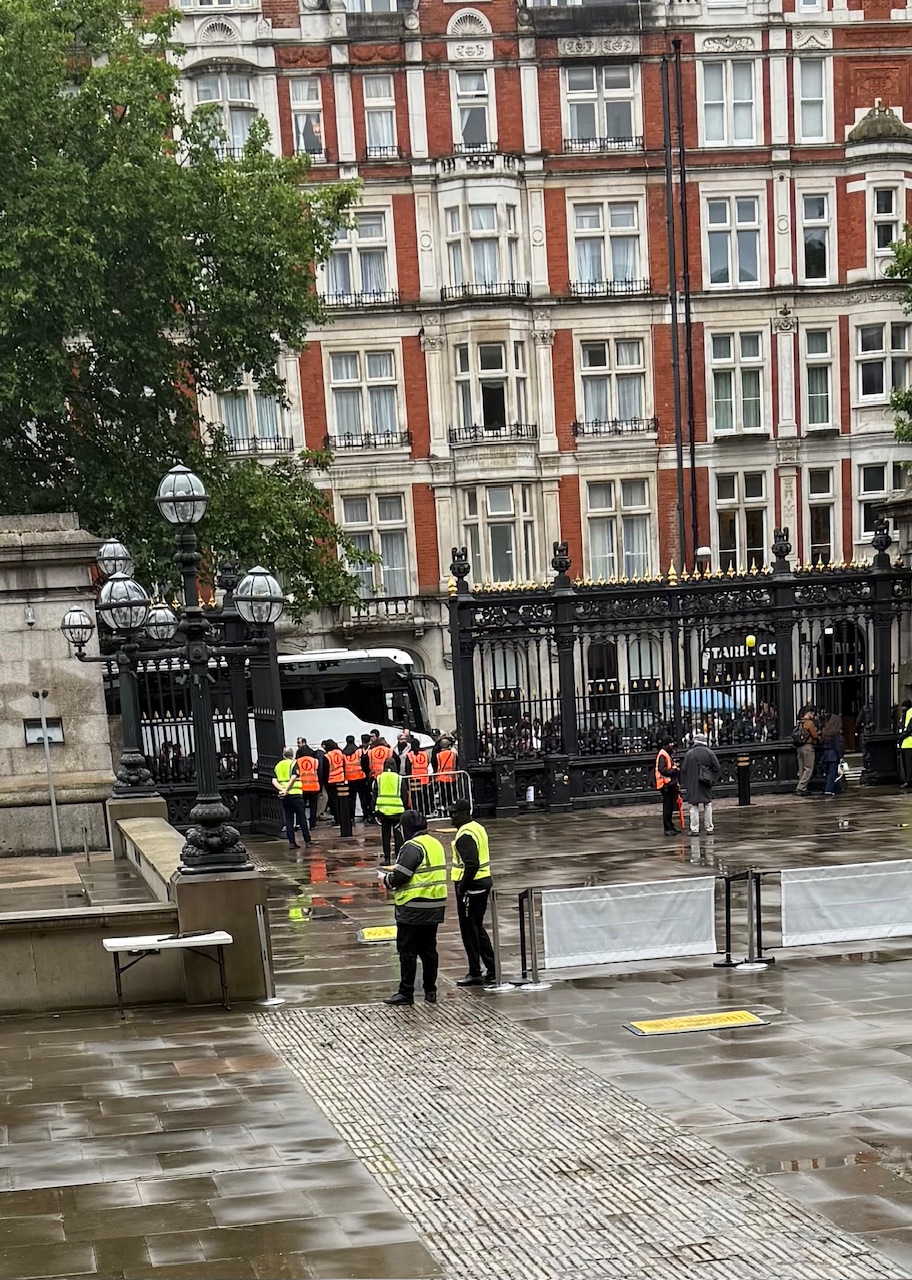
Before people were allowed inside, about 15 museum staff were given a briefing as to what actions to take if anyone in the 100-strong audience tried to disrupt Dr Collins.


It is understood that more precautions were taken to protect the “thousands” of people who had registered to watch the lecture on-line. About 4,000 people registered to see Dr Collins, making it the highest-attended event in Jewish Culture Month to date.
Dr Nicholas Cullinan said the museum was “proud to be part of an event marking 1,000 years of shared British-Jewish history,” and expressed gratitude to the Board of Deputies for its support in enabling the event to take place.
He added: “A public talk delivered by a senior curator, for Jewish Culture Month, at the British Museum, should have been unremarkable. But in these polarising times in which we live, this event became a flashpoint in a wider argument about protest, intimidation, and the witness of free expression”.
He went on: “I want to be absolutely clear, the British Museum did not, and will not, give in to intimidation. Disruption will never be an acceptable way of determining what is discussed… within these four walls. The British Museum, like every other public institution, is accustomed to protest. Indeed, protest is a healthy feature of democratic life. But there is a fundamental difference between protest outside an event and organised disruption within it, intended to silence and overwhelm, especially at such an understandably difficult moment for the Jewish community in the UK.
“Museums exist to facilitate learning, inquiry and debate. They are civic spaces where histories can be examined through evidence, scholarship and discussion. If disruption becomes an acceptable means of determining which conversations are permitted, the result is not greater freedom, but less.”
This time Dr Collins was able to complete his fascinating lecture with no interruptions, taking his audience on a whistlestop tour of Middle East history from the 9th century BCE, using items in the British Museum collection to illustrate the rise and fall of kingdoms. Many of the items were found between 1931 and 1935 in a variety of archaeological digs in the region.
Board of Deputies acting president, Adrian Cohen, said: “For one of the world’s most renowned museums to host the highest-attended event of Jewish Culture Month is a significant moment.
“This afternoon’s lecture on ancient Israel and Judah was a truly enriching experience. We were delighted to see it enjoyed by so many people, both here at the British Museum and by those joining online, reflecting the strong public appetite for engagement with Jewish history and heritage. This is exactly the type of event we envisaged for Jewish Culture Month.
“Jewish Culture Month was created by the Board of Deputies to open up Jewish life, creativity, history, and culture to the widest possible audience – from lectures, exhibitions and concerts to food, family events, comedy nights, and community celebrations. Thousands of people have joined more than 150 events across the country.
“We are proud to work in close partnership with the British Museum and with a range of cultural and academic institutions to bring events like this to life. Collaborations such as these play a vital role in deepening understanding, fostering dialogue, and ensuring that the richness of Jewish culture and history is accessible to all.”
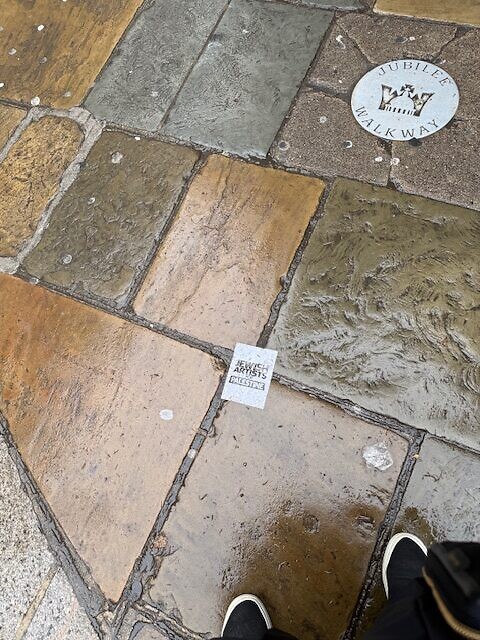
Outside the British Museum, a forlorn sticker lay on a rain-soaked pavement. It read “Jewish Artists for Palestine”.
But there was no trace of them, or some of Palestine Youth Action who had gathered outside the railings before the event, denied entry without a ticket.

Keep community journalism free.
Jewish News is free for everyone. No paywall. No barriers. Just trusted journalism for anyone who wants to stay connected to Jewish life in Britain.
If you value that, please support us.
From as little as £5 a month, you can help keep our journalism free and accessible to all.
Every day, we report on the issues that matter to our community. We celebrate achievements, support charities, challenge antisemitism and ensure Jewish voices are heard more widely.
From as little as £5 a month, you can help us continue to:
- Report on the stories shaping Jewish life in the UK and beyond
- Bring our community together through shared stories, events and campaigns
- Celebrate the people, culture and moments that define our community
- Support organisations doing vital work across Jewish Britain
You can make a one-off donation or become a regular supporter. Every contribution helps keep our journalism free, independent and accessible to all.
If everyone who values Jewish News gave a small amount, it would make a real difference to our future.