Prefer Jewish News on Google
Built from blessings and bronze
Michelle Rosenberg visits the London artist turning dreams into monuments
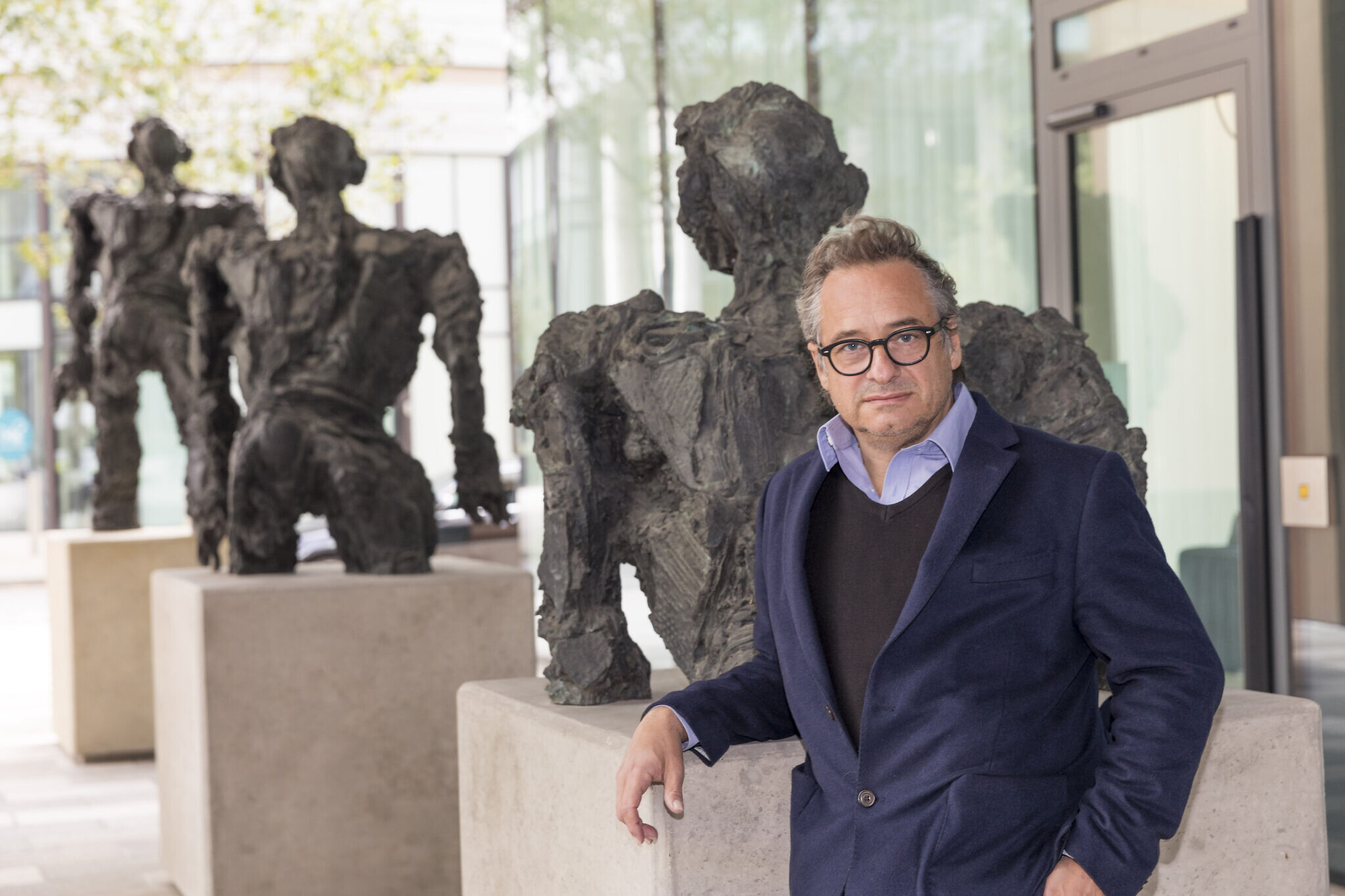
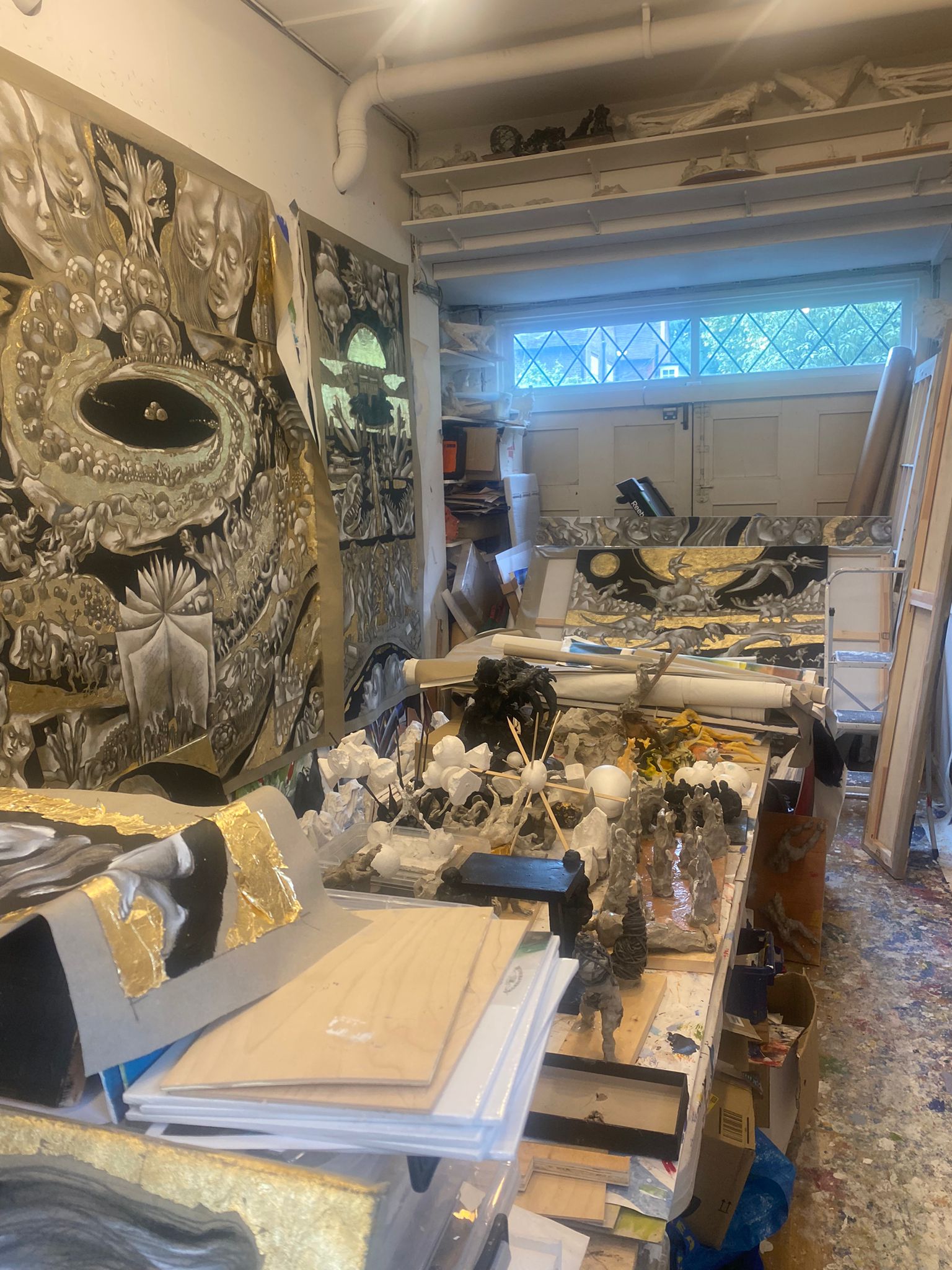
Step through the door of David Breuer-Weil’s home and you’re no longer in ordinary London. you’re inside a living, breathing artwork. The space – his space – hums with energy. Books are stacked beside bronze maquettes; tiny golden sketches sit beside vast, surreal canvases. Even the lounge table is an altar to creativity, cluttered with chocolates and curiosities.
Welcome to the world of one of Britain’s most fascinating contemporary artists where ancient Jewish history, modern-day London, monumental sculpture and imagined universes exist side by side.
A prolific creator in bronze, clay, and paint, David channels the spirit and history of his Jewish ancestors with an urgent need to share it with the world.
Born in London in 1965, he studied at Central Saint Martin’s School of Art under Henry Moore’s assistant Shelley Fausset and then at Clare College, Cambridge. David is famed for his monumental solo shows of vast painted inter-related canvases referred to as the Projects, that were held at various venues including The Roundhouse, OXO Tower and The Vaults in Waterloo. Alongside the Projects, David continues to produce paintings, sculpture and smaller scale works on paper.
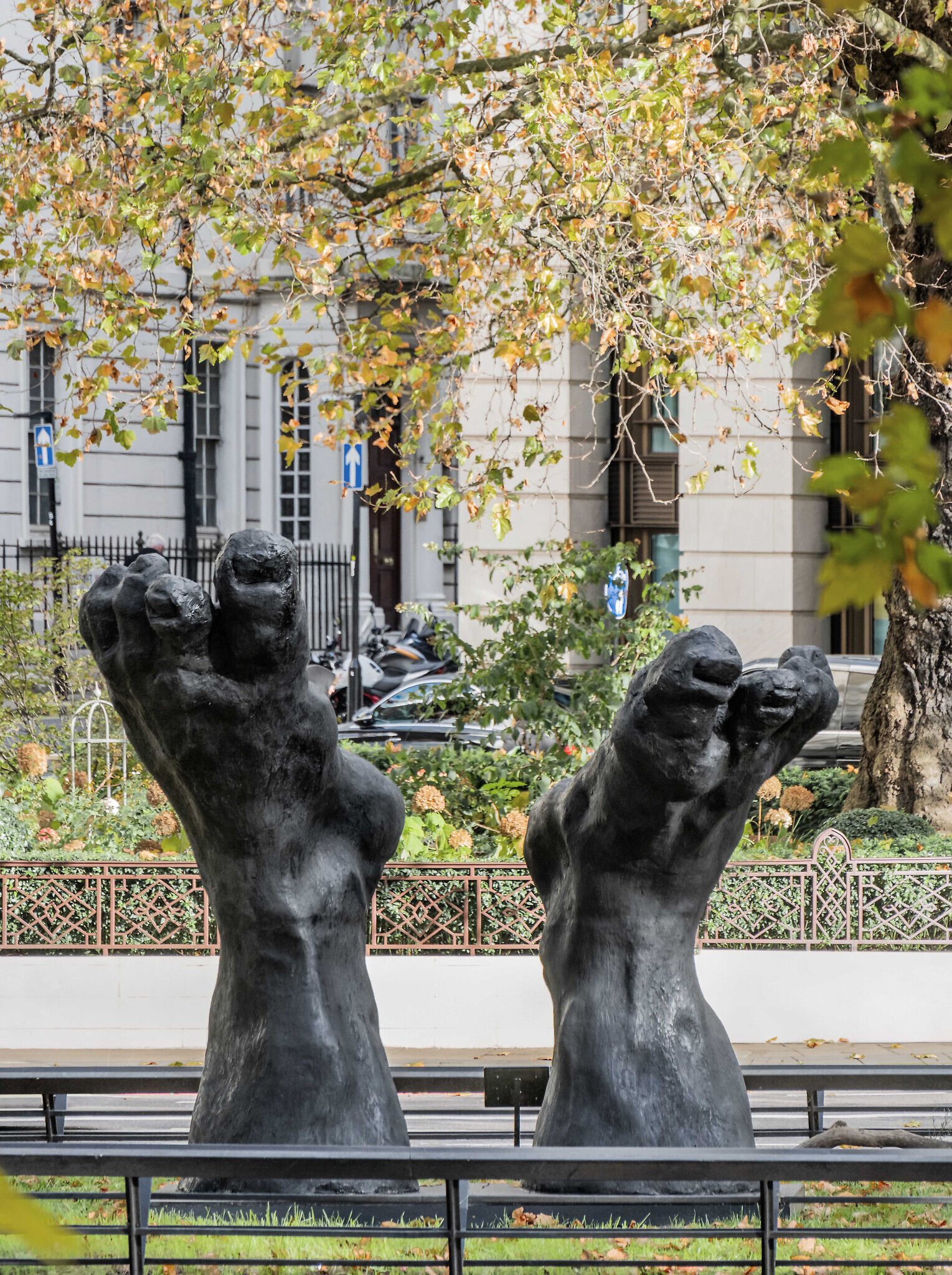
Iconic, powerful, giant works such as ‘Brothers’ and ‘Alien’ have been installed in major public spaces such as Hampstead Heath, Hanover Square, Grosvenor Gardens, Marble Arch and around the world.
Following a visit to Venice, he’s currently at home with wife Samantha, the calm and welcoming centre of his whirlwind of frenetic output. He promises to show me his studio and current works in the garden. For the “really enormous things”, which are often commissioned, he goes to the foundry.
Inside David’s mind is the Kingdom of Nerac—an imagined artistic salon of fictional creators, brought to life in a 2015 film shown at London’s ICA and New York’s Lincoln Center.”
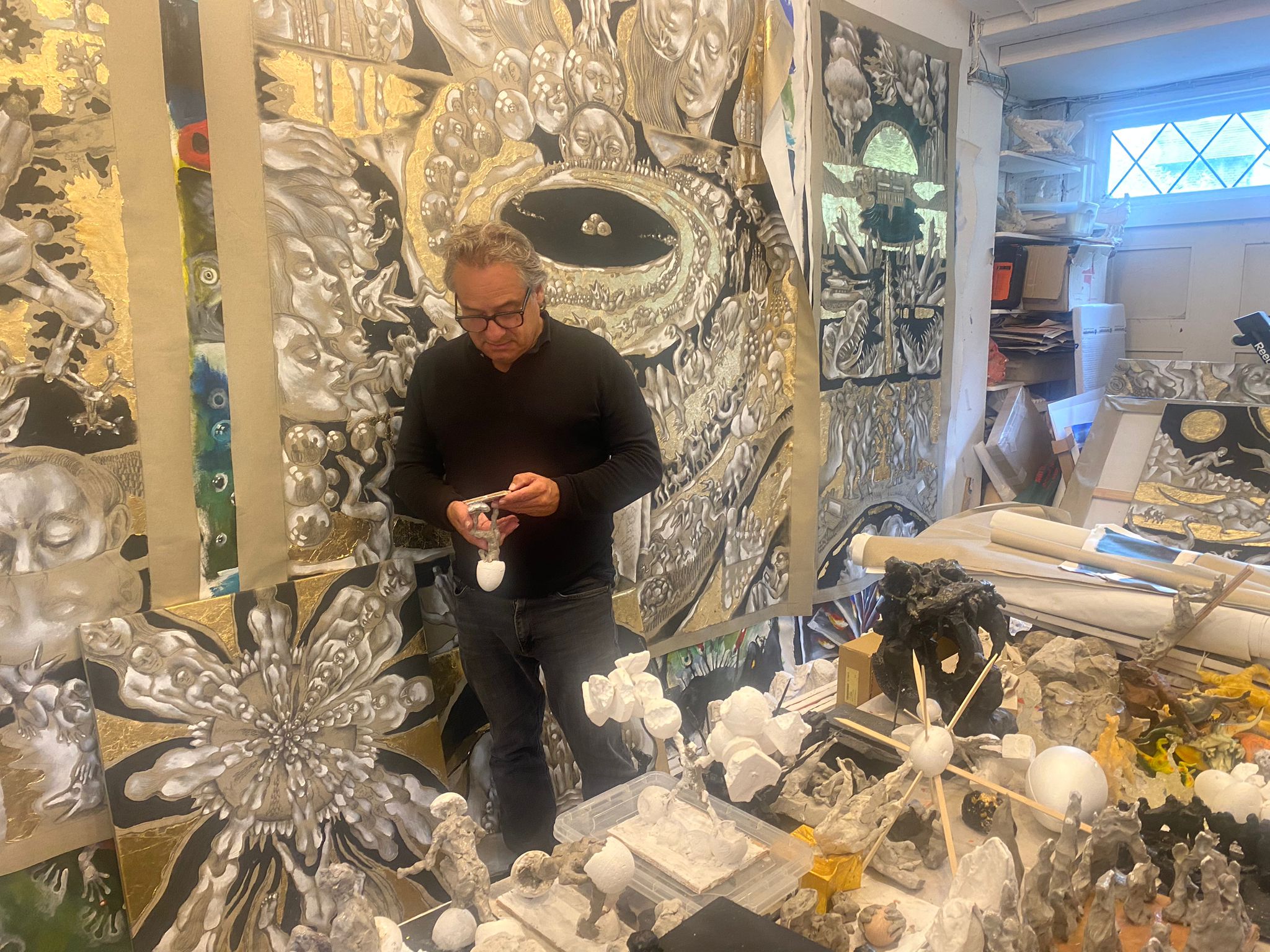
Responsible for inspiring “lots of little work,” he describes his muses as “a great prompt to creativity, because what I’m always trying to do is come up with ideas.”
Within his “empire of fictional artists,” each one produces numerous small-scale works. “There’s a lot of hidden works I’ve done that no one knows about,” he adds.
David gestures to sit down by the large, square glass table, full of tiny, intricate pieces bravely laying alongside hefty art books, and the ubiquitous Jewish home offering of Bendicks chocolates.
The books contain a range of inspiring images—oil lamps from the Hasmonean, Herodian, Roman, and Byzantine periods; an Egyptian Ushabti (1300 BCE); and an 18th-century Italian menorah. David calls them his own “cabinets of curiosities.
Pointing to the pristine white chairs, each draped with (hopefully dry) gold-painted A4 figurative works, he introduces his new series, Sisters.
“The concept of having a sibling is a very strong theme for me. Some of my best-known sculptures are called ‘Brothers’”.
“There are two on display in Portman Square—two brothers sharing one mind—based on a dream. “My brother and I used to have the same recurring dream. Exactly the same. We’re not twins, but it felt like that.”
He’s drawn to the spiritual power of blessings—especially Shabbat ones and those shared between fathers and sons in synagogue.
“Somebody blessing another; that’s a very, very powerful image which hasn’t been explored much in art. “A lot of contemporary art has been drained of meaning,” he says. “I’m very interested in bringing a certain meaning—something very human—back into art.”
For David, “art is therapy. It is a daily compulsion.”
He’s kept a daily journal for years, “where I write down what I’m doing, why I’m doing it, and what it’s all about. I find that quite helpful.” Inspired by Van Gogh’s letters to his brother, he also writes ideas and thoughts.
His heritage, trauma, the Holocaust, and the influence of his Austrian refugee father and “what it feels like to be born into the legacy of a second generation” are fundamental to his entire being, as a man and an artist.
Opening a book of his own artwork, he points out “this image of cut down trees, enormous trees. And on each stump where these little plants are growing, the trees are growing back. We’re coming back to life. We don’t see those stumps, but that’s where we are. Just to make that visual seemed to me a real, sort of necessary task in my life.”
Turning the page, he points to a depiction of a vibrant blue sea depiction, explaining: “I’ve always had a thought that each wave is like a generation that comes and goes. It’s full of sound and fury. That’s our life. A painting like that has to be done in layers. It’s a kind of madness—but there’s a lot of technicalities in it too.”
Sitting back briefly on the couch, he confesses to having “a very active dream life. A lot of them are quite spiritual and even historical. When I first had the idea for the Projects, I actually had a dream. I was asleep at the foot of a mountain that was absolutely enormous, but I couldn’t see it. I just knew it was there. When I woke up, I had this sense—that’s our ancestry, our history, our faith. We don’t see it, but we have to express it. And I put that into painting.”
Thirty years in the making, a new phase is underway: his gallery and studio manager, Greg Baker, is cataloguing all the Projects works to create a virtual museum. Also planned is “a very large sculpture garden—almost like an amusement park—with dozens, scores, or even hundreds of interconnected large-scale sculptures.
Returning to the subject of Venice, David says he admires artists like Titian and Tintoretto.
” In more modern times, I’ve always found Picasso’s constant creativity inspiring. But my favourite artist—funnily enough—isn’t a painter, it’s Mozart. There’s something so beguiling about him: the fertility of his ideas, his endless inventiveness with form and sound. What’s unique is how, in a single piece, you can feel heartbreak and joy at once. And that I suppose, is what I aspire to, that there can be joy and heartbreak in the same work>
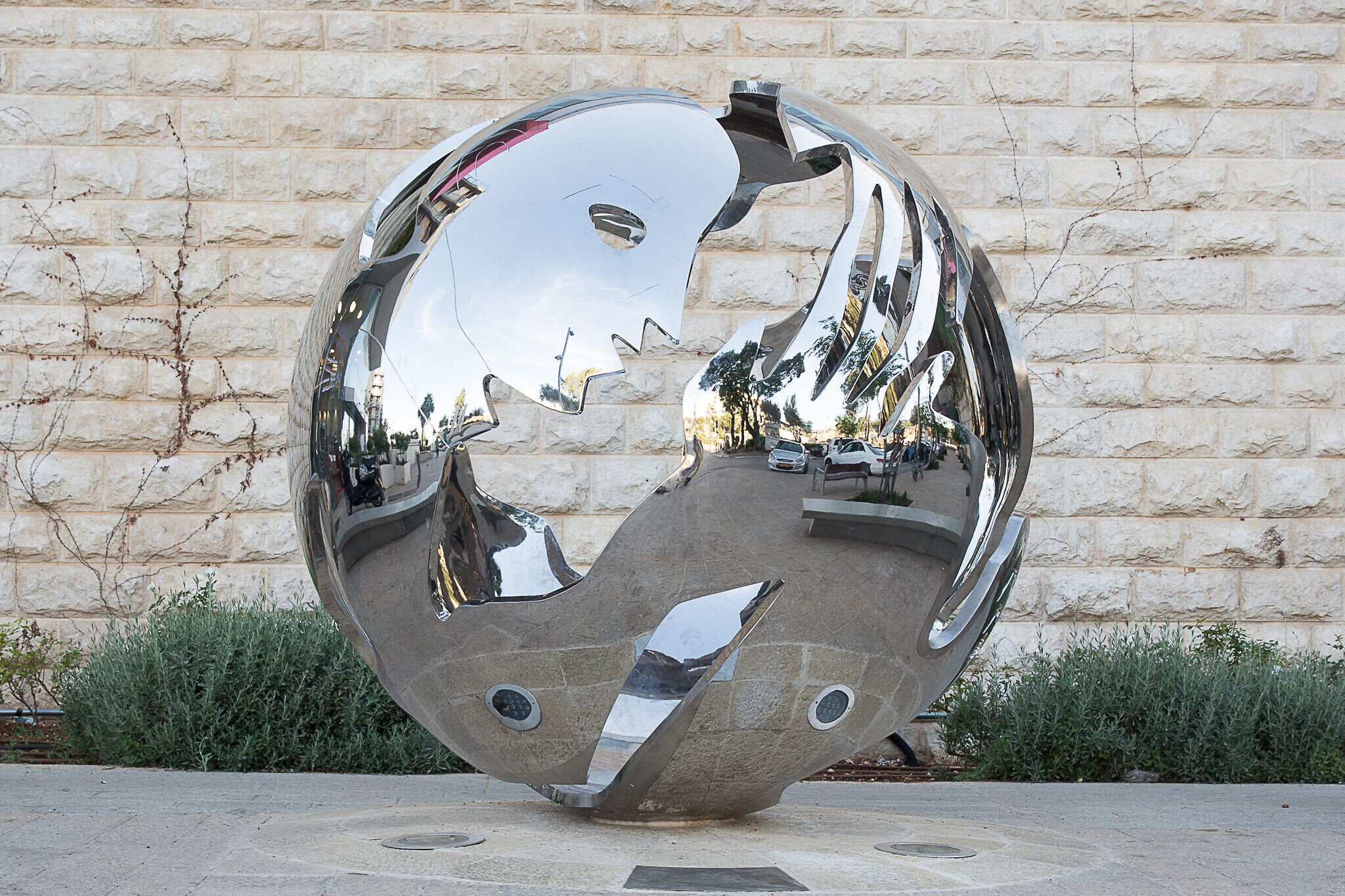
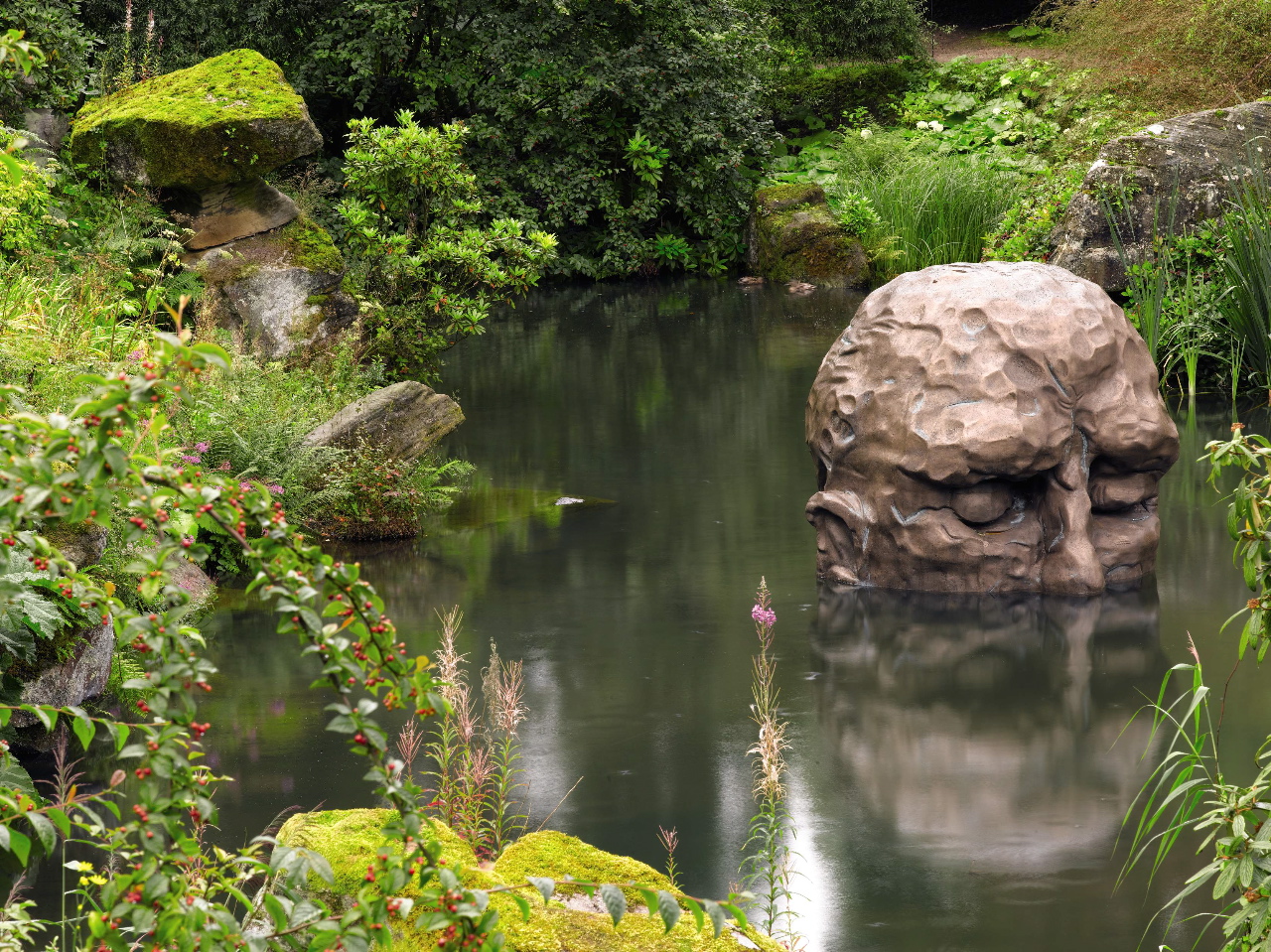
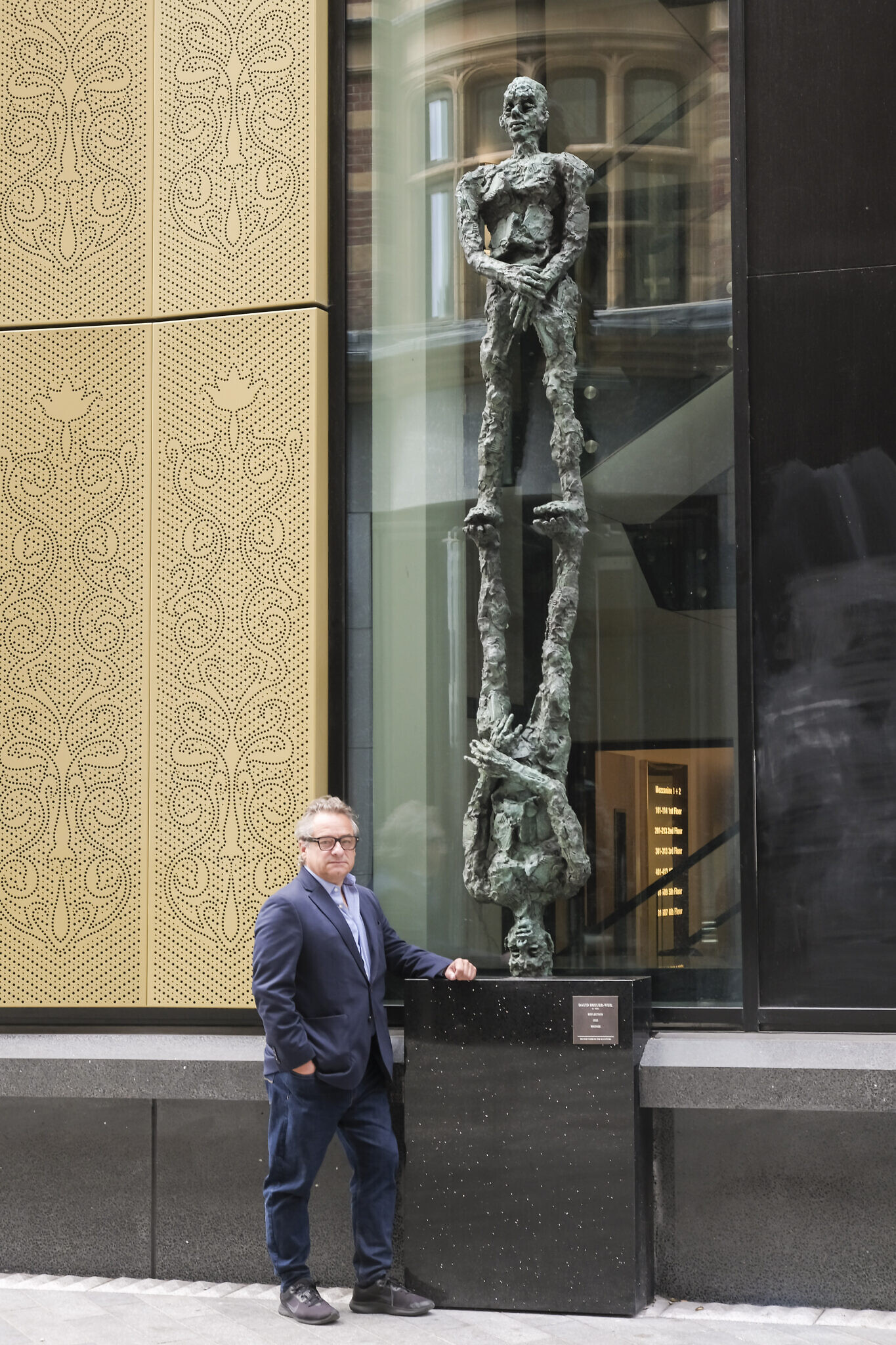
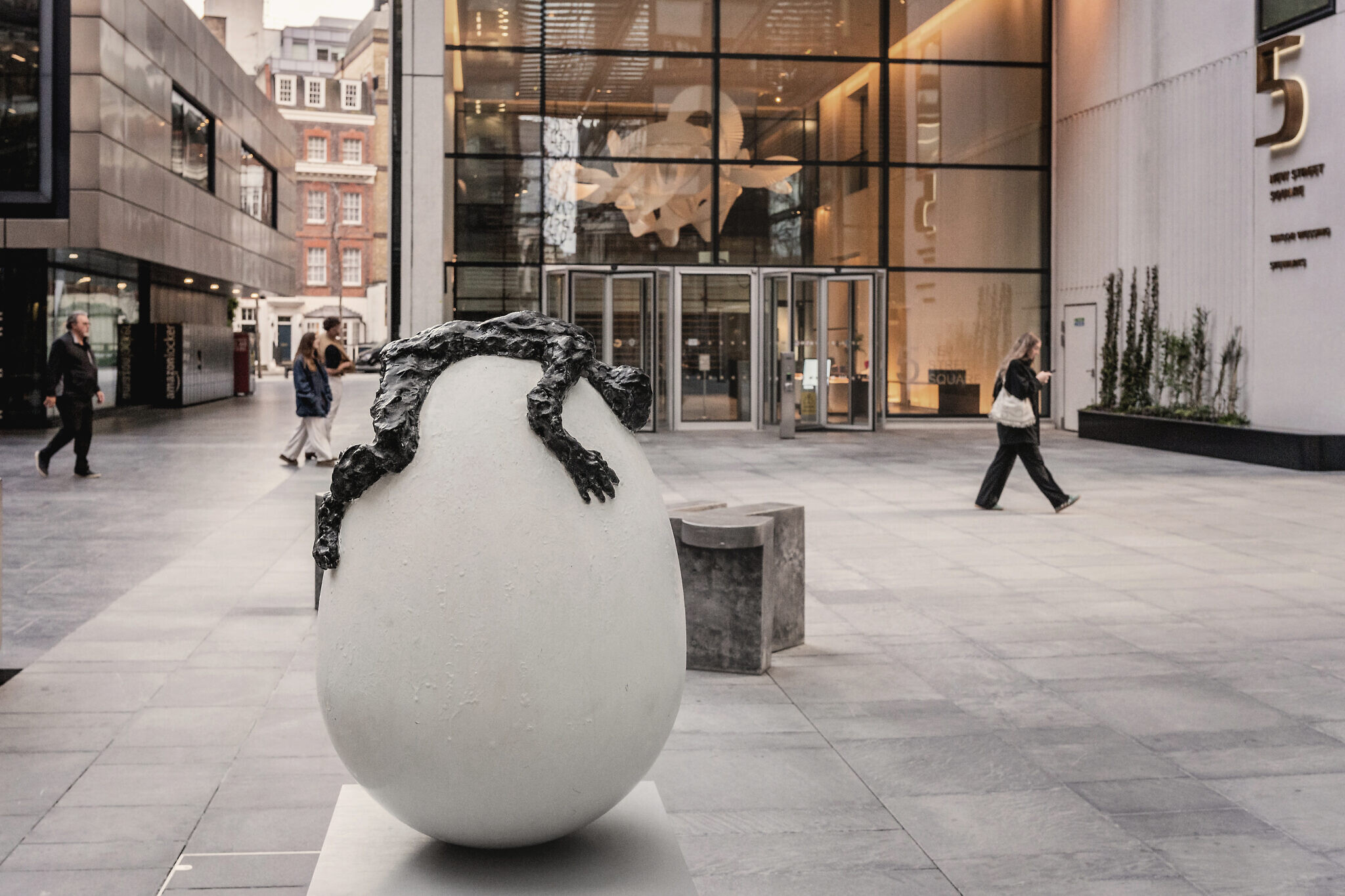
- David Breuer-Weil will be exhibiting new work at TOMASSO DURING Frieze London in October; monumental sculptures can be seen at Visitor 5 (Park Lane till end of October), Emergence (Canary Wharf) and Reflection (Dean Street) are permanent.

Keep community journalism free.
Jewish News is free for everyone. No paywall. No barriers. Just trusted journalism for anyone who wants to stay connected to Jewish life in Britain.
If you value that, please support us.
From as little as £5 a month, you can help keep our journalism free and accessible to all.
Every day, we report on the issues that matter to our community. We celebrate achievements, support charities, challenge antisemitism and ensure Jewish voices are heard more widely.
From as little as £5 a month, you can help us continue to:
- Report on the stories shaping Jewish life in the UK and beyond
- Bring our community together through shared stories, events and campaigns
- Celebrate the people, culture and moments that define our community
- Support organisations doing vital work across Jewish Britain
You can make a one-off donation or become a regular supporter. Every contribution helps keep our journalism free, independent and accessible to all.
If everyone who values Jewish News gave a small amount, it would make a real difference to our future.