Prefer Jewish News on Google

Burnham inherits toughest Israel balancing act yet
With Gaza dominating domestic politics, the new Prime Minister faces unprecedented pressure from activists while safeguarding vital UK-Israel ties
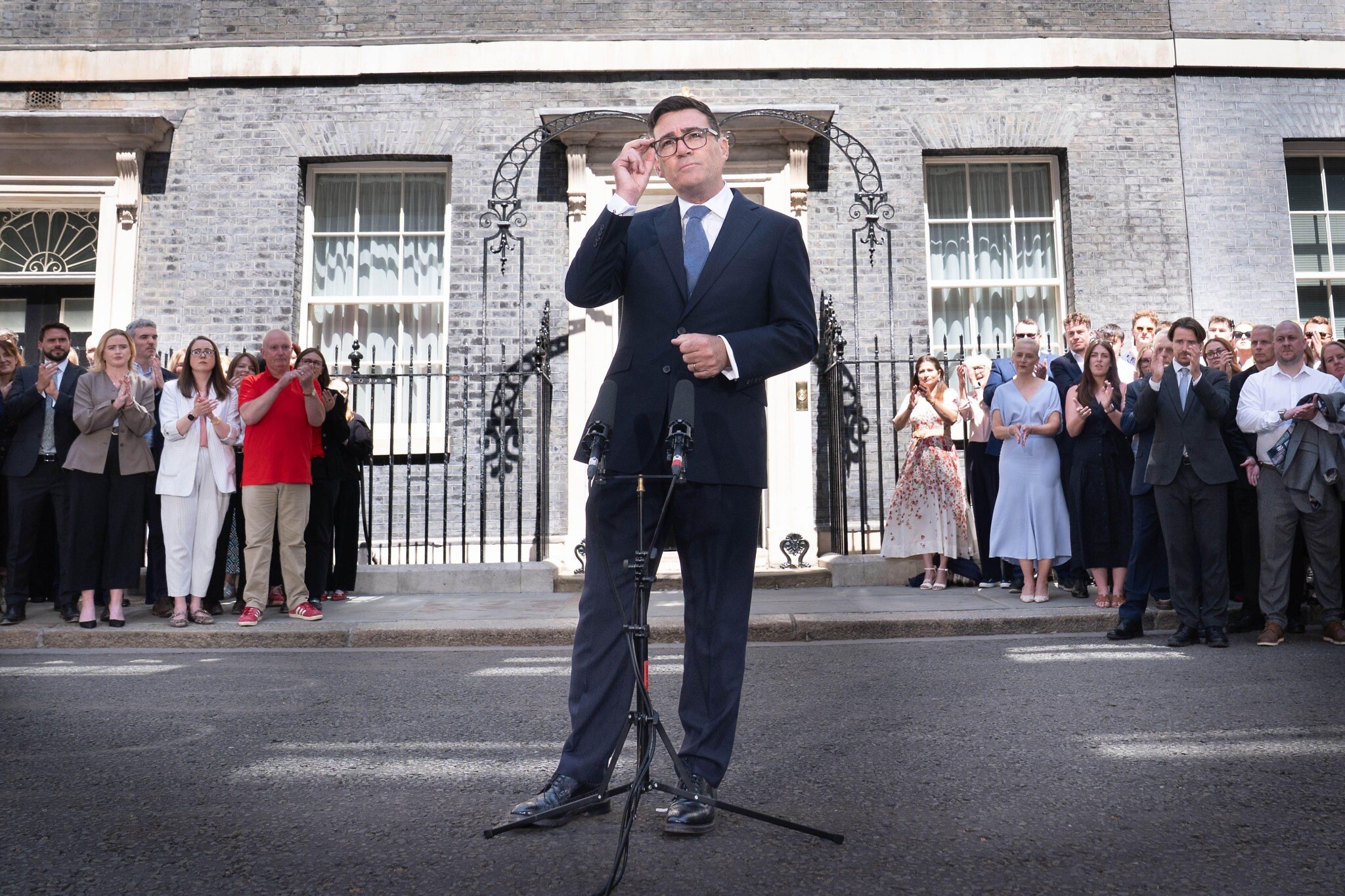
The careful balancing act performed by senior British politicians for more than half a century on the Middle East conflict is about to be tested to its limits as former Manchester mayor Andy Burnham takes office.
Unlike their 1950s, ’60s and ’70s predecessors, who could be openly supportive of Israel, British Prime Ministers from James Callaghan to Sir Keir Starmer (and their respective Foreign and Home Secretaries) have had to walk a tightrope: maintaining a vital economic and security relationship with Israel while pandering to the bonkers, spittle-foamed haters on the far left and the far right – though mostly on the far left, especially in recent years.
Precisely how grudgingly or enthusiastically any Prime Minister, Foreign Secretary or Home Secretary maintained this vital relationship – and how much he or she “pandered” to the haters – varied from administration to administration. One advantage of perspective is recognising that Israel-Palestine was not always an obvious Left-Right issue.
Margaret Thatcher, for example, was a devoted Israelophile whose unequivocal support for Israel was one more reason for the Left to viciously hate her. Partly, of course, that support reflected the large Jewish population in her Finchley constituency, but I also suspect she admired Israel for collectively embracing her own philosophy of self-reliance, coupled – perhaps – with a desire to tease and infuriate the Foreign Office.
John Major has the dubious distinction of becoming the first Western leader to meet Yasser Arafat, but despite that, he never appeared to harbour any particular animus towards Israel. Despite his wife Cherie’s alleged passion for Palestine, Tony Blair seemed to take a balanced, pragmatic view, while the decent, clever Gordon Brown wanted nothing to do with the hard-left’s anti-Israel hostility. David Cameron may have avoided the traditional brand of casual, posh-boy antisemitism, but he had certainly imbibed much of the pro-Palestinian narrative – possibly through his wife Samantha, who attended Exeter University when it was a hotbed of Palestine activism, thanks to generous Gulf funding.



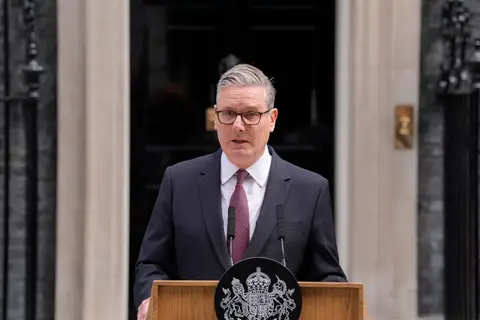
Although the Jewish community was serially furious at his perceived betrayals, outgoing Prime Minister Sir Keir Starmer – who became Labour leader on a flood tide of “Anyone but Jeremy” – succeeded in walking the tightrope. Indeed, with his nice Jewish wife, he may even have been the Trojan Horse that enabled the Labour Left to return to power. But that’s a subject for another time.
Pic PA
Throughout every change of government, Foreign Office mandarins were always on hand to ensure that no Prime Minister or Foreign Secretary ever became too warm or too cosy with Israel.
The key point, however, is that until just over a decade ago, Israel-Palestine was not the intensely divisive, vote-winning or vote-losing issue it has since become. Governments merely had to fend off the occasional backbench obsessives such as Christopher Mayhew and, later, Jeremy Corbyn.
Everything changed when the overtly anti-Israel Corbyn moved from the back benches to become Labour leader in 2015. By placing Israel-hatred and anti-Zionism at the centre of Labour politics, he gave permission to people steeped in more than four decades of what I regard as a bogus, Soviet-fabricated Palestinian narrative to express hostility towards Israel and, as it turned out, towards Jews as well.
The balancing act British Prime Ministers have performed for more than half a century is about to face its sternest test yet
At the same time, the Muslim vote became increasingly important electorally – even decisive in some Labour constituencies – while a bevy of Independent MPs, for whom the existing level of anti-Israel fervour was still insufficient, arrived in Westminster. The Israel-haters had achieved critical mass.
The deluge that followed Corbyn was a political game-changer. Israel-Palestine ceased to be merely a difficult diplomatic issue and instead became one of Britain’s defining political fault lines – potentially even a make-or-break issue for a party leader, judging by the Gaza video Andy Burnham released last week that appeared to have been written by Hamas’s communications team.
The anti-Israel playground bullies could now intimidate openly and aggressively on behalf of – well, mainly Iran and Islamist extremists – although they probably believe they are acting on behalf of “poor Palestinians”.
Even to me, it sounds alarmingly conspiratorial to speculate that this political transformation might be attributable to the billions of dollars Israel’s enemies have allegedly spent on a disinformation campaign since the day after the 7 October atrocities, and before Israel even began military operations in Gaza. So I’ll assume it all happened spontaneously, with a little help from social media.
Whatever sparked the change, the playground bullies have created a political environment in which it is no longer enough for politicians simply to criticise Israel. They are expected to support boycotts, divestment and ever more punitive measures.
Yet the NHS saves an estimated £2.4 billion to £3 billion each year by purchasing affordable Israeli medicines, while Britain’s security services rely heavily on Israeli intelligence to help keep this country safe. Walking the tightrope, therefore, remains an essential skill for any British leader.
Like those before him, Sir Keir maintained Britain’s vital economic and security relationship with Israel while simultaneously attempting to placate the Israel-hating playground bullies on the left. But the bullies saw someone they believed they could push around. Or perhaps the failure to confront them decisively simply emboldened them further.
Either way, the intimidation has become habitual.
Which brings us back to Andy Burnham.
The balancing act British Prime Ministers have performed for more than half a century is about to face its sternest test yet as the “King of the North” takes office and attempts to preserve Britain’s strategic partnership with Israel without sacrificing billions of pounds in NHS savings or weakening the intelligence cooperation that helps prevent Islamist terrorism on British streets.

Keep community journalism free.
Jewish News is free for everyone. No paywall. No barriers. Just trusted journalism for anyone who wants to stay connected to Jewish life in Britain.
If you value that, please support us.
From as little as £5 a month, you can help keep our journalism free and accessible to all.
Every day, we report on the issues that matter to our community. We celebrate achievements, support charities, challenge antisemitism and ensure Jewish voices are heard more widely.
From as little as £5 a month, you can help us continue to:
- Report on the stories shaping Jewish life in the UK and beyond
- Bring our community together through shared stories, events and campaigns
- Celebrate the people, culture and moments that define our community
- Support organisations doing vital work across Jewish Britain
You can make a one-off donation or become a regular supporter. Every contribution helps keep our journalism free, independent and accessible to all.
If everyone who values Jewish News gave a small amount, it would make a real difference to our future.