Prefer Jewish News on Google
Campus is not a war zone for Jews, UJS chief tells Limmud
Jewish student leaders reject fear narrative and urge teens to choose universities for courses, not antisemitism
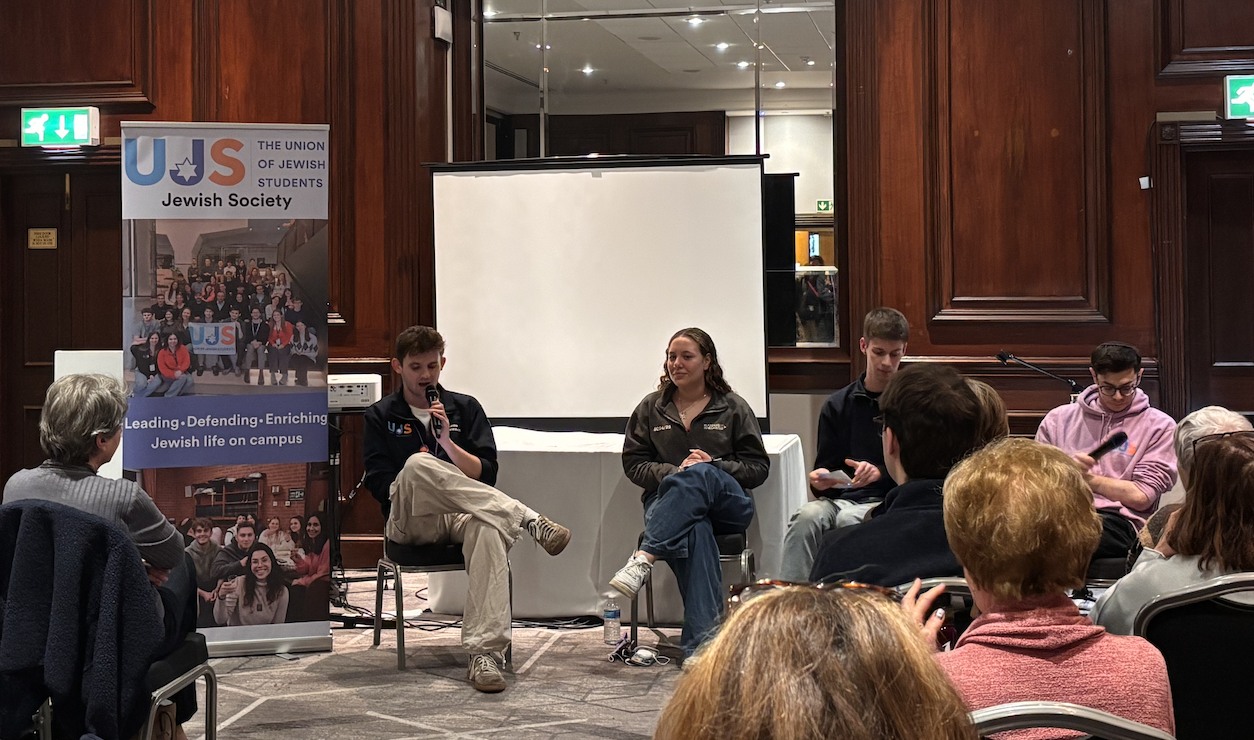
Jewish student leaders have hit back at claims that UK campuses are “no place to be Jewish”, insisting that university life should not be treated as a battlefield for Jewish students.
Speaking at a Limmud session on Jewish life on campus, Louis Danker, president of the Union of Jewish Students (UJS), said he had heard rhetoric reach “extraordinary” levels – including from a “leading activist figure” who claimed they would rather be “fighting the war in Israel and Gaza than be on a UK campus”.
“That’s the level the conversation has reached,” Danker said – before firmly rejecting it.
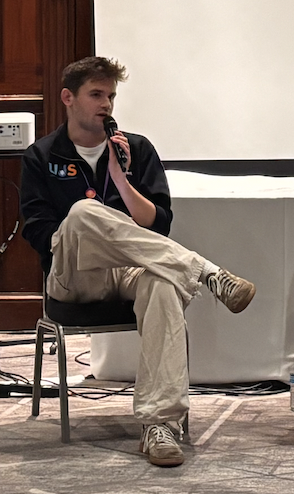
UJS, the 106-year-old representative body for Jewish students in the UK and Ireland, represents more than 10,000 Jewish students nationwide. Danker said that while antisemitism has risen since 7 October, Jewish students have responded with “pride, resilience and defiance”.
“We don’t think the Jewish student story should be written by those who spread hate,” he told the audience.


The panel also featured Ari Joseph, Eli Sassoon and Maya Blackstone, who described a campus reality that is often more complex – and more constructive – than headlines suggest.
Blackstone, chair of Birmingham JSoc, said her campus had faced serious challenges, including a large encampment and student politics that, she said, “don’t really believe in our right to exist as Jewish students on our campuses”. But she stressed that what appears in the media often omits the work happening behind the scenes.
“What you see in the news is not the same as what actually happens,” she said, describing meetings with senior university figures – including the vice-chancellor and head of security – after incidents affecting Jewish students. She said the university subsequently intervened quickly when further issues arose, arguing that examples of good practice should be shared more widely.
Joseph said university is often the first time young Jews actively choose how to engage with Jewish life – from religious practice to social and cultural involvement – and that this freedom can be empowering. He described JSoc spaces as places where students work out “what actually makes you happy” as a Jew and which elements of identity they want to carry forward.
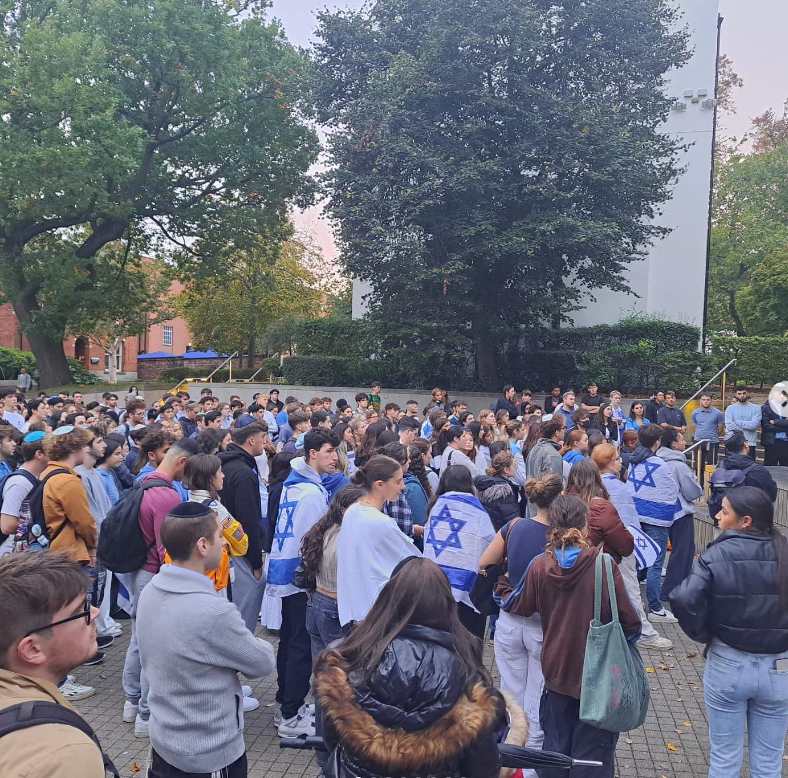
He also highlighted the importance of relationship-building with other societies on campus, including maintaining lines of communication with the Palestinian society even during periods of heightened tension. Joseph said those conversations had not always been easy and had not always led to agreement but stressed that keeping contact mattered – allowing concerns to be raised early, reducing misunderstandings and, in some cases, helping prevent situations from escalating.
Sassoon, a fourth-year student at Nottingham, said his involvement in Jewish student leadership had shaped his confidence and a sense of belonging. He described being able to sit “in rooms with people I would never think I’d be sitting with at 21”, adding that the experience helped ensure he was seen “as Jewish for what I want to do”, rather than as a stereotype.
Danker said one of the most common questions he receives from parents is which universities Jewish students should avoid – but warned that fear-driven decisions risk doing long-term damage.
“You should go to the university you want to study at, to study a subject that you are interested in,” he said. “Don’t make decisions based off antisemitism on campus, because there is no place that is a no-go zone for a Jewish student.”
He added that conceding campuses would only entrench problems. “If we decide there are places that are no-go areas for Jewish students,” he warned, “they will become that.”
The speakers also criticised what Danker described as “stunt activism” by external groups who enter campuses briefly before leaving students to manage the fallout.
“Too often, organisations come onto campus, make a lot of noise, and leave – and leave the students to clear up the mess,” he said. His message to the wider community was blunt: “Fund us, amplify us, and follow us.”
Despite heightened polarisation, the panel stressed that Jewish student life remains pluralistic. Danker said UJS’s role is to hold a broad tent – one in which students with sharply different views can still share communal space.
“If you’re happy being in a room with people you fundamentally disagree with, but you can still come for a Friday night dinner,” he said, “that’s your ticket in.”
For Jewish students weighing their futures, the message from the panel was clear: campus is not a war zone – and it should not be treated as one.

Keep community journalism free.
Jewish News is free for everyone. No paywall. No barriers. Just trusted journalism for anyone who wants to stay connected to Jewish life in Britain.
If you value that, please support us.
From as little as £5 a month, you can help keep our journalism free and accessible to all.
Every day, we report on the issues that matter to our community. We celebrate achievements, support charities, challenge antisemitism and ensure Jewish voices are heard more widely.
From as little as £5 a month, you can help us continue to:
- Report on the stories shaping Jewish life in the UK and beyond
- Bring our community together through shared stories, events and campaigns
- Celebrate the people, culture and moments that define our community
- Support organisations doing vital work across Jewish Britain
You can make a one-off donation or become a regular supporter. Every contribution helps keep our journalism free, independent and accessible to all.
If everyone who values Jewish News gave a small amount, it would make a real difference to our future.