Prefer Jewish News on Google
Opinion: two memorable lessons from the diplomatic frontlines of faith
A Commonwealth Jewish Council representative shares her experiences of dialogue with two different nations - and the importance of Jewish organisations showing up
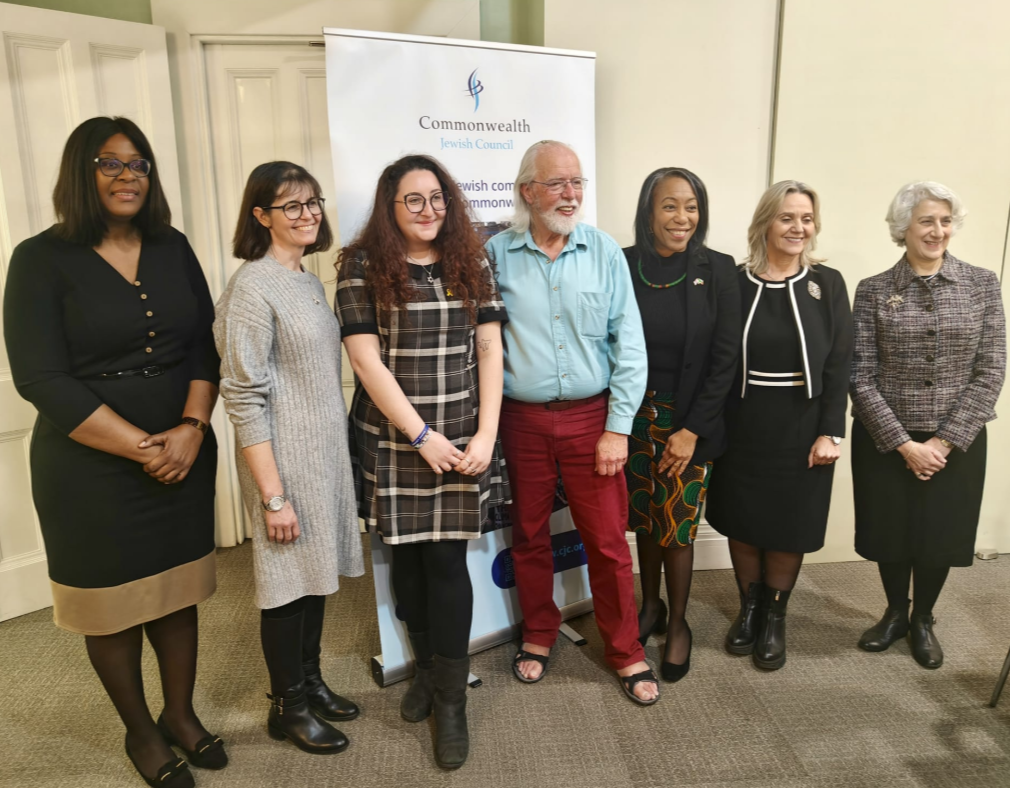
Since I started as the International Campaigns Director for the Commonwealth Jewish Council (CJC) in October, I’ve had the privilege and challenge of meeting many High Commissioners, deputy heads of mission, and diplomatic representatives across the Commonwealth. Some meetings are formalities. Others are rich and meaningful. Most fall in between. But occasionally, a meeting reveals something much deeper: the state of interfaith trust, the weight of historical memory, or the gap between official policy and personal belief. In recent months, two encounters have stood out. They weren’t dramatic or newsworthy, but they clearly showed the two ends of the spectrum we work within.
For confidentiality and to maintain ongoing relationships, I’ll refer to the countries as Country A and Country B. Both are Muslim-majority nations, and both are part of the Commonwealth. Each provided powerful, yet very different, insights into Jewish-Muslim engagement in our shared international space.
Country A: A Door Opens
Our meeting with Country A took place in early July.
To be honest, we expected little. The diplomatic tone from Country A had always been neutral, and we weren’t sure if there would be meaningful room for engagement with a Jewish organisation. However, what we found was genuinely encouraging. We were warmly welcomed by a senior diplomat who admitted they had never met a Jew before. That fact alone was significant. It reminded us that, for many officials in Commonwealth countries with tiny or no Jewish populations, we might be their first and only contact with Jewish civil society, which bears responsibility.


During that meeting, we shared the work of the Commonwealth Jewish Council. We explained our role in connecting and supporting Jewish communities across the Commonwealth’s 56 member states, our advocacy for communities facing discrimination or marginalisation, and our mission to ensure that religion (not just Judaism) is properly considered in Commonwealth discussions.
To their credit, the diplomat listened closely, asked thoughtful questions, and showed genuine interest in our work. They proudly spoke about their country’s focus on inclusivity and peaceful coexistence, even as a Sunni Muslim-majority state. This was a particularly encouraging moment in the meeting.
Most importantly, they expressed real curiosity about interfaith engagement at the Commonwealth level. We discussed some of our main campaigns, including our promotion of the IHRA working definition of antisemitism, our efforts to ensure religious voices are heard within Commonwealth spaces, and our interfaith partnerships with other faith groups. No commitments were made, but the door remained open.
In diplomacy, especially between religious minorities and majority states, that is no small achievement.
Country B: A Wall Remains
In contrast, our earlier meeting in March was with a senior political counsellor from Country B. Instead of discussing areas of cooperation or common values, the conversation immediately focused on one topic: Israel. Despite our efforts to clarify that the CJC is not an Israel advocacy organisation (and that Israel is not even a Commonwealth member), the official pressed us to denounce the Israeli government’s actions and to clarify our position on the conflict in Gaza and the West Bank. This was not a misunderstanding. It was a pattern. Any attempt to redirect the conversation to our actual work on antisemitism, interfaith dialogue, and religious civil society was dismissed or ignored.
At one point, we mentioned the idea of a formal definition of Islamophobia, similar to the internationally adopted IHRA definition of antisemitism. The diplomat had never heard of this concept. When we explained its basis—that it was developed by academics and legal scholars to define a growing global issue—they acknowledged that such definitions might hold value.
There were moments of personal connection. They reminisced about their childhood, attending interfaith events with classmates from different faiths. They recognised that times had changed; suspicion, fear, and political baggage had replaced openness and trust. They also acknowledged that the conflict in Israel/Palestine had long been viewed as political rather than religious and noted that the shift toward a religious framing was more recent and damaging. Still, these moments were brief. Much of the meeting felt tense, circular, and challenging. I left without believing a breakthrough had occurred.
Yet even in that environment, something began to grow. A conversation happened that, years ago, might never have taken place.
Why This Work Matters
These two meetings were drastically different in tone and outcome, but both were valuable. In Country A, we witnessed what’s possible when openness meets sincerity. In Country B, we saw how heavy the burden of politics and inherited suspicion can be. We also learned that showing up still matters. It is significant when a Jewish organisation is willing to enter a room, calmly and confidently, and ask for dialogue. This is true even when the answer is difficult or the history is complicated. In many parts of the Commonwealth, there are no Jewish communities, or they are small and overlooked. In many of these countries, Jewish people and the organisations that represent them remain misunderstood or misrepresented.
I have been struck repeatedly by how little is known about Jewish life in the Commonwealth, even among senior figures. Still, when we take the time to explain, speak honestly, and listen, doors begin to open. Not always wide, but enough to remind me that this work is important. Our job is to change that, conversation by conversation, visit by visit. Sometimes through open doors, sometimes by knocking multiple times.
Final Thoughts
When I took this role, I knew the work would involve politics, but I didn’t realise how personal it would be. Because every meeting is, in a way, a test of trust, both in the Jewish community and in the possibility of speaking as people rather than symbols. So yes, Country A gave me hope. Country B reminded me why this work is challenging. Yet both taught me why it matters. We can’t only engage with those who already understand us. We must also confront where it’s difficult, where suspicion runs deep, where history weighs heavy, and where simply showing up is an act of courage. As the Commonwealth looks toward the future, our voice—the Jewish voice—must be heard. Even when the conversation is uncomfortable.
Especially then.
Daniella Myers is the International Campaigns Director of the Commonwealth Jewish Council

Keep community journalism free.
Jewish News is free for everyone. No paywall. No barriers. Just trusted journalism for anyone who wants to stay connected to Jewish life in Britain.
If you value that, please support us.
From as little as £5 a month, you can help keep our journalism free and accessible to all.
Every day, we report on the issues that matter to our community. We celebrate achievements, support charities, challenge antisemitism and ensure Jewish voices are heard more widely.
From as little as £5 a month, you can help us continue to:
- Report on the stories shaping Jewish life in the UK and beyond
- Bring our community together through shared stories, events and campaigns
- Celebrate the people, culture and moments that define our community
- Support organisations doing vital work across Jewish Britain
You can make a one-off donation or become a regular supporter. Every contribution helps keep our journalism free, independent and accessible to all.
If everyone who values Jewish News gave a small amount, it would make a real difference to our future.