Prefer Jewish News on Google

‘Healey budget misses opportunity to tackle mounting cost of living pressures’
Paperweight's Barry Shaw says 'What they need is a path out of financial crisis, not just temporary relief'
Leading Jewish charities have expressed concern that Chancellor John Healey’s budget failed to deliver the robust measures needed to ease mounting pressures on some in the community, and in wider society.
Responding to Wednesday’s budget, Barry Shaw, executive director of Paperweight, said: “The Chancellor talks about giving families breathing space, and of course the £100 winter energy payment and proposed removal of gas standing charges are welcome.
“But for many of the people coming through our doors, these measures are simply not enough. What they need is a path out of financial crisis, not just temporary relief.
“The Government needs to look beyond headline savings and recognise the cumulative effects of rising living costs, mounting debt, housing pressures, and an increasingly complex welfare system.”
Norwood Chief Executive Naomi Dickson also suggested there had been a lack of “bold action.”



She told Jewish News:“While we welcome the government’s commitment to delivering practical support that helps families manage the pressures of everyday life, this Budget falls short of the bold action needed to tackle the growing social care crisis.
“The Chancellor’s moves toward an adult social care Fair Pay Agreement and an increased National Living Wage are a vital, long-overdue recognition of our dedicated frontline workforce. However, without an immediate, matching uplift in local authority commissioning rates, these rising statutory costs represent an unfunded mandate that places voluntary care providers like Norwood under unprecedented financial strain.”

Jewish Care’s CEO Daniel Carmel-Brown responded to the budget saying: “We would like to see a timely investment in social care or mental health. The social care sector continues to face rising demand without the support needed to meet it.
“This gap will continue to have real consequences for older people, those living with dementia, individuals at the end of life, and people experiencing mental health challenges until it is addressed.”
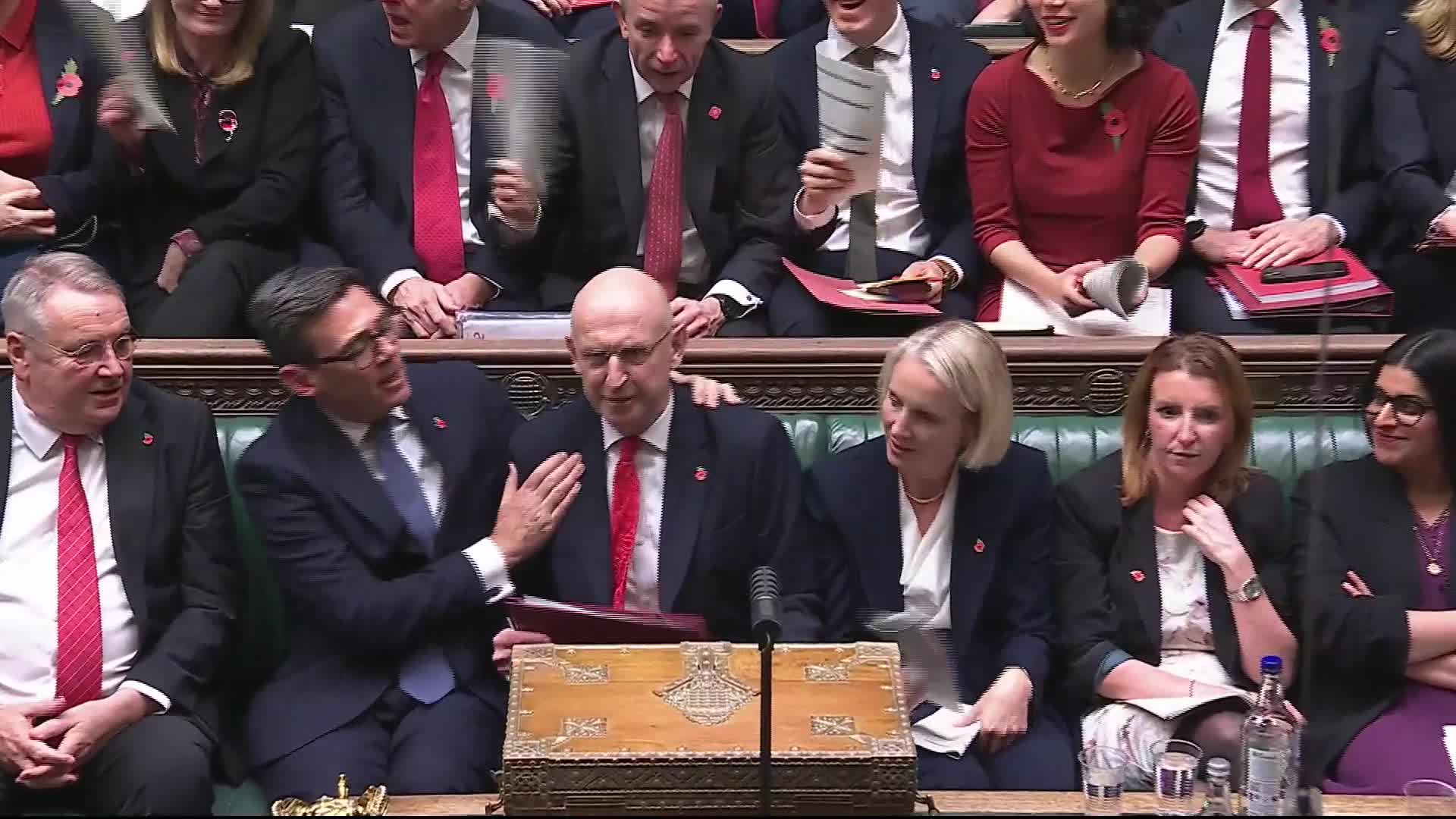
Millions of households will receive £100 to help with soaring energy bills, the Chancellor confirmed as he delivered his budget in the House of Commons.
The energy bills support package will cost £2.6 billion, with around 20 million households in council tax bands A to D receiving £100 from the Government this winter to help with the bills.
The support will reach 80% of households in England, 83% of fuel-stressed households, and 88% of those in the bottom three income deciles, the Government estimates.
Recipients can spend the cash landing in their bank account from January as they wish.
But Shaw warned that these and other measures, such as the announced increase in gambling taxes to fund business rates relief, “do not go far enough.”
He said: “Families facing mounting debt needed a bold and ambitious Budget to tackle the underlying causes of their difficulties. Instead, they got measures that merely tinker around the edges of a much deeper problem.”
He added: “At Paperweight, we are increasingly supporting what we call the ‘new vulnerables’ – ordinary people who have worked hard, paid their bills, managed their finances responsibly, and never imagined they would need to turn to a charity for help.
“Gradually, a household that was once managing perfectly well can find itself struggling, facing mounting debts, unpaid bills, and overwhelming financial uncertainty.
“These are ordinary working families, pensioners, and individuals whose financial resilience has been steadily eroded by years of rising costs.”

The communal charity says it opened more than 2,000 new cases last year and devoted over 50,000 hours to supporting clients. Demand continues to grow, with the charity sometimes opening more than 20 new cases in a single day.
Norwood’s Dickson added:” Once again, wider social care has been left without the comprehensive, long-term plan and investment required to meet rising levels of need.
“It is one of the most effective ways to improve outcomes for neurodivergent children and young people, people with learning disabilities, and their families, while reducing pressure on already overstretched public services.”
She continued:”Without properly funded preventative support, more families will be forced to struggle alone, more people will reach crisis point, and demand on health and social care services will continue to grow.
“The government must now back its ambition for stronger communities with a fully funded plan for social care. It must be a plan that invests in early intervention, supports families, and ensures that vulnerable people can access the help they need, when they need it.
Jewish Care’s CEO added:” We continue to absorb the substantial impact of the increase in employers’ National Insurance introduced in a previous Budget, which requires Jewish Care to find an additional £1.1 million every year.
“The Jewish community is fortunate to have organisations like Jewish Care and Jami providing essential social care and mental health services. These are made possible only through the generous support of our community, ensuring we can continue to be there for those who rely on us.”

The Chancellor said the UK was being battered by a global economic storm, with the Budget watchdog slashing its forecast for gross domestic product growth next year.
The public finances have also taken a battering, with the cost of borrowing soaring and the UK spending £14 billion more on debt interest this year, Healey said.
The Chancellor told MPs: “Those are the storms we face. We can’t wish them away. We must choose the course we steer through them.”
Healey hiked taxes on banks and gambling firms to provide “breathing space” he promised for households and high street businesses.
He said the Office for Budget Responsibility (OBR) had identified the war in the Middle East as the key driver in the economic forecasts.
But he promised, “to steer us through the global economic storms today, to chart a new course for Britain in the years ahead, to give people fresh hope for Britain’s future”.
Key measures announced include:
– The freeze in fuel duty has been extended until July next year.
– Hiking machine games duty from 20% to 25% for higher-stakes gambling machines, with adult gaming centres and vape shops not benefting from business rate reliefs.
– The national minimum wage and national living wage will increase by 3.9% for 2.3 million workers.
– The £4.7 billion black hole in the defence investment plan will be funded, in part through taking money from capital budgets across Whitehall.
– An extra £10 billion of additional economic and military support to Ukraine, and half a billion in urgent military funding this winter.
– A new founders’ relief to encourage start-up businesses.
The OBR said the UK’s “economic and fiscal position remains very challenging” after almost two decades of shocks and stagnation, pushing up the national debt.
“Since 2008, repeated adverse shocks have contributed to persistently weak GDP growth and elevated levels of government borrowing.
“This has resulted in a sharp increase in government debt as a share of GDP, to a level that is high by both recent historical and international standards.”
The Government is expected to borrow more every year than had been forecast in March, with the cost of that borrowing also set to increase.
Borrowing is around £18 billion higher this year, £16 billion in 2027-28, and an average of £11 billion a year over the following years, the OBR said.
The cost of debt interest is expected to be £15 billion higher this year and then £12 billion a year more on average in the years to come.
Simon Francis, coordinator of the End Fuel Poverty Coalition, hit out at Healey’s failure to back up his claims after introducing only a £100 payment to help 20 million households with energy bills.
He said: “The Chancellor talked the talk on energy bills, but ultimately failed to walk the walk.
“The Government acknowledged that wholesale gas prices have tripled since February and that, because of this, bills are expected to rise further during the sixth winter of high energy costs.
“Yet the only immediate support is a payment that will barely dent the predicted rise households face in January. Because it is paid directly into household bank accounts in England, it may not even be spent on staying warm this winter.
“Beyond this winter, the Chancellor’s commitments appear lukewarm at best. Keeping VAT off electricity until the summer and moving older renewables onto fixed contracts are welcome steps towards breaking the link between gas and electricity prices, but these do not go far enough.”
Tory leader Kemi Badenoch said the Budget is “not good enough, not strong enough, not bold enough” as the UK remains “overspent, overborrowed, overtaxed and drowning in an out-of-control welfare system”.

Keep community journalism free.
Jewish News is free for everyone. No paywall. No barriers. Just trusted journalism for anyone who wants to stay connected to Jewish life in Britain.
If you value that, please support us.
From as little as £5 a month, you can help keep our journalism free and accessible to all.
Every day, we report on the issues that matter to our community. We celebrate achievements, support charities, challenge antisemitism and ensure Jewish voices are heard more widely.
From as little as £5 a month, you can help us continue to:
- Report on the stories shaping Jewish life in the UK and beyond
- Bring our community together through shared stories, events and campaigns
- Celebrate the people, culture and moments that define our community
- Support organisations doing vital work across Jewish Britain
You can make a one-off donation or become a regular supporter. Every contribution helps keep our journalism free, independent and accessible to all.
If everyone who values Jewish News gave a small amount, it would make a real difference to our future.