Prefer Jewish News on Google
Deborah Lipstadt: ‘It begins with words’ – the dangers of Holocaust denial
The former US antisemitism envoy urges people to challenge antisemitism wherever they encounter it, during a panel event examining the Weimar Republic and lessons from history
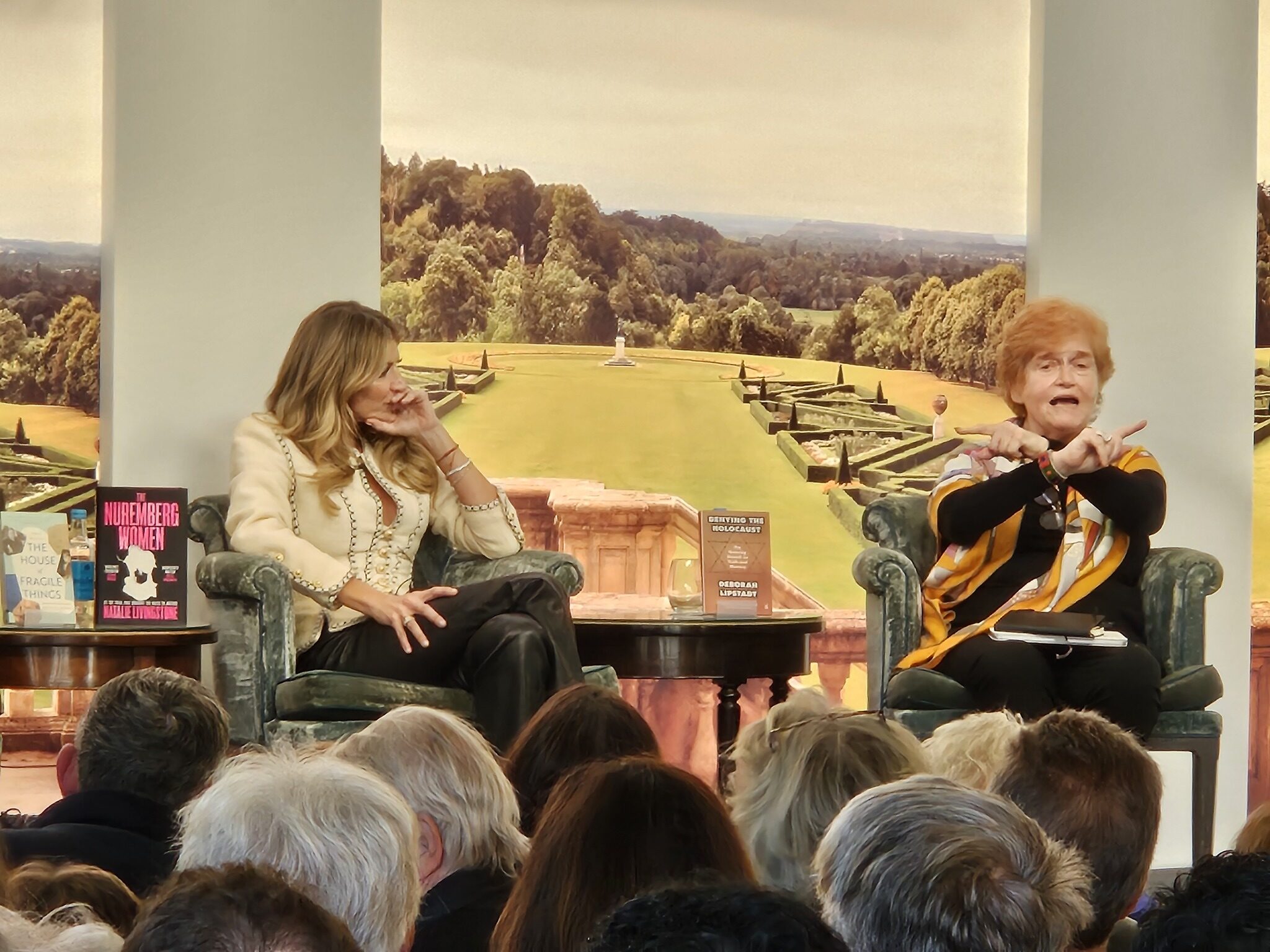
The historian and former US antisemitism envoy Deborah Lipstadt spoke about the power and danger of words at an event on 20th-century German history, held at the Cliveden literary festival.
“Whether you’re talking about the Holocaust, Rwanda, the [propaganda] radio [broadcasts] from the Congo, no one wakes up in the morning and says, ‘I’m going to get a machete and go kill people. I’m going to go build the gas chamber’. It begins with words.
“So if you hear something… even if it’s a little thing, you’re at the gym on the treadmill and someone makes a crack, say something.”
The event last weekend, titled From Weimar to Nuremberg, covered topics including the rise of Nazism, the lessons of the Holocaust, and the threats posed by artificial intelligence-fuelled Holocaust denial.
Among the speakers was the journalist Victor Sebestyen, author of several books on European history, who warned of the danger of “reading history backwards”.



He said: “I hate that word ‘inevitable’. Things [in Germany] were really booming in the Golden Twenties, and the Nazis and the far right were absolutely nowhere in the polls.” Had the former chancellor and moderate Gustav Stresemann, who helped to stabilise the German economy, not died in 1929, or had bullets fired by government forces that killed 16 of the Munich Putsch accomplices also struck Hitler, the course of history would have been very different, he said.
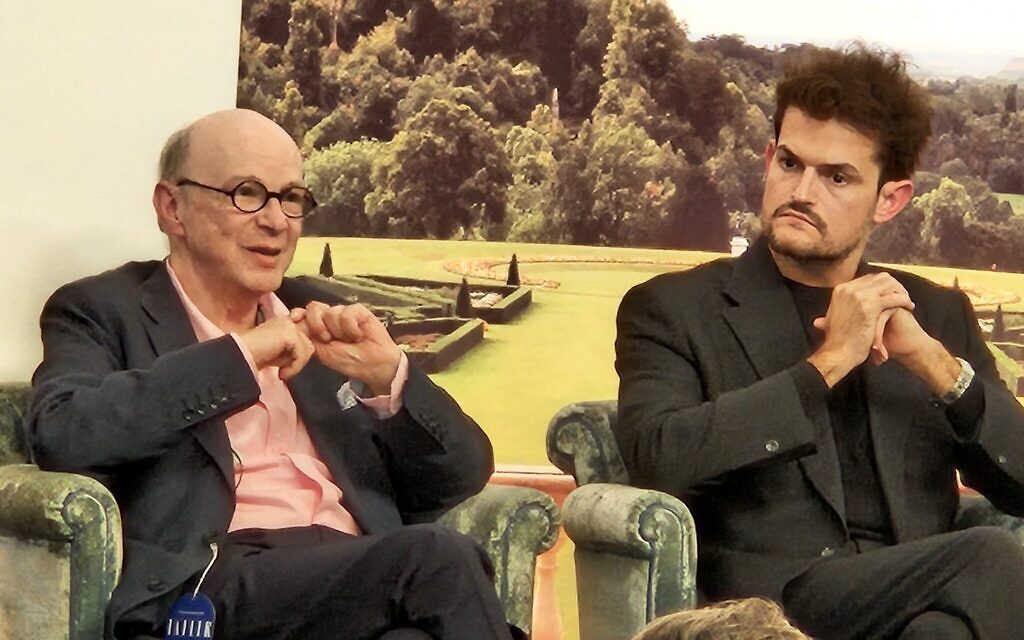
The historian and journalist James McAuley considered what the lessons of the Holocaust were. “Is it the failure of assimilation? Is it the imperative of Zionism? Is it the urgency to commit to and to protect human rights and human dignity? … I think we’re living in a moment when some of those lessons that we have had for so long are in increasing conflict.”
In a recent essay, The Death of History, the historian Niall Ferguson had charted the rise of Holocaust denial on social media, or as he put it the “algorithmic media”. The panel was challenged about whether the truth could survive into the 21st century.
“The Holocaust was an inconvenient truth, to borrow a phrase from Al Gore,” said Lipstadt. “It was something that rattled too many assumptions. And it’s been denied.” Lipstadt, who successfully defended a libel action by the denier David Irving, insisted that we had to keep on fighting denial, going to describe the internet and social media as being like a knife. “A knife in the hands of a killer can take a life. But if you’re choking and the emergency medical technician has a knife, they can save a life. It’s what you do with it.”

Keep community journalism free.
Jewish News is free for everyone. No paywall. No barriers. Just trusted journalism for anyone who wants to stay connected to Jewish life in Britain.
If you value that, please support us.
From as little as £5 a month, you can help keep our journalism free and accessible to all.
Every day, we report on the issues that matter to our community. We celebrate achievements, support charities, challenge antisemitism and ensure Jewish voices are heard more widely.
From as little as £5 a month, you can help us continue to:
- Report on the stories shaping Jewish life in the UK and beyond
- Bring our community together through shared stories, events and campaigns
- Celebrate the people, culture and moments that define our community
- Support organisations doing vital work across Jewish Britain
You can make a one-off donation or become a regular supporter. Every contribution helps keep our journalism free, independent and accessible to all.
If everyone who values Jewish News gave a small amount, it would make a real difference to our future.