Prefer Jewish News on Google

Defiance must be matched by compassion
Governments, politicians, the police, faith leaders, friends, and colleagues can—and must—do more to ensure Jewish communities are safe everywhere, writes David Davidi-Brown
Twenty-three years ago, much to my parents’ dismay, I was determined—despite the Second Intifada—to spend time in Israel volunteering and learning on a shnat sherut (year of service) programme. As it had been for my brother and for so many across our community, that time in Israel was transformative. I formed lifelong friendships with people from around the world, including Australia. It sparked decades of involvement in Jewish communal life, alongside a commitment to Israel and a determination to strive for a fairer and safer world.
Less than a month into our time in Israel, as young adults from different programmes came together at the start of Sukkot, we learnt that a hateful and murderous attack had taken the life of Yoni Jesner and six more precious souls. Early in my communal career, I was honoured to work with Yoni’s family on a scheme—still running today—through which thousands of young people have taken on acts of kindness (chessed), making his memory a blessing. Yoni, who had planned to become a doctor, saved lives even in death: his family agreed to donate his organs, including to a young Palestinian girl.
Yoni used to jot down thoughts and ideas. These handwritten notes were found with him and later became aphorisms that many have turned to for guidance and inspiration. One reads:
“Every human being is beautiful. Each has his own needs, wants, desires, and passions which serve to complement and influence our experiences. This realisation not only heightens our empathy towards each other but also sets each person a mission.”

Another urges us to:
“Always look for the good, both in people and situations.”
Since 7 October—and as terrorism struck again in Manchester and Sydney—many of us have understandably found it hard to look for the good or to heighten our empathy. We have felt outrage, anger, and isolation as the fears and warnings of our community have been ignored and at times even ridiculed.
Governments, politicians, the police, faith leaders, friends, and colleagues can—and must—do more to ensure Jewish communities are safe everywhere.
Yet we must also confront a difficult truth: even when a state and a society try to do as much as they can to thwart terror—as Israel does, and as the UK and many other countries have done since 9/11 and 7/7—they cannot prevent every act of murderous violence.
We should loudly and defiantly demand more of our leaders and our neighbours—clearer leadership, firmer action, and an unambiguous commitment to the safety of Jewish communities. And we must do so without surrendering our hope or our capacity for compassion.
In the days and weeks immediately after 7 October, as I struggled not to give in to hate and vengeance—a struggle I do not always overcome—I found strength in the words and bravery of those whose loved ones were murdered.
“Everyone I know from my childhood has a horror story to tell… We are all scared, hurt and distraught… People from both sides of the border have good reasons to hate one another. This is being used by those who feed on hate. But this cannot be the only option… Our shared future is based on the belief that all human beings are equal and deserving of respect and safety. This is how I was raised and how I am raising my own children… Even if it’s very far away, the only real future is that of hope and peace.” — Magen Inon, whose parents, Bilha and Yaakov, were murdered in Netiv Ha’Asara on 7 October
“The only way to create a future for the three children I have left in this country is to ensure that the Palestinian people have a dignified and decent life too.” — Elana Kaminka, mother of an Israeli soldier killed on 7 October
I am fortunate to work with dozens of Israelis and Palestinians who in turn work with thousands of people living through this painful conflict. If those who have endured such profound loss can continue to strive together for a better future, then we must follow their lead and summon some measure of their courageous compassion.
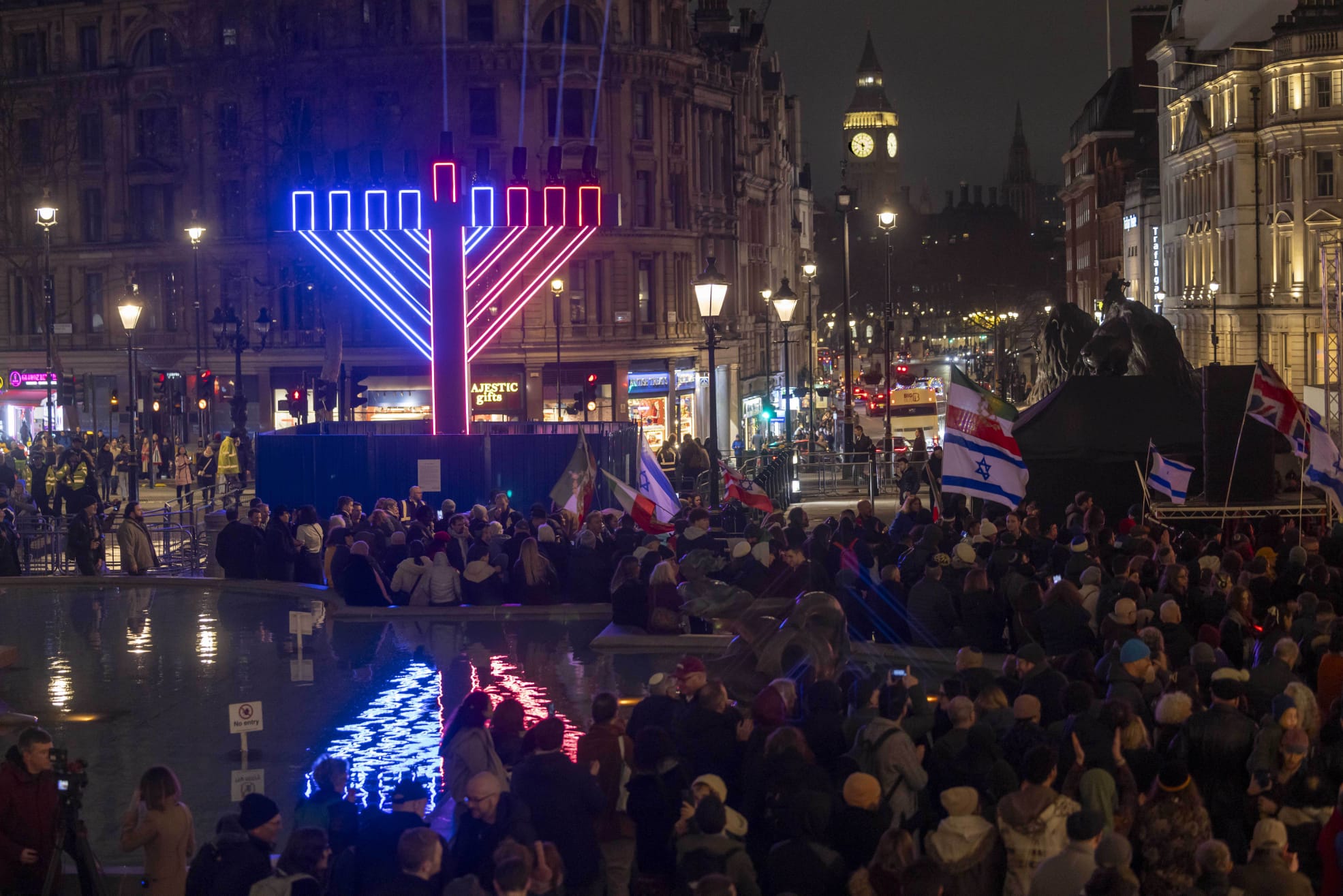
Hanukkah commemorates a defiant period in Jewish history. Our heroes, the Hasmoneans, used force to triumph against overwhelming military odds. Yet as the festival took shape, its focus shifted: focusing on the preservation of Jewish values which that force was utilised to ensure. The customs centre on lighting candles and the rededication of the Temple, symbolised by flames that burned brighter and longer than anyone thought possible.
I am not naïve. Confronting extremism and terror will require some of the zeal and defiance of our Hanukkah heroes. But if we are to defeat those whose hatred and fundamentalism seek to destroy us, that defiance must be tempered by dedication to the values we hold dear: the dignity of every person, the sanctity of every life, and the relentless pursuit of peace and justice.
- David Davidi-Brown is the chief executive of New Israel Fund UK

Keep community journalism free.
Jewish News is free for everyone. No paywall. No barriers. Just trusted journalism for anyone who wants to stay connected to Jewish life in Britain.
If you value that, please support us.
From as little as £5 a month, you can help keep our journalism free and accessible to all.
Every day, we report on the issues that matter to our community. We celebrate achievements, support charities, challenge antisemitism and ensure Jewish voices are heard more widely.
From as little as £5 a month, you can help us continue to:
- Report on the stories shaping Jewish life in the UK and beyond
- Bring our community together through shared stories, events and campaigns
- Celebrate the people, culture and moments that define our community
- Support organisations doing vital work across Jewish Britain
You can make a one-off donation or become a regular supporter. Every contribution helps keep our journalism free, independent and accessible to all.
If everyone who values Jewish News gave a small amount, it would make a real difference to our future.