
 Prefer Jewish News on Google

There is no Pride in excluding Queer Jews
We all deserve to enter LGBTQIA spaces without being asked to prove our Jewishness meets the criteria others set for 'good Jews.'
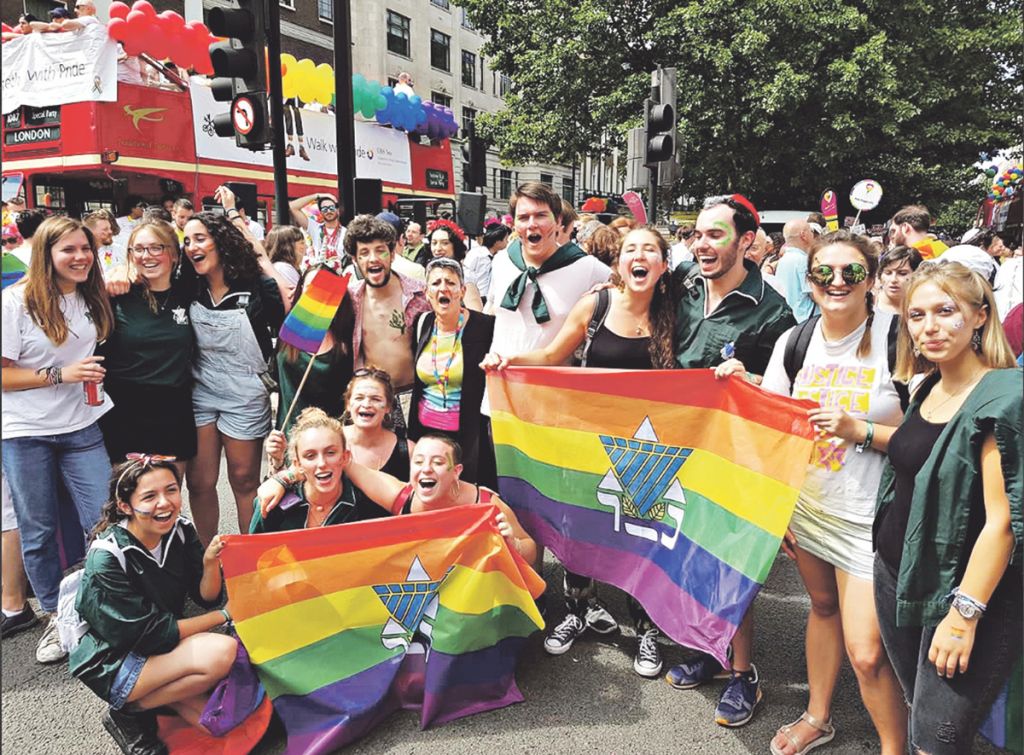
The first time I went back into a Jewish school to speak as an openly queer Jew, it felt like progress: LGBTQIA Jews no longer having to hide one part of ourselves within communities of belonging.
I left school in 2002, one year before Section 28 was repealed. For my entire education, teachers were banned from “promoting homosexuality,” which in practice meant silence: no language, no role models, no reassurance that being Jewish and queer was not a contradiction.
Years later, representing KeshetUK, I spoke with Jewish pupils about being young, Jewish and queer. That conversation happened somewhere that, when I was younger, would have found it almost impossible.
Pride, at its best, should do the same thing. It should say: come as you are. Not as the world finds you convenient. Not as the politics of others require you to be.
In Rome, Pride organisers have refused the participation of Keshet Italia for not taking their stance or accepting Roma Pride’s characterisation of Israel’s war with Hamas. Participation required a “clear and unequivocal stance condemning the genocide perpetrated by the Israeli government.”
In Brussels, Jewish LGBT+ attendees were told they could participate only if they hid visible Jewish symbols, including a Star of David or even the word “Jewish.” The condition was withdrawn, but the wound remains. Queer spaces should not need persuading that asking Jews to hide is a betrayal of Pride.
In London, thankfully, after two years without an official Jewish bloc, Jewish LGBTQIA visibility is set to return, with organisers agreeing to receive antisemitism training from CST.
Rome. Brussels. London. Exclusion. Erasure. Repair.
Different cities, different decisions, but the same question: do LGBTQIA spaces have room for queer Jews as we actually are? Not as acceptable Jews only if we fit prescriptive politics on a complicated conflict where we, unlike many judging us, have deep connections to people impacted by the violence.
I am a queer Jew who cares deeply about Israel-Palestine, and I understand the outrage over what has been inflicted on Palestinians in Gaza. My colleagues are Israelis — Jewish and Palestinian citizens — working to end the occupation and build a safe, shared future for Arabs and Jews. We share many of those concerns.
Yet struggling for human rights is not black or white. Queer activism should not be binary.
Jewish grief is real too. Jewish fear is real too. The trauma of 7 October is ongoing. Israelis have continued to suffer attacks from repressive regimes that also brutalise their own people, including queer citizens. Increasingly violent antisemitism is real. LGBTQIA Jews approach queer spaces with trepidation, wondering whether our presence is conditional.
Some progressive spaces have adopted a binary approach to Israel and Palestine they would reject in almost any other context. Queer people know identity is complicated, belonging is layered, and liberation movements can reproduce the exclusions they were created to resist.
And yet, when it comes to queer Jews, complexity is too often treated as evasion. If we challenge antisemitism, we are accused of distracting from Gaza. If we speak of Jewish connections to Israel, those attachments become suspect. If we refuse to adopt positions recognising only one people’s rights and humanity, we are told we have failed the test.
But queer Jews should be welcomed as the diverse people we are. Many of us are Zionist, some are not, and all of us are more complex than either label allows. All of us deserve to enter LGBTQIA spaces without being asked to prove our Jewishness meets the criteria others set for “good Jews.”
This does not mean Pride should be silent about Gaza. Palestinians, including queer Palestinians, deserve dignity, safety, self-determination and life. But solidarity with Palestinians does not require excluding Jews, suspecting Jewish communal organisations, or erasing Jewish symbols.
We can learn from the compassionate and courageous Israelis and Palestinians I work with, who offer models of activism clear in the pursuit of justice without losing humanity or humility.
No one should take pride in excluding queer Jewish people from LGBTQIA spaces. Not in Rome. Not in Brussels. Not in London. Not anywhere.
Many of us are tired of explaining that caring about Israel and Israelis does not make us accountable for the actions of the Israeli government. We are fed up with being asked where we stand on a conflict thousands of miles away before being allowed to stand together with our local queer community.
Pride marches can speak with moral urgency for Palestinian life and freedom. They must also make room for queer Jews to march as Jews.
Not hidden, humiliated or conditionally tolerated.
Proud. Whole. And still here.

Keep community journalism free.
Jewish News is free for everyone. No paywall. No barriers. Just trusted journalism for anyone who wants to stay connected to Jewish life in Britain.
If you value that, please support us.
From as little as £5 a month, you can help keep our journalism free and accessible to all.
Every day, we report on the issues that matter to our community. We celebrate achievements, support charities, challenge antisemitism and ensure Jewish voices are heard more widely.
From as little as £5 a month, you can help us continue to:
- Report on the stories shaping Jewish life in the UK and beyond
- Bring our community together through shared stories, events and campaigns
- Celebrate the people, culture and moments that define our community
- Support organisations doing vital work across Jewish Britain
You can make a one-off donation or become a regular supporter. Every contribution helps keep our journalism free, independent and accessible to all.
If everyone who values Jewish News gave a small amount, it would make a real difference to our future.





















