
 Prefer Jewish News on Google

Under cover of war, we must listen to the Israelis sounding the alarm
A variety of prominent figures - from both Israel's Left and Right - are speaking out against a pattern that is becoming harder to ignore: the erosion of moral and legal boundaries
For many Jews — in Israel and in Britain — this is a time of fear.
I am writing from Israel, where that fear is immediate and visceral: sirens, missiles, and the lingering trauma of 7 October. Just yesterday, 100 kg of explosives landed in a residential area not much more than five minutes’ walk from where I am staying.
In Britain, the recent antisemitic — and likely terrorist — attack on our community, and indeed on Britain as a whole, fuels growing anxiety about safety, belonging, and the future.
At times like these, it is natural to close ranks — to focus on external threats and hold tighter to a sense of collective solidarity.
But those of us who love Israel must also be willing to listen — especially now — to courageous Israelis who, even under the barrages of Islamic Republic and Hezbollah missiles, are warning that something dangerous is taking place under the cover of war.

These are not marginal voices. They include journalists, security officials, diplomats and political figures — people deeply embedded in the life of the state — who are speaking out against a pattern that is becoming harder to ignore: the erosion of moral and legal boundaries.
Channel 13 journalist Udi Segal put it starkly this week, reflecting on the idea that war protects a nation’s values. Referring to “unbridled Jewish terror” and to incidents in which those accused of crimes or even torture are embraced by senior members of Israel’s government, he asked: when does the conduct of war — or what is done in its shadow — begin instead to corrode those values?
His question is not theoretical.
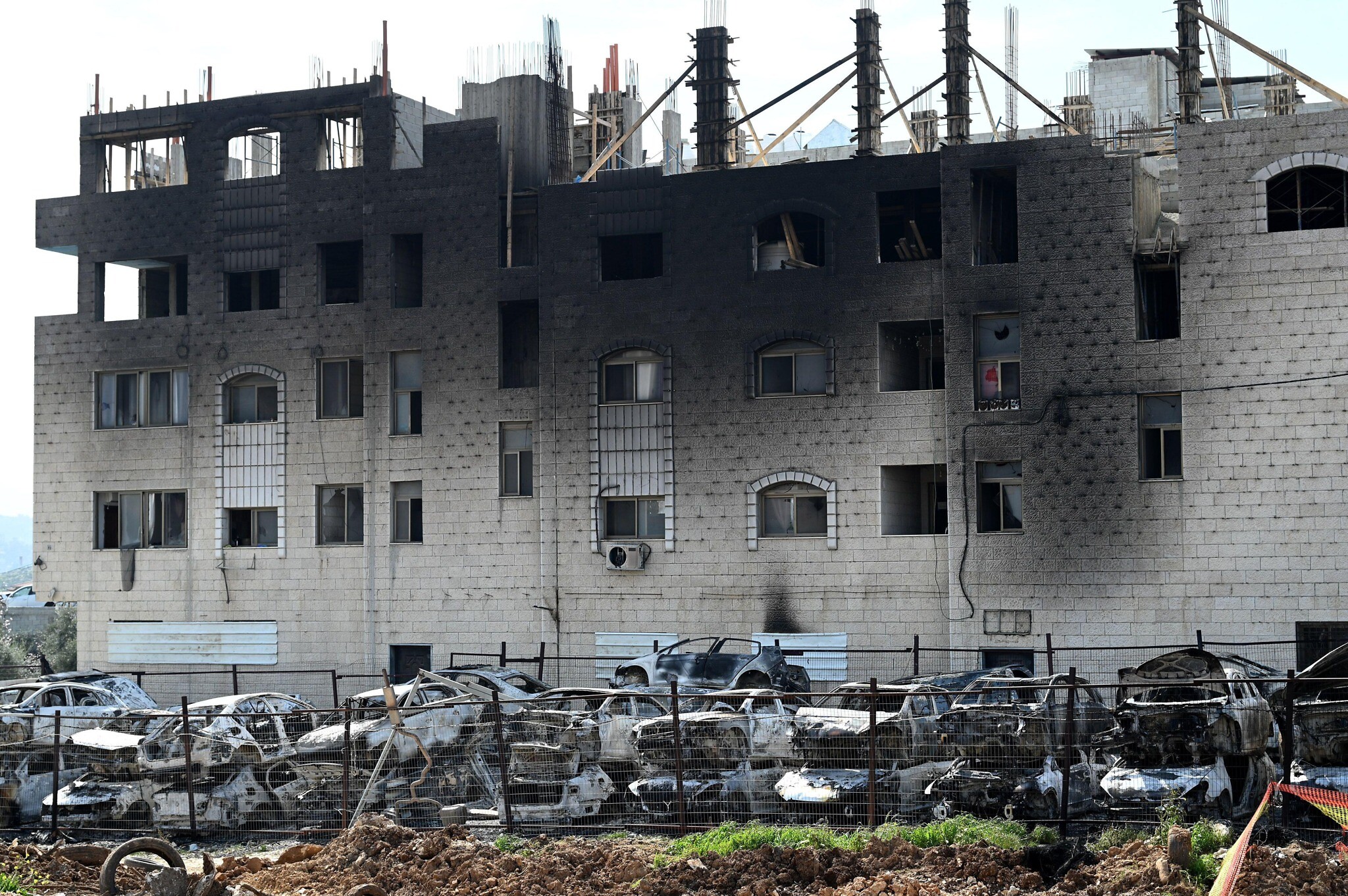
In recent weeks, Palestinian communities across the West Bank have faced escalating attacks: homes and cars burned, families driven from their land, lives lost. These are not isolated incidents. They form a pattern — one that many Israelis themselves are now describing in increasingly stark terms.
Jewish News itself once described the violence in Huwara as a “pogrom”. By some accounts, what unfolded across parts of the West Bank last weekend was equivalent in scale to multiple such incidents happening at once.
What is striking is not only the violence itself, but the response it has prompted from unexpected quarters.
The IDF Chief of Staff, Eyal Zamir, has warned of the dangers posed by nationalist violence. Former Likud justice ministers have spoken out. Senior Israeli diplomats — who have spent their careers defending the country abroad — have issued a public call for urgent action, warning that such attacks “run diametrically contrary to any values of governance and morality” and are eroding Israel’s standing in the world.
Their message is clear: this is not only a moral crisis. It is a strategic one.
It is also unfolding alongside deeper shifts within Israel itself. Laws are passing that could fundamentally alter the character of the State of Israel, taking it further from the democracy envisioned by its founders.
A bill passed this week expanding the authority of religious courts — both rabbinical and sharia — has prompted the leader of the opposition, Yair Lapid, to declare that Israel is becoming “a theocracy”. Other proposals, including moves towards a death penalty for terrorism that would in practice apply almost exclusively to Arabs, and restrictions that could criminalise non-Orthodox Jewish religious practice at the Kotel, with those found guilty facing up to seven years in prison, point to a broader and deeply concerning trajectory.
For many of us in Britain, this question is not abstract.
Many of us are again asking whether Britain is safe for Jews. I’m sure many of us think of Israel as the place — perhaps the only place — we would turn to in order to find safety and live free, vibrant Jewish lives.
If the extremists have their way, the Israel we love — and that some of us consider our next home — will become something else: a place where only Orthodox Jews can pray and practise openly; a state that punishes Arab terrorists with the death penalty while seldom prosecuting Jewish terrorists; and a society in which the rule of law and the protection of minorities are steadily eroded.
This is not an argument against Israel. It is an argument for it — and one being made, increasingly urgently, by Israelis themselves.
One of the most powerful moments of journalism in these weeks of war came from Ilana Dayan, a prominent TV anchor on Israel’s Channel 12. She dedicated the final minutes of a broadcast to urging us to remember that a “total victory” that fails to uphold the sanctity of life — all human life — will be no victory at all.
I have sympathy with those who say that now is not the time for such conversations. But those who care about Israel’s future cannot afford to look away.
We should listen — carefully, seriously — to the growing number of Israeli leaders, from across the political and institutional spectrum, who are urging us to confront the urgency of this moment.
Many Israelis are already doing so: in protests, in civil society organisations, and in daily acts of resistance to the idea that fear must mean we forget or undermine our values.
Supporting that vision — of an Israel that is Jewish, democratic, and committed to a more equal and peaceful future — is one way of responding. The New Israel Fund is part of that effort, alongside many others.
But before action comes attention.
And right now, there are voices inside Israel asking us not to look away.
David Davidi-Brown is the chief executive of the New Israel Fund

Keep community journalism free.
Jewish News is free for everyone. No paywall. No barriers. Just trusted journalism for anyone who wants to stay connected to Jewish life in Britain.
If you value that, please support us.
From as little as £5 a month, you can help keep our journalism free and accessible to all.
Every day, we report on the issues that matter to our community. We celebrate achievements, support charities, challenge antisemitism and ensure Jewish voices are heard more widely.
From as little as £5 a month, you can help us continue to:
- Report on the stories shaping Jewish life in the UK and beyond
- Bring our community together through shared stories, events and campaigns
- Celebrate the people, culture and moments that define our community
- Support organisations doing vital work across Jewish Britain
You can make a one-off donation or become a regular supporter. Every contribution helps keep our journalism free, independent and accessible to all.
If everyone who values Jewish News gave a small amount, it would make a real difference to our future.





















