Prefer Jewish News on Google
Diaspora Jews urged to ‘speak up’ as Israel warned it is ‘on wrong track’
Limmud panel says Jewish communities in the Diaspora have a duty to challenge Israel’s direction and defend liberal democracy
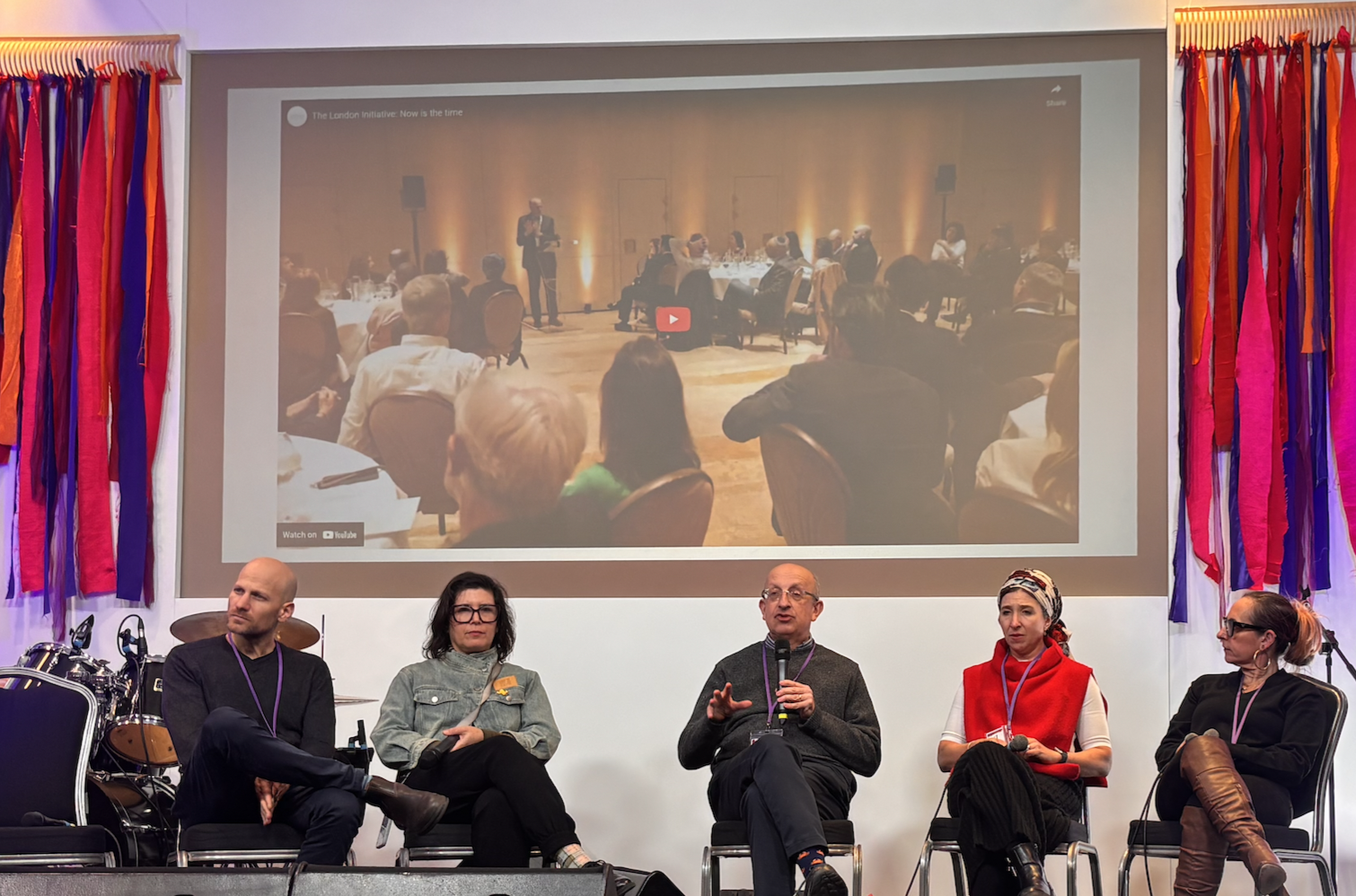
A senior Limmud Festival panel has urged Jews in the diaspora to “speak up and speak out” over Israel’s future, warning that silence risks allowing the country to drift further from the liberal vision of its founders.
The session, The Endangered Majority – Speaking Up and Speaking Out, took place on Monday afternoon and was presented by The London Initiative (TLI), an organisation that describes its mission as empowering Israelis and world Jewry who believe Israel is “on the wrong track”.
Mike Prashker, who co-founded TLI after advising the Ted Arison Family Foundation, told the audience the group is “not left wing or right”, but “pro democracy, pro secure peace, pro fairness and pro Declaration of Independence”.
Prashker, founder of Merchavim – The Institute for the Advancement of Shared Citizenship in Israel and author of A Place for Us All – Social Cohesion and the Future of Israel, said TLI deliberately avoids party politics. “We don’t invite politicians as members,” he said, adding that democratic values and Jewish-Arab partnership were non-negotiable.
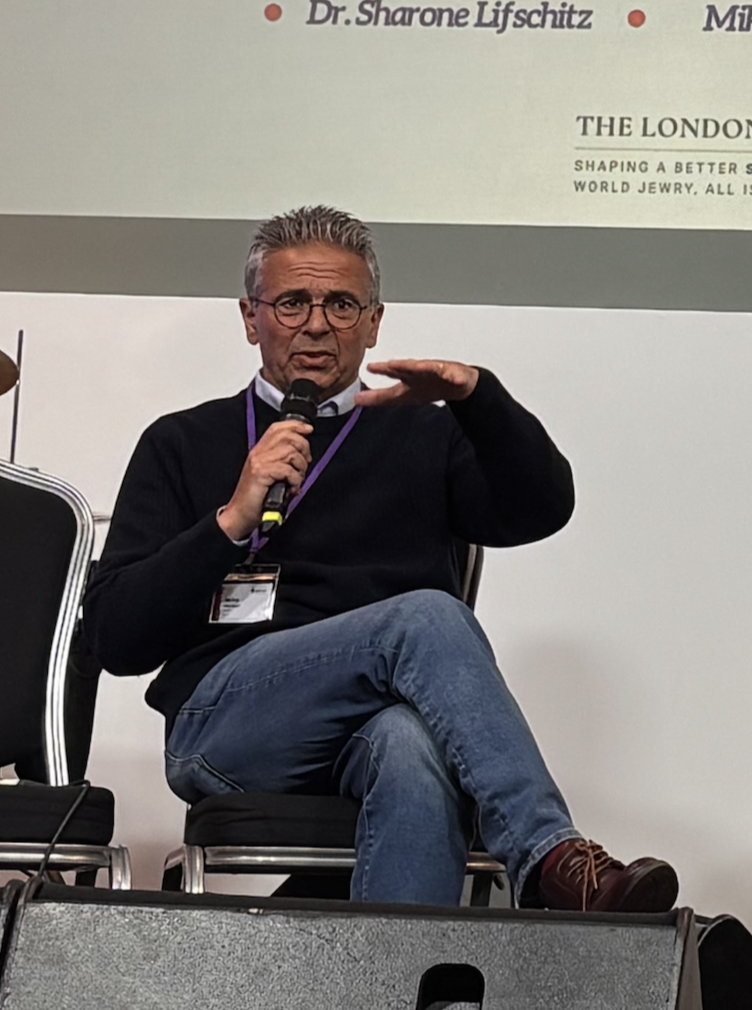
Michael Wegier, Chief Executive of the Board of Deputies of British Jews since 2021, appeared in a personal capacity. Wegier, who has held senior Jewish leadership roles in Israel, the US and the UK, spoke about the need to shift what ideas are considered acceptable in Israeli and Jewish communal discourse, arguing that diaspora voices remain legitimate despite claims they have “no skin in the game”.



The panel also featured deeply personal testimony from Magen Inon and Sharone Lifschitz, both of whom lost parents during the Hamas attacks of 7 October, 2023.
Inon, an educator with a PhD who has worked with students, military officers and inmates to promote liberal values, said the murder of his parents had reinforced his belief that revenge would only deepen the conflict. “Very early on, we came out with a message that we don’t believe in revenge. It’s not the legacy of my parents,” he said. Since the attack, Inon has become a prominent voice advocating Israeli-Palestinian peace.
Lifschitz, a British-Israeli filmmaker and academic from Kibbutz Nir Oz, where around a quarter of residents were murdered or abducted on 7 October, said her mother was released after 17 days in captivity, while her father was killed while being held hostage. She told the audience that pursuing a diplomatic resolution alongside the fight to bring hostages home was “not utopian, but the bare minimum”.
Rabbi Charley Baginsky, co-lead of Progressive Judaism in the UK and Ireland, said she joined TLI because she needed “a constructive space to be both critical and still engaged”. A leading voice on Progressive Zionism, Baginsky said younger Jews were asking fundamentally different questions about Israel, while communal leadership had failed to replace formative Israel engagement experiences that shaped previous generations.
Joanne Greenaway, CEO at the London School of Jewish Studies, warned that trauma following 7 October risked becoming generational if fear hardened into hatred. She argued that building relationships and restoring trust were essential to preventing long-term societal damage.
Audience members challenged the group on its limited membership, branding and grassroots reach, with one questioning whether the name “London Initiative” undermined credibility in Orthodox communities. Prashker acknowledged shortcomings in outreach, saying: “We’re far from perfect,” but rejected the idea that rebranding would neutralise opposition. “Whatever we do, the machine will delegitimise,” he said.
In one of the session’s sharpest moments, Prashker drew a clear line on communal unity. “We are not in the unity business,” he said. “We are not in the business of hugging people who want less democracy, less fairness, and less secure peace.”
As the session closed, speakers returned to TLI’s central claim: that diaspora Jews not only have the right to speak about Israel’s future, but a responsibility to do so – especially when core democratic and Jewish values are at stake.

Keep community journalism free.
Jewish News is free for everyone. No paywall. No barriers. Just trusted journalism for anyone who wants to stay connected to Jewish life in Britain.
If you value that, please support us.
From as little as £5 a month, you can help keep our journalism free and accessible to all.
Every day, we report on the issues that matter to our community. We celebrate achievements, support charities, challenge antisemitism and ensure Jewish voices are heard more widely.
From as little as £5 a month, you can help us continue to:
- Report on the stories shaping Jewish life in the UK and beyond
- Bring our community together through shared stories, events and campaigns
- Celebrate the people, culture and moments that define our community
- Support organisations doing vital work across Jewish Britain
You can make a one-off donation or become a regular supporter. Every contribution helps keep our journalism free, independent and accessible to all.
If everyone who values Jewish News gave a small amount, it would make a real difference to our future.