Prefer Jewish News on Google
Do you want an EU passport?
Passportia, a company set up in 2013 specialising in citizenship law, has seen a huge increase in the numbers of people contacting it for help in obtaining an EU passport
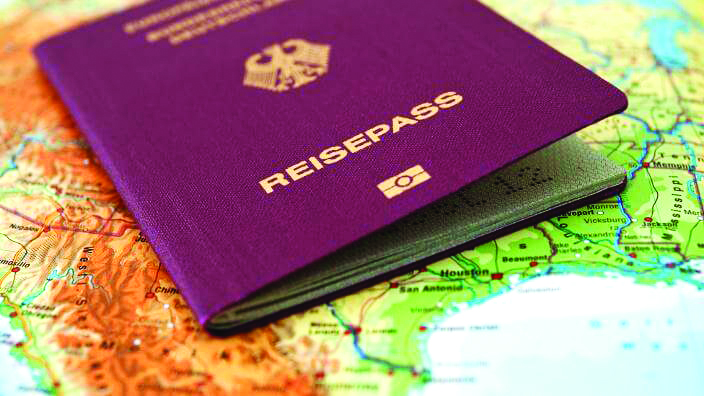
Jeff’s four grandparents had all been murdered in 1942 by the Nazis, so he was perhaps an unlikely candidate to apply for German citizenship. His parents had been lucky enough to escape Germany on the Kindertransport and they had met later, in England, where they set up a factory employing other Jewish refugees.
But Jeff is one of many people – among them a large proportion of Jews – who, just before, and definitely since, the Brexit vote, began to look into whether they could get an EU passport. Jeff, and others, are researching if they can reclaim German citizenship from ancestors who left or fled persecution.
But obtaining the documention (birth or marriage certificates) and details from German authorities can be tricky and time consuming, especially if you don’t speak German.
Passportia, a company set up in 2013 specialising in citizenship law, can help. It provides legal advice for applications for citizenship of the UK, Germany and Ireland, and is familiar with cases where the applicant has ancestral or family connections.
“Applications for German citizenship now account for more than half Passportia’s work,” explains founder Bruce Mennell.


AleArest“I did a test case in early 2016 for restoration of German citizenship that had complications, but went very well.” The two types of enquiry Passportia mostly deals with is where a person is already eligible, typically through a German parent, grandparent or great grandparent, or where a person would have been eligible had their German ancestors not lost their citizenship or lives due to Nazi oppression.
The restoration the company applies for is under Article 116 of the German constitution of 1949, which says: ‘Former German citizens who between 30 January 1933 and 8 May 1945 were deprived of their citizenship on political, racial or religious grounds and their descendants shall, on application have their citizenship restored.’
However, this is not always as straightforward as it seems and some people fall outside of Article 116, the implementation of which was made more restrictive by court judgements in the 1980s. Others still are unable to source the necessary documents, which are often stored at local level in Germany, Poland, the Czech Republic or other Eastern European countries, and have trouble finding proof that their ancestor was in fact a German citizen.
“If we can’t locate primary evidence, we’ll try to build a case based on secondary evidence,” says Mennell. “We have a comprehensive set of laws, judgements and commentary, so we can work around people in a borderline situation. We prepare the application very thoroughly, and our case workers speak German, so we have a higher chance of success .”
The company carries out pre-screening to ensure the prospective client has a reasonable basis to qualify for German citizenship. If they do, they are invited for a consultation where the strength of their case will be established and after being given the go-ahead to act, they build the case.
The company claims a 90 percent success rate for obtaining citizenship. “So far we’ve never had a refusal,” affirms Mennell. While he and his caseworkers don’t usually ask clients their motivations for wanting EU citizenship, sometimes the clients tell them.
“The main reason is to maintain the ability to live, work and travel in the EU. There are benefits of dual passports for business people as some countries don’t require a visa if you have a German passport.
“Sometimes they want it for children – to keep their options open – and maybe they have some anxiety as to what the future of Britain holds as there is uncertainty,” he says.
“For others, they want to assert their identification with the EU, and sometimes we get people who have some kind of cultural interest in or connection with Germany – they’re Jewish, their link is a grandparent, they can speak some German… It’s a minority, but it’s more people than I was expecting,” Mennell admits.
His caseworkers have heard some “extraordinary” stories of escape from clients whose German ancestors were hidden in other countries during the Second World War, while others had unusual migratory patterns after leaving.
“We hear many stories where people experience loss and have escaped or emigrated,” Mennell acknowledges. “They have survived trauma and change and demonstrated an incredible capacity to survive and adapt.”

Keep community journalism free.
Jewish News is free for everyone. No paywall. No barriers. Just trusted journalism for anyone who wants to stay connected to Jewish life in Britain.
If you value that, please support us.
From as little as £5 a month, you can help keep our journalism free and accessible to all.
Every day, we report on the issues that matter to our community. We celebrate achievements, support charities, challenge antisemitism and ensure Jewish voices are heard more widely.
From as little as £5 a month, you can help us continue to:
- Report on the stories shaping Jewish life in the UK and beyond
- Bring our community together through shared stories, events and campaigns
- Celebrate the people, culture and moments that define our community
- Support organisations doing vital work across Jewish Britain
You can make a one-off donation or become a regular supporter. Every contribution helps keep our journalism free, independent and accessible to all.
If everyone who values Jewish News gave a small amount, it would make a real difference to our future.