Prefer Jewish News on Google
OPINION: Where do you come from? Free speech or racial interrogation?
A black British charity worker says Royal Household questions about her origins were racial abuse. When does a question become a violation, asks Jewish News historian Derek Taylor.
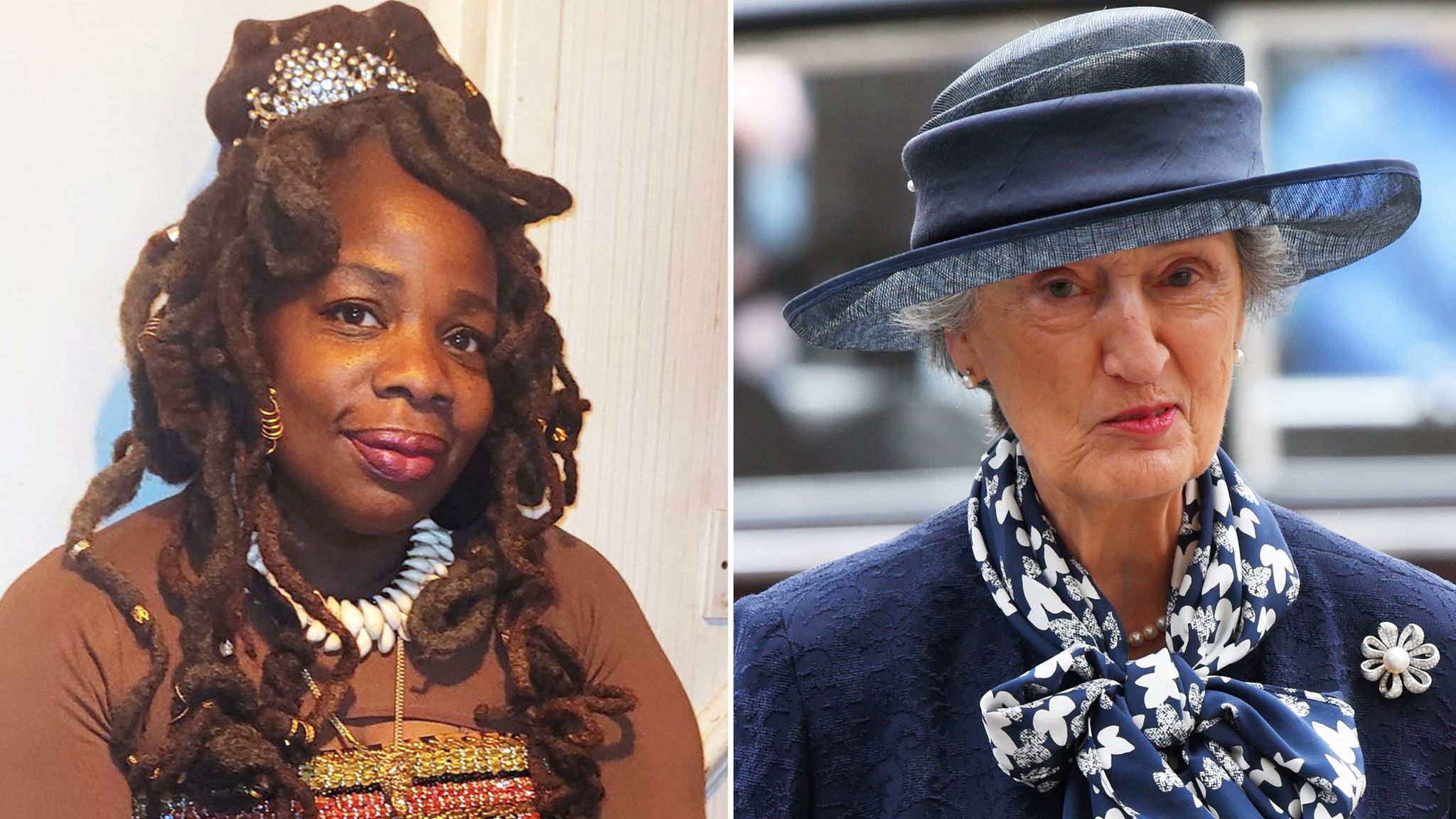
But where do you really come from? The accusation of racism at a royal reception from charity boss Ngozi Fulani has Derek Taylor asking where free speech ends and abuse begins.
New York taxi drivers are famously morose. The one driving me from Kennedy Airport was no different and it’s a long way into town. So as I felt like some company, I said to him “When did you come from Haiti?” And he said “How do you know I come from Haiti”?’ His licence was displayed on the windscreen and I said “Your name is Toussaint Oliver and you’re obviously named after Haiti’s great founder, Toussaint l’Ouverture.” A history degree comes in useful.
He was delighted. He carried my bags when we got to the hotel, he gave me sightseeing brochures and we got on fine. Lady Susan Hussey has had a distinguished life ruined by a somewhat similar experience.
I’m very grateful to my Polish grandfather for deciding to emigrate to Britain around 1880. If he hadn’t I’d very likely have died in the Holocaust. Lady Hussey, on the other hand, was talking to Ngozi Fulani, a distinguished charity worker, who said she felt she was being interrogated when asked about her ancestry.
Lady Hussey is from the Waldegrave family and Sir Richard Waldegrave was the Speaker of the House of Commons in 1381 in the reign of Richard II. The Waldegraves were, of course, Norman and had come over with William the Conqueror in 1066, so Lady Hussey is originally from France. As the royal family are originally from Germany – Prince Albert of Saxe Coburg and Gotha was not a Cockney and the House of Windsor only came about in 1917 – they are like the large majority of Brits who have ancestors in other countries.


Does it matter? Anthropologists have been arguing the toss about this for years and years. The fact is that when society changes its way of life, it can very easily go too far in the other direction. We don’t have workhouses any more. We have abolished public hanging and capital punishment. The Scots have abolished hanging, drawing and quartering. They abolished slavery in Scotland only at the back end of the 18th century. All these changes were admirable, but are we getting just a little too sensitive about our ancestry?
Lady Hussey is living in a time when we are becoming more conscious of racism – and a good thing too.
The recent census report highlights the decline in religious attribution by an increasingly substantial percentage of the population. So what happens if you become very ill? A lot of the non-believers will be tempted to pray for a cure. How, though, can they do so when they have announced that they have no religion? Will it be taken further? Will the non-believers advocate abolishing Armistice Day?
As Jews, we have seen the positive and negative aspects of religion over the centuries. A lot have opted for atheism and agnosticism, but what happens when the end of life approaches? Bertrand Russell, the great philosopher, said he didn’t believe in an after-life when he was over 90 years of age. I’ve always wondered whether he hoped he was wrong.
Lady Hussey is living in a time when we are becoming more conscious of racism – and a good thing too. The cause of free speech needs protecting as well though. We don’t want to finish up like so many overseas countries, for whom free speech is anathema and illegal.
I’m sure that her many friends will sympathise with Lady Hussey. It won’t change anything but the general attitude needs watching.

Keep community journalism free.
Jewish News is free for everyone. No paywall. No barriers. Just trusted journalism for anyone who wants to stay connected to Jewish life in Britain.
If you value that, please support us.
From as little as £5 a month, you can help keep our journalism free and accessible to all.
Every day, we report on the issues that matter to our community. We celebrate achievements, support charities, challenge antisemitism and ensure Jewish voices are heard more widely.
From as little as £5 a month, you can help us continue to:
- Report on the stories shaping Jewish life in the UK and beyond
- Bring our community together through shared stories, events and campaigns
- Celebrate the people, culture and moments that define our community
- Support organisations doing vital work across Jewish Britain
You can make a one-off donation or become a regular supporter. Every contribution helps keep our journalism free, independent and accessible to all.
If everyone who values Jewish News gave a small amount, it would make a real difference to our future.