Prefer Jewish News on Google


Now more than ever, we must remember we are a global Jewish family
Whatever the result of next week's Israeli election, we will then face a task which is as essential for the future of the Jewish people as it is difficult
I vividly recall a conversation I had with a journalist in the days following 7 October 2023. We had just concluded a sombre interview when, almost as an afterthought, she asked me, “Do you have family in Israel?”
“Yes,” I replied, “about seven million of them.”
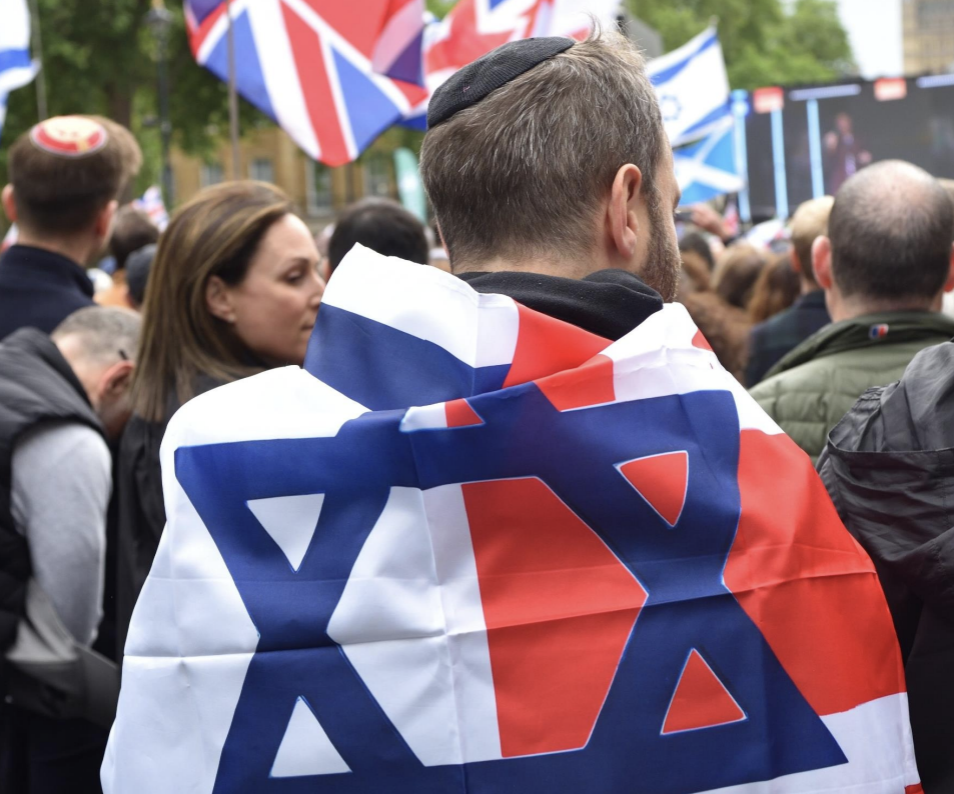
I was not the first to express this sentiment to her. It had quickly become clear to anyone who cared to pay attention, that when a Jew is mercilessly brutalised at a music festival or kidnapped from their home in Israel, Jews around the world experience that atrocity as though it had been perpetrated against a member of their family.
This phenomenon has been truly heartening to behold. We have gathered at vigils, visited sites of tragedy in Israel, filled synagogues, demonstrated, volunteered, donated and grieved together. Not out of mere solidarity, but an instinctive recognition, almost involuntary, of belonging to what we call a mishpacha – the global Jewish family.
But a family cannot stand together only when it comes under threat, and it cannot define itself only by its response to catastrophe. As Israel prepares for a general election of critical importance, our proud and cherished sense of mishpacha is being seriously tested.


The National Polarisation Index published by Tel Aviv University earlier this year recorded a polarisation rating of 8.3 out of 10, indicating a level which could, God forbid, lead to civil conflict. And that fracture does not stay in Israel. We have seen how it travels across the Jewish world through social media, newspaper columns, dinner table conversations and communal gatherings.
On the morning of 28 October, Israeli citizens and Jews across the world will wake to an election result. Whatever the outcome, some of us may feel relief; others, deep disappointment. We will then face a task which is as essential for the future of the Jewish people as it is difficult: To define our Jewish identity not by the political campaign of the day – as important as that may be – but by what it is that truly makes us mishpacha.
Shared suffering may bring us together in crisis. But it is a sense of belonging to a people which the Torah describes as “a kingdom of priests and a holy nation,” which can ensure our survival.
To be a part of the Jewish family is to be blessed with the gift of both an anchor and a compass. The anchor is our shared story, which holds us steady when the storm rages, reminding us that we are all in the same boat. The compass is our shared purpose, the covenant given at Sinai to every Jew equally, which points us towards a destination far beyond any single moment in history.
Yet it has often been in quieter waters that we have argued most fiercely about the route. It is for this reason that remarkably, nearly two months of our calendar are devoted to a reminder of the perils of Sinat Chinam – causeless hatred, in our midst: The Three Weeks between 17th Tammuz and 9th Av, when we recall the civil war that raged in Jerusalem from 67 to 70CE, which caused the loss of our Temple and the exile of our people; the 33 days of the Omer, when we remember the absence of respect to others within the ranks of the 24,000 students of Rabbi Akiva; which, according to Rabbinic tradition, led to the fall of Betar; and the Fast of Gedaliah, which commemorates the assassination of the Jewish governor, Gedaliah, by a fellow Jew.
There is something available to us all, which requires no political consensus and asks no one to surrender a single conviction.
The first Chief Rabbi of the Land of Israel, Rabbi Abraham Yitzchak Kook, taught that our redemption can only be achieved through Ahavat Chinam – causeless love. You might fundamentally disagree with someone. You might think them misguided. But you can, nonetheless, relate to them with unconditional love, because they remain a part of your family.
That single discipline, consistently applied, does not end disagreement. But it does begin to change its character entirely. Openness, empathy and understanding follow.
In this spirit, our Talmudic sages encourage us to engage in machloket leshem Shamayim – argument for the sake of Heaven, when issues are debated passionately without any attempt to demonise one’s foes.
The Hebrew word for hope, ‘tikva’, appears for the first time in the Bible in the Book of Joshua to describe a rope. The connection between the two is clear: A single thread can be easily broken, but when dozens are intertwined, they constitute a rope which is unbreakable. There is hope for our people when we are united, while we are at our weakest when divided.
Sometimes we confuse unity with uniformity. Judaism does not celebrate uniformity, when people look the same, speak in the same way or hold the same views. Unity has always been our goal, achieved through mutual respect, the capacity to listen to the views of others and the will to bring divergent opinions, often strongly expressed, under the baton of harmonious living.
The result of Israel’s election will be determined by those who vote in it. However, what kind of family we are on the morning of 28 October is something that we will determine for ourselves.

Keep community journalism free.
Jewish News is free for everyone. No paywall. No barriers. Just trusted journalism for anyone who wants to stay connected to Jewish life in Britain.
If you value that, please support us.
From as little as £5 a month, you can help keep our journalism free and accessible to all.
Every day, we report on the issues that matter to our community. We celebrate achievements, support charities, challenge antisemitism and ensure Jewish voices are heard more widely.
From as little as £5 a month, you can help us continue to:
- Report on the stories shaping Jewish life in the UK and beyond
- Bring our community together through shared stories, events and campaigns
- Celebrate the people, culture and moments that define our community
- Support organisations doing vital work across Jewish Britain
You can make a one-off donation or become a regular supporter. Every contribution helps keep our journalism free, independent and accessible to all.
If everyone who values Jewish News gave a small amount, it would make a real difference to our future.