
 Prefer Jewish News on Google

Eleven years on, Lt. Hadar Goldin finally laid to rest in Israel
After 4,118 days in Hamas captivity, IDF recovers and buries fallen soldier whose case defined a nation’s pain
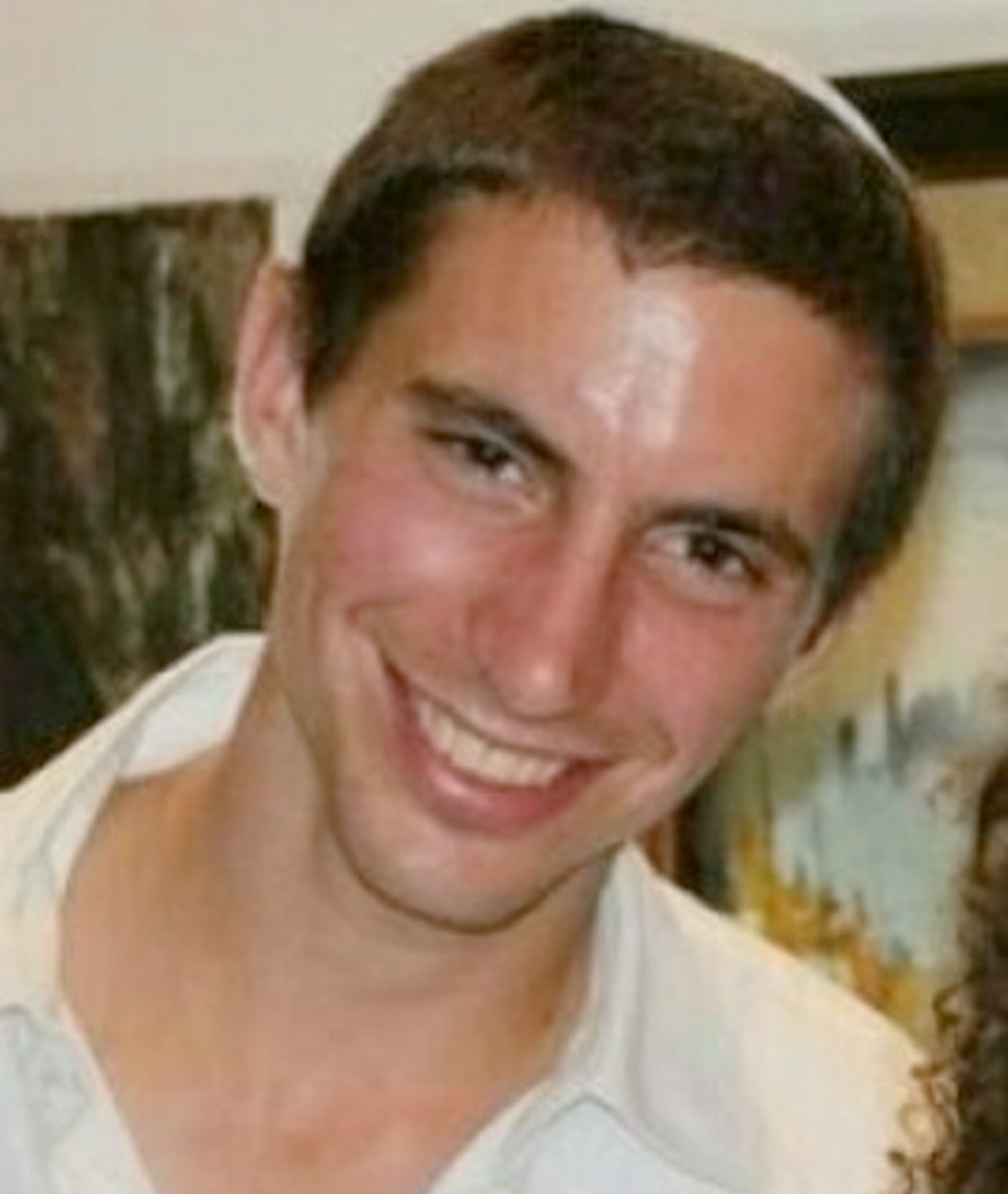
4,118 days. That’s how long Simcha and Leah Goldin have been waiting for their son’s remains to be returned to them for proper burial.
Lt Hadar Goldin was killed in action on 1 August, 2014, during Operation Protective Edge, during what was supposed to be a 72-hour humanitarian ceasefire. His Givati reconnaissance team was ambushed by Hamas from an underground tunnel. Three soldiers died in the attack. Hadar Goldin’s body was taken by the terrorists.
For more than 11 years, his parents and his siblings Ayelet, Tzur and Hemi have lived in a state of limbo, where Israel knew where Hadar was and who held him but could not, or would not, bring him home.
Then, on 7 October 2023, Hamas and other terror groups violently dragged another 251 people into Gaza, from their homes, their cars, the fields and a music festival.
People talk about “the hostages” as if the story began that day. But four Israelis had already been held in Gaza by Hamas for almost a decade.


· Lt Hadar Goldin, Givati Brigade, killed in 2014 and abducted in Rafah.
· Sgt. Oron Shaul, Golani Brigade, killed in 2014 in Shuja’iyya, his body seized by Hamas.
· Avera Mengistu, an Ethiopian-Israeli civilian with mental illness who crossed the fence into Gaza in 2014 and never came back.
· Hisham al-Sayed, a Bedouin Israeli, also living with mental illness, who wandered into Gaza in 2015 and was taken.
For years, these four were treated as a footnote. A “complex issue”. Something that could wait until after the next round with Hamas, the next coalition crisis, the next speech about “quiet”.
A year before the 7 October massacre, at the end of his tether, furious and frustrated at the failure to return his son and the other three hostages, Simha Goldin wrote with devastating clarity, “Those who abandon the dead will abandon the wounded and the living.”
One may look at the past two years since 7 October and ponder that statement.
Eleven Years is a Lifetime
The Goldin family did everything one would expect and far more. They fought with everything they had. They protested. For 286 Fridays in a row, Simha and Leah Goldin and their supporters held weekly rallies at the Black Arrow Memorial to raise public awareness and pressure the Israeli government. They chose the site on the Gaza border, which is a memorial to the 101st paratroop battalion of the 1950s, as it honours the Israeli military ethos of leaving no one behind, be they living or dead.
They travelled the world, lobbied foreign leaders, took on the UN, and pushed for international resolutions, insisting that any form of Gaza reconstruction or aid be tied to the return of their son and the other three hostages.
They stood incredulous and horrified as hundreds of millions of dollars in Qatari cash were transferred to Hamas, along with work permits for Gazans to enter Israel.
They felt betrayed, rejected and ignored by their own government.
At a Knesset State Control Committee hearing in April 2017, Leah Goldin sat before coalition MKs to demand answers as to why her son’s body was still in Gaza. She attacked the government, saying, “You have turned bereaved families into enemies of the state.”
When Likud MK Miki Zohar interrupted, she lost patience and cut him off, “You don’t answer! I wasn’t asking you! I don’t even know your name, you insolent man. Be quiet!” Then, in frustration, she threw a cup of water at him.
Zohar had interrupted her plea to defend the government and his party leader. He later claimed he was only objecting to her accusation that the government saw the bereaved families as enemies. Leah didn’t retract it. She doubled down on the accusation.
In the same meeting, David Bitan shamelessly shouted at another bereaved father, Rami Yitzhaki, the father of Staff Sergeant Erez Yitzhaki, who was killed during Operation Protective Edge in Gaza in July 2014, accusing him of lying about the government’s treatment of bereaved families.
It was a snapshot of something larger, a government so defensive, so addicted to its own narrative, it had lost the basic instinct to empathise and listen to its own people’s pain. In the wake of 7 October and a war that has lasted two years and more, we have clearly seen history repeating itself.
Six years before 7 October, Leah Goldin, who had already paid the ultimate price, had to sit and plead with authorities and argue with politicians for the IDF and the Israeli government to honour the unwritten contract with the people of Israel. No one is left behind.
The family of Oron Shaul carried the same pain, albeit with less media coverage and, as Leah noted, at a certain point, with not enough strength left even to speak. His father died in 2016, heartbroken at the age of just 54. He never got to see his son’s remains returned home for burial. Oron Shaul’s body was eventually recovered from Gaza in January 2025, in a daring operation by the IDF and Shin Bet.
The families of Avera Mengistu and Hisham al-Sayed felt abandoned, that the government simply didn’t care. Human Rights Watch pointed out years ago that both men came from “the most marginalised communities in Israeli society” and that Hamas’s abuse of them was a war crime.
In February 2025, after more than a decade, Avera and Hisham finally walked out of Gaza as part of a ceasefire deal. Their release was a miracle for their families and an indictment of us all.
7 October. A Terrible Watershed
For nine years, as Simha Goldin put it, “only the Goldin and Shaul families were on the playing field; the rest of Israel were watching from the grandstands.”
In one terrible day, it all changed. Now every community in Israel had a name, a face, and a family trapped in the same nightmare. Another 251 men, women and children, infants and pensioners, soldiers, civilians and foreign workers were violently taken. Held in dark tunnels in Gaza, they were tortured, sexually abused, starved, and even executed.
In the wake of the greatest disaster in the country’s history, the state had no choice but to act with the weight, determination, and urgency that had been so lacking for so long.
It is a bitter irony that it took the brutal abduction of another 251 to move the country to action and to fulfil its part of the unwritten contract it had failed to honour for more than a decade.
Only the IDF
On Sunday night, 9 November, Leah and Simha Goldin stood where they had stood 11 years earlier to give the statement they had been waiting more than a decade to deliver.
Simha said simply…
“We brought Lt Hadar Goldin back to be buried in Israel. The IDF brought Hadar home. No one else, only the IDF.”
Leah reminded us that in those first days of August 2014, she assumed, as most Israelis did, that “the State of Israel would never leave its soldiers behind.” Yet, it took 11 painful years and the IDF fighting again in the streets and tunnels of Gaza to correct what they saw as the betrayal of their son and the ethos and values he had been fighting for.
They thanked the IDF, the security services, and the ordinary Israelis who stood with them. Not the politicians who had ignored their plight. Not the leaders who had preferred to purchase a false and deceitful “quiet” over confronting Hamas on this most basic moral demand. None of those who had spent years telling them to sit quietly and wait. Not the government, for whom they had become a nuisance. Their bitterness was well earned.
Hadar Goldin is Finally Home
For the Goldin family, one can only hope that Hadar’s return provides some semblance of closure and perhaps comfort. His parents, twin brother Tzur, sister Ayelet, and brother Hemi can stand by his grave and say, This is where he rests. Their nightmarish state of purgatory is finally over.
Hadar Goldin had become more than a private tragedy. He was a symbol of a country in pain, a people struggling with the consequences of war and disaster.
Across the political divide, a veritable canyon these days, there was a collective exhale when the news broke that Hadar’s remains were finally back in Israel. Every Israeli, bar none, felt a knot loosen, just a little. Not joy, not victory, but a flicker of relief that one burden had been eased, if only slightly, for a nation living with a collective trauma that is palpable.
Bringing Hadar home does not heal the wounds. But it sends a message of hope to every other family still waiting for news, still counting days. Four hostages still remain in Gaza. It is not over until all the hostages are returned to their families.
As for the government. It should go without saying, bereaved parents and hostage families cannot be treated as a political nuisance to be managed. Families must be afforded the proper respect and patience. They must be heard, and their concerns addressed fully. Respect is the absolute minimum that should be expected of our politicians. Politicians who smear them as “leftists”, “traitors”, or, in Leah’s own words, “enemies of the state” must be sanctioned, indeed removed from the Knesset altogether.
Hadar’s return does not erase eleven years of abandonment. It does not absolve those who chose convenience and “quiet” over courage and responsibility.
But it does something important, for one family and for a country gasping for small fragments of hope. It proves that even after years of struggle against silence, negligence and failure, the right outcome is possible, even if it is not because of those in charge but despite them.
May Hadar Goldin’s memory be a blessing.
May we as a country live up to his sacrifice and to the values he fought and died for.
- Gary Cohen is a British Jewish writer and commentator

Keep community journalism free.
Jewish News is free for everyone. No paywall. No barriers. Just trusted journalism for anyone who wants to stay connected to Jewish life in Britain.
If you value that, please support us.
From as little as £5 a month, you can help keep our journalism free and accessible to all.
Every day, we report on the issues that matter to our community. We celebrate achievements, support charities, challenge antisemitism and ensure Jewish voices are heard more widely.
From as little as £5 a month, you can help us continue to:
- Report on the stories shaping Jewish life in the UK and beyond
- Bring our community together through shared stories, events and campaigns
- Celebrate the people, culture and moments that define our community
- Support organisations doing vital work across Jewish Britain
You can make a one-off donation or become a regular supporter. Every contribution helps keep our journalism free, independent and accessible to all.
If everyone who values Jewish News gave a small amount, it would make a real difference to our future.





















