Prefer Jewish News on Google

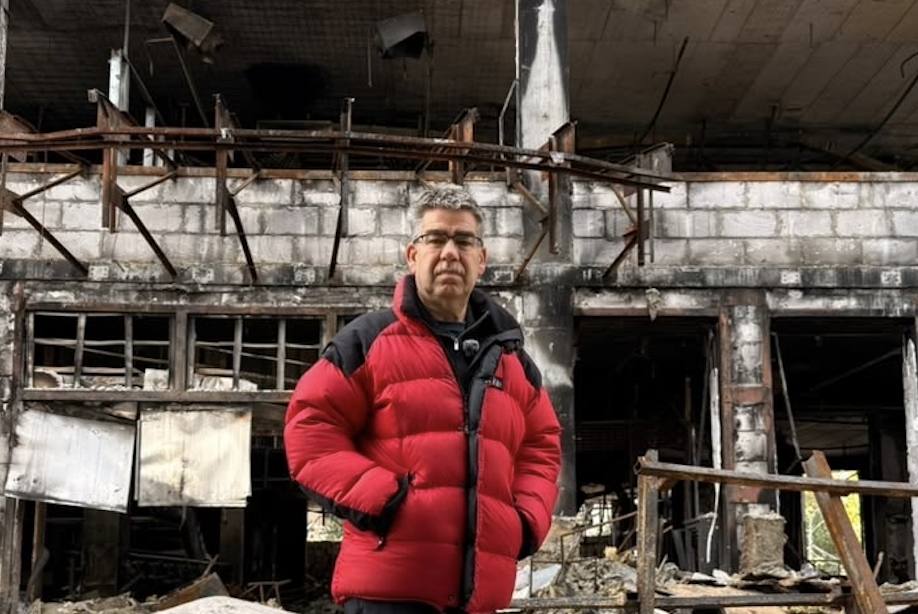
Emily Maitlis, the former BBC Newsnight presenter and co-host of The News Agents podcast, will interview the head of World Jewish Relief live from war-torn Ukraine on Monday, as tens of thousands of Jewish people face another potentially devastating winter.
Paul Anticoni OBE will join the award-winning broadcaster from Kharkiv, just 30 kilometres from the frontline, for a webinar examining the humanitarian crisis and the charity’s efforts to support vulnerable communities.
Speaking exclusively to Jewish News ahead of the event, Anticoni warned that international attention had faded even as Russian attacks continued to threaten civilian lives.
“I don’t think they’re beginning to forget. They’ve forgotten,” he said.
He described the conflict as a “war of exhaustion”, adding: “It just goes on and on and on.”



Anticoni arrived in Kharkiv on Thursday following a 36-hour journey and described a city where air raid sirens sound almost constantly, yet residents continue their daily routines.
“The street lights are on, the cafes are open, the shops are open,” he said. “I wouldn’t say as if nothing’s happening. But as if they’ve just got used to it.”
Having visited Ukraine repeatedly since Russia’s full-scale invasion, he said he had noticed a significant change in the atmosphere in Kyiv, where he spent around ten hours before travelling east.
Previously regarded as comparatively sheltered from the worst of the fighting, the capital now felt increasingly threatened by strikes on energy infrastructure, transport networks and other essential facilities.
“Now Kyiv feels the most dangerous place,” he said, contrasting the growing anxiety in the capital with Kharkiv’s apparent adaptation to life under bombardment.
Anticoni estimated that between 50,000 and 90,000 Jewish people remain in Ukraine, although he stressed that obtaining an accurate figure was impossible.
Many are elderly residents reluctant to leave their homes, despite the dangers posed by Russian attacks and the approaching winter.

“This is their home, this is what they know, this is where their property is,” he said, explaining that younger relatives may already have fled.
He warned that damage to Ukraine’s power infrastructure could leave vulnerable residents without heating, electricity, or running water during freezing temperatures.
“If there’s no heating, the water pipes freeze. If the water pipes freeze, the toilets don’t work,” he explained.
With snow expected in Kharkiv as early as this weekend, World Jewish Relief and its Ukrainian partners are preparing emergency stocks of blankets, heaters and power banks.
Rather than relying on evacuations, the charity expects to deliver supplies directly to older residents who are unwilling or unable to relocate.
“The thought of moving somewhere that they are unfamiliar with, unsure, is probably more worrying for them than the winter ahead,” Anticoni said.
He fears prolonged power cuts could threaten the lives of those already living in difficult conditions.
As he spoke to Jewish News, Anticoni was on his way to visit a Jewish couple in their late 80s, one of whom is a Holocaust survivor, who depend on the charity for essential supplies.
He planned to accompany them to their local Jewish community centre, where they continue to meet others despite fears over drone attacks.
He said maintaining these relationships was vital for people at risk of becoming increasingly isolated, particularly those too frail to reach shelter during air raid warnings.
Beyond older residents, Anticoni expressed concern for children whose education has been disrupted by the fighting.
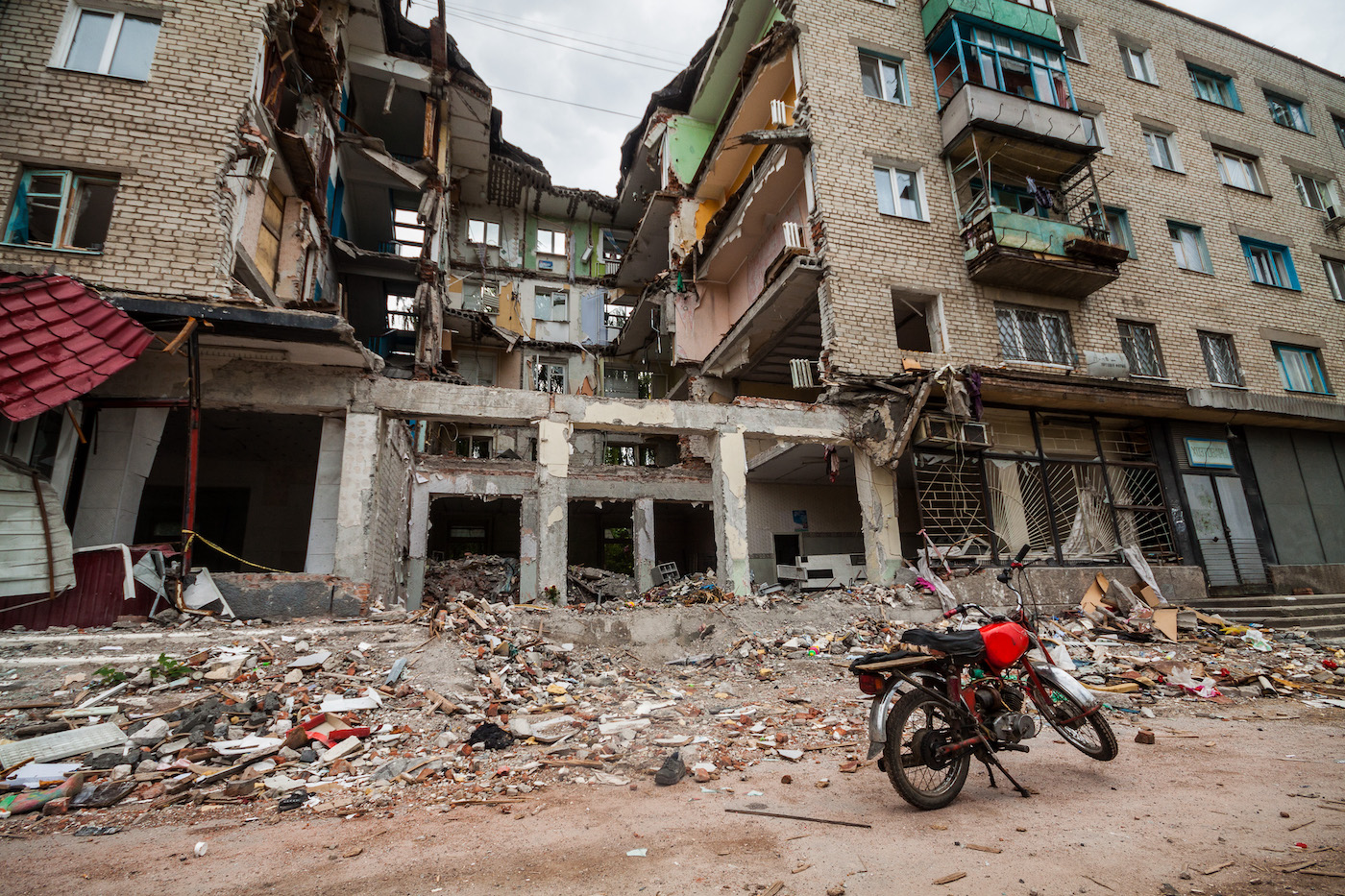
“There’s a generation that is now growing up in this conflict, which knows nothing else,” he said.
World Jewish Relief has worked in Ukraine for more than 30 years and has supported over 400,000 people across almost 400 towns and cities since February 2022.
Alongside emergency assistance, it helps families find employment and supports children’s education.
Explaining why he wanted to hold the webinar with Maitlis, Anticoni said: “I just want to keep Ukraine in people’s minds.”
He said he wanted to ensure the crisis was not reduced to statistics, but that people in Britain understood the reality of life for those enduring the conflict.
“We can’t stop. I really, desperately feel we cannot just stop and give up at this stage,” he said.
The free webinar takes place on Monday 9 November at 6pm GMT, with attendees able to put questions to Maitlis and Anticoni.
Register for the webinar here.

Keep community journalism free.
Jewish News is free for everyone. No paywall. No barriers. Just trusted journalism for anyone who wants to stay connected to Jewish life in Britain.
If you value that, please support us.
From as little as £5 a month, you can help keep our journalism free and accessible to all.
Every day, we report on the issues that matter to our community. We celebrate achievements, support charities, challenge antisemitism and ensure Jewish voices are heard more widely.
From as little as £5 a month, you can help us continue to:
- Report on the stories shaping Jewish life in the UK and beyond
- Bring our community together through shared stories, events and campaigns
- Celebrate the people, culture and moments that define our community
- Support organisations doing vital work across Jewish Britain
You can make a one-off donation or become a regular supporter. Every contribution helps keep our journalism free, independent and accessible to all.
If everyone who values Jewish News gave a small amount, it would make a real difference to our future.