Prefer Jewish News on Google

Ethiopian Jews celebrate Sigd in Jerusalem
Thousands gather in holy city to observe centuries-old tradition of faith and belonging
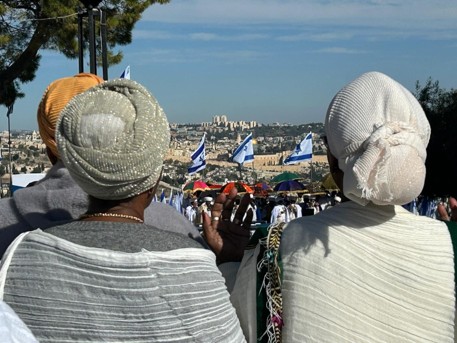
Members of Israel’s Ethiopian Jewish community gathered in Jerusalem this week to celebrate the festival of Sigd.
On Monday 9 November, against the backdrop of the Old City, worshippers dressed in traditional white garments came together for prayers, reflection and celebration, continuing a tradition that sustained their ancestors through generations of exile.
Sigd, which became an official Israeli national holiday in 2008, is a unique celebration of Jewish faith, identity and the enduring connection between the Ethiopian Jewish community, known as Beta Israel, and the land of Israel.
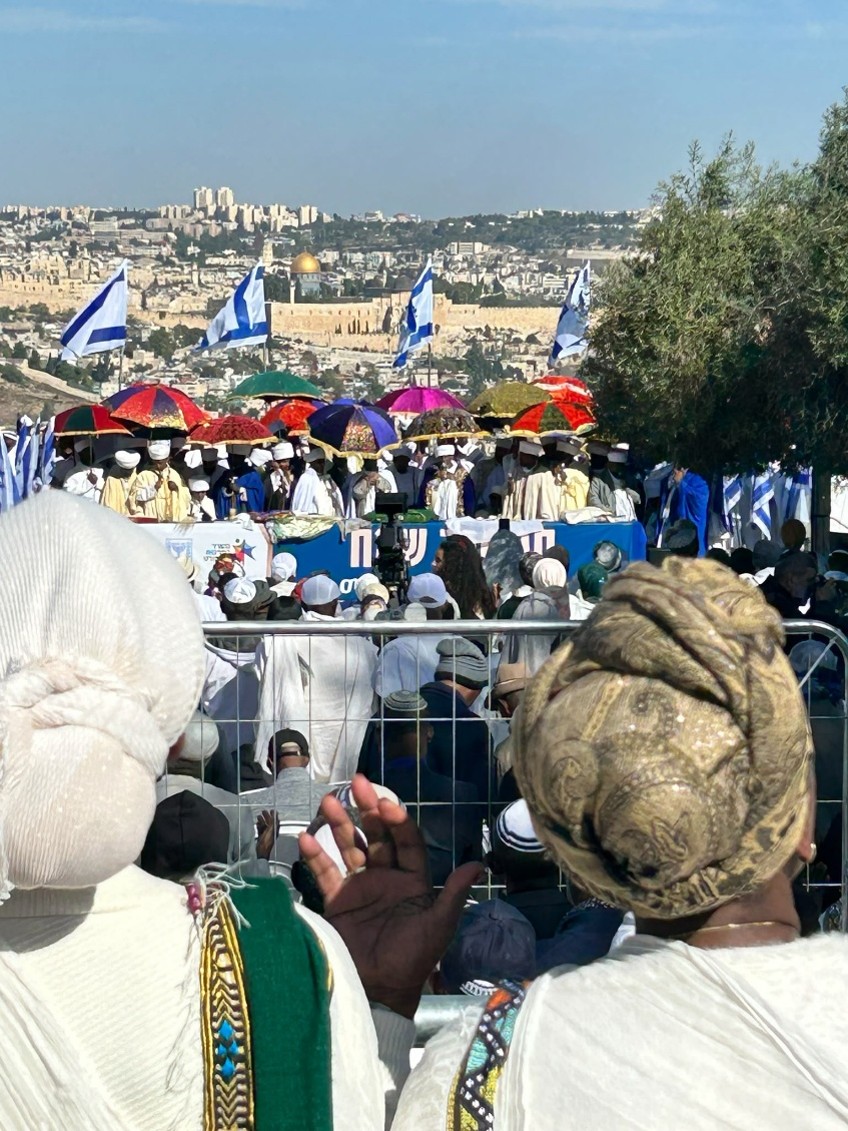
Observed 50 days after Yom Kippur, the festival is a day of fasting, repentance and spiritual renewal, recalling the biblical renewal of the covenant between God and the Jewish people in the days of Ezra and Nehemiah.
For centuries, Ethiopian Jews marked the occasion by climbing the highest mountain near their villages, symbolically recreating the revelation at Mount Sinai. Led by their spiritual leaders, known as kessim, communities would gather to pray, seek forgiveness and express their longing to return to Zion.


A Torah scroll would be carried from the synagogue on the head of a young child, followed by the community’s elders and worshippers. The gathering culminated in prayers for Jerusalem, a place that existed for many only through scripture, tradition and collective memory.
The largest celebrations traditionally took place in Ambober, near the Ethiopian city of Gondar.
Following the immigration of Ethiopian Jews to Israel, including the dramatic rescue missions of Operation Moses in the 1980s and Operation Solomon in 1991, the prayers once offered for a return to Jerusalem are now recited in the city itself.
Each year, Ethiopian Jews travel from across Israel to gather in Jerusalem, where the kessim lead prayers and read from the Orit, the community’s sacred scriptures, written in the ancient Ge’ez language.
The name Sigd means ‘prostration’, reflecting the act of bowing before God. The festival is also known as Mehlella, meaning supplication or a plea for forgiveness.
The day begins with fasting and solemn prayers before giving way to joyful celebrations, traditional food, music and dancing, as families and communities come together.
For Ethiopian Jews, Sigd is both a celebration of a distinctive and ancient Jewish heritage and a powerful reminder of the enduring bond between Jewish communities across the diaspora and Jerusalem.

Keep community journalism free.
Jewish News is free for everyone. No paywall. No barriers. Just trusted journalism for anyone who wants to stay connected to Jewish life in Britain.
If you value that, please support us.
From as little as £5 a month, you can help keep our journalism free and accessible to all.
Every day, we report on the issues that matter to our community. We celebrate achievements, support charities, challenge antisemitism and ensure Jewish voices are heard more widely.
From as little as £5 a month, you can help us continue to:
- Report on the stories shaping Jewish life in the UK and beyond
- Bring our community together through shared stories, events and campaigns
- Celebrate the people, culture and moments that define our community
- Support organisations doing vital work across Jewish Britain
You can make a one-off donation or become a regular supporter. Every contribution helps keep our journalism free, independent and accessible to all.
If everyone who values Jewish News gave a small amount, it would make a real difference to our future.